
Key takeaways
- Find the best garden trowel for digging, planting, and weeding. Compare five durable hand trowels by blade, grip, length, and soil type before you buy.
- Top Pick: Fiskars Ergo Garden Trowel
- Runner-up: Wilcox All-Pro 202S 14-Inch Trowel
- Also consider: Radius Garden Root Slayer Trowel
A garden trowel is the tool most gardeners reach for first, and it is also the tool most likely to bend, snap, or rust out within a season. The difference between a trowel that lasts a decade and one that fails on the first root is almost always in the blade and the neck. A single piece of metal, a forged head, or a cast-aluminum body holds up where a thin stamped blade welded to a hollow handle gives way. Grip shape matters too, because planting, weeding, and transplanting all put repeated twisting pressure on the wrist.
This guide compares five hand trowels that cover the main jobs in a garden bed: general digging and planting, cutting through roots, working in tight containers, sowing seed, and all-day comfort. Each pick is described from its published specifications, so you can match blade material, length, and grip to your soil and your hands before you buy.
As an Amazon Associate, we earn from qualifying purchases.
Our top picks
Best for: Everyday digging, planting, and weeding in soft to medium soil
Check price on AmazonBest for: Rocky soil, transplanting, bulb planting, and tight spaces
Check price on AmazonBest for: Cutting roots, dividing perennials, and opening new beds
Check price on AmazonBest for: Containers, raised beds, potting mix, and light daily use
Check price on AmazonBest for: Seed starting, spacing seeds, and handling seedlings
Check price on AmazonQuick Answer
The best garden trowel for most gardeners is the Fiskars Ergo Garden Trowel, a cast-aluminum tool with an ergonomic grip that handles everyday digging and planting in soft to medium soil. For rocky ground, the Wilcox All-Pro 202S is tougher, with a one-piece stainless blade. The Radius Garden Root Slayer cuts roots, the Fiskars FiberComp is the lightest budget pick, and the Fiskars Seed Planting Trowel suits seed work.
1. Fiskars Ergo Garden Trowel

The Fiskars Ergo Garden Trowel is the all-round pick in this roundup, and it earns that spot by getting the basics right. The head is cast aluminum, which keeps the tool light while resisting rust, and the ergonomic SoftGrip handle is shaped to reduce hand and wrist strain during long planting sessions.
This is the trowel to buy first if you want one tool for general garden work. It digs planting holes, lifts weeds, scoops potting mix, and settles seedlings without feeling heavy in the hand. The cast-aluminum construction means there is no blade-to-handle joint to loosen, which is the most common failure point on cheaper trowels. Fiskars backs the tool with a lifetime warranty.
Specs
- Blade material: Cast aluminum
- Handle: Ergonomic SoftGrip with hang hole
- Overall length: About 12 inches
- Weight: About 6.4 ounces
- Warranty: Lifetime
- Best for: Everyday digging, planting, and weeding in soft to medium soil
- Price group: Budget
2. Wilcox All-Pro 202S 14-Inch Trowel
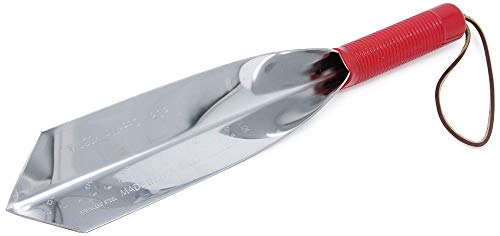
The Wilcox All-Pro 202S is built for gardeners whose soil fights back. It is a single piece of stainless steel, forged into a narrow 14-inch trowel with a V-shaped blade and depth markings etched along the edge. Because the blade and handle are one continuous piece of metal, there is no neck joint to bend and no weld to crack.
The narrow blade and sharp edges let you work between established plants without disturbing nearby roots, which is why this trowel is a favorite for transplanting and bulb planting. Depth markings help you set bulbs and seedlings at a consistent depth, and the pointed tip slices into firm ground more easily than a wide, blunt blade. It is heavier than a basic trowel, but for tough soil it is the tool that keeps working when lighter trowels stop.
Specs
- Blade material: One-piece stainless steel
- Blade shape: Narrow V-blade with depth markings
- Overall length: 14 inches
- Handle: Full-tang stainless steel grip
- Best for: Rocky soil, transplanting, bulb planting, and tight spaces
- Price group: Premium
3. Radius Garden Root Slayer Trowel

The Radius Garden Root Slayer Trowel is the specialist in this roundup. Its carbon steel blade carries ripsaw teeth along the edges and an inverted V-shaped tip, so it saws through roots and tough turf instead of bouncing off them. The handle uses the curved Natural Radius Grip shape that Radius Garden is known for, designed to spread pressure across the palm and reduce wrist strain.
This trowel makes sense when your beds are full of roots, when you divide perennials, or when you need to cut through sod to open a new planting area. The serrated edges also help with weeding, since they cut taproots cleanly instead of leaving a stub that regrows. The blade is heavier than a standard trowel, so it is not the best choice for delicate potting work, but for clearing and cutting it is the most capable tool here.
Specs
- Blade material: Carbon steel with ripsaw teeth
- Blade tip: Inverted V-tip for root cutting
- Included: Holster
- Handle: Natural Radius Grip
- Model number: 17011
- Best for: Cutting roots, dividing perennials, and opening new beds
- Price group: Mid-range
4. Fiskars FiberComp Hand Trowel

The Fiskars FiberComp Hand Trowel is the lightest tool in this guide and the simplest to live with. Its FiberComp handle is a fiber composite that will not rust, and the oversized aluminum head digs quickly in loose soil and potting mix. At about 11 inches long it fits easily in a tool bag or a bucket of hand tools, and the hang hole lets you keep it on a hook by the door. It is the trowel to grab for container gardening, raised beds, and quick jobs around the yard.
Because it is so light, this trowel suits gardeners who work in short sessions or who find heavier steel tools tiring. The trade-off is leverage: it is not the tool for prying rocks or cutting thick roots, and the composite handle flexes slightly under heavy load.
Specs
- Blade material: Cast aluminum, oversized head
- Handle material: FiberComp composite with hang hole
- Overall length: About 11 inches
- Weight: Lightweight, under half a pound
- Warranty: Lifetime
- Best for: Containers, raised beds, potting mix, and light daily use
- Price group: Budget
5. Fiskars Seed Planting Trowel

The Fiskars Seed Planting Trowel is a four-in-one tool built for the fiddly end of gardening: starting seeds, spacing rows, and handling seedlings. It combines a small trowel blade with a stylus for placing tiny seeds, a widger for lifting seedlings without damaging their roots, and measurement marks for setting seed depth and spacing. The FiberComp body keeps it light and rust-free, and the compact size fits neatly into a seed-starting tray setup.
This is a niche pick, and it knows it. It will not dig a hole for a tomato transplant or cut through a root, and you should not expect it to. What it does well is replace three or four small tools on a potting bench, which matters when you are starting dozens of seeds and want consistent depth and spacing.
Specs
- Blade material: FiberComp composite
- Functions: Trowel, stylus, widger, and depth and spacing marks
- Model number: 340110-1001
- Best for: Seed starting, spacing seeds, and handling seedlings
- Price group: Budget
How to Choose
Start with your soil. Soft loam and potting mix suit almost any trowel, so weight and grip comfort matter most. Clay, rocky ground, and root-filled beds call for a one-piece stainless or forged steel blade, because a stamped or welded blade will bend at the neck. If you garden mostly in containers, a shorter, lighter trowel is easier to control in a small pot.
Blade shape is the next decision. A wide blade moves more soil with each scoop and digs a hole faster. A narrow blade works between plants, sets bulbs at a consistent depth, and disturbs fewer roots.
Grip shape decides whether your hands tire. An ergonomic or curved handle spreads pressure across the palm and reduces wrist twist. A straight handle with a soft grip is fine for short sessions. If you have arthritis or limited grip strength, a lighter trowel with a thick, cushioned handle is usually more comfortable than a heavy steel one, even if the steel tool is stronger.
Length affects leverage and reach. A 14-inch trowel gives more leverage in firm soil and reaches deeper into a raised bed. An 11-inch trowel is handier in pots and tool bags. Finally, check the warranty: a lifetime warranty is a useful sign that the maker expects the tool to last.
Who Should Skip
Skip the heavy steel trowels if you garden only in containers and potting mix. A one-piece stainless trowel is overkill for a balcony herb garden, and its weight will tire your hand faster than a light composite tool. Buy the lightest trowel that suits your soil instead.
Skip the serrated Root Slayer style if you never cut roots. The teeth add weight and cost, and a smooth blade is easier to clean and safer to carry. Similarly, skip the seed planting trowel if you do not start seeds. Its four-in-one design is clever, but a general trowel covers everything else it does.
Skip any trowel with a thin stamped blade and a hollow handle if your soil is rocky or compacted. That construction bends at the neck under leverage, and once a trowel bends it never digs straight again.
Frequently Asked Questions
What is the best garden trowel for rocky soil?
A one-piece stainless steel trowel is the best choice for rocky soil. The Wilcox All-Pro 202S is a single piece of stainless steel with no weld or joint at the neck, so it resists bending when you lever against a stone. A cast-aluminum trowel is the next best option, while a thin stamped blade is likely to bend.
How long should a garden trowel be?
Most garden trowels are between 11 and 14 inches long. An 11-inch trowel suits containers and tool bags, while a 13- or 14-inch trowel gives more leverage in firm soil and deeper reach in raised beds. Handle comfort matters more than an inch or two of length, so hold the tool first if you can.
What is the difference between a trowel and a transplanter?
A trowel has a wide blade for digging holes and moving soil, while a transplanter has a narrow blade for working between plants and setting seedlings at a consistent depth. Many gardeners own both. A narrow trowel, such as the Wilcox All-Pro 202S, can do transplanting work as well as general digging.
How do I keep a garden trowel from rusting?
Clean soil off the blade after each use, dry it before storage, and store it indoors or under cover. Stainless steel and cast aluminum resist rust far better than carbon steel, which needs a light wipe with oil after use in damp conditions. A hang hole makes it easy to keep the tool off a damp floor.
Final Verdict
The best garden trowel depends on your soil, but one pick covers most gardeners: the Fiskars Ergo Garden Trowel. It is light, rust-resistant, comfortable to hold, and strong enough for everyday digging and planting, with a lifetime warranty behind it. If your beds are rocky or full of roots, step up to the Wilcox All-Pro 202S for its one-piece stainless blade, or the Radius Garden Root Slayer if you cut roots often.
FAQ
What is the best garden trowel for rocky soil?
How long should a garden trowel be?
What is the difference between a trowel and a transplanter?
How do I keep a garden trowel from rusting?
More from Amazon
Programs that pair well with the guide above. Offers and eligibility are set by Amazon and may change.
Free shipping on eligible items, Prime Video and more. Eligible new members can start with a free trial.
Start a Prime free trialAudiobooks and podcasts to listen to on the go. Eligible new members can start with a free trial.
Try Audible freeAd-free music streaming. Eligible new subscribers can start with a free trial.
Try Music Unlimited freeA free business account with business pricing and bulk-buying tools for work, shop or home office.
Create a business accountAs an Amazon Associate we earn from qualifying purchases.



Write Your Review
No reviews yet. Be the first to share your experience!