
Key takeaways
- Compare gravity, thumb, lever, keyed and magnetic pool gate latches for wood, vinyl and metal gates, with post fit, gap ranges and locking notes.
A gate latch has a simple job: catch every time the gate swings shut and open without a fight when someone needs through. The catch is that gates are not all alike. A cedar garden gate, a hollow vinyl privacy gate and a square-tube metal gate each need different mounting hardware, and a latch that suits a side yard may be the wrong choice entirely for a pool fence, where local codes often set rules for how the gate closes and where the release sits.
This guide compares five gate latches across the main styles shoppers actually buy: a gravity self-latching post-mount latch, a decorative thumb latch, a two-sided lever-handle latch, a keyed latch and a magnetic pool-style latch. Each pick was chosen from maker listings and spec sheets, with attention to gate material fit, post size, the gap between gate and post, and how the latch locks. Measure your gate and post before ordering, because those numbers decide whether any latch works.
As an Amazon Associate, we earn from qualifying purchases.
How to Choose a Gate Latch
Start with the gate itself. Match the latch to the gate material, wood, vinyl or metal, and to the post size before anything else. Vinyl posts are hollow, so makers often specify longer screws, through-bolts or internal stiffeners. Metal gates may need self-drilling screws or bolts rather than wood screws. Square posts suit most modern latches, while round tube farm gates use clamp-on two-way styles instead.
Next, measure the gap between the closed gate and the post. Every latch has a gap range it can bridge, and a latch installed outside that range will miss its catch or bind. Also note the swing direction. Some latches are built for outswing gates only, while others work on gates that swing inward, outward or both ways, and most mount for left-hand or right-hand use.
Then decide how the gate should close. Gravity and spring latches catch on their own when the gate swings shut, which is convenient for busy side yards. Magnetic latches pull the bolt into place as the gate nears the post and tolerate slight misalignment from sag or ground movement. Manual styles, such as slide bolts and thumb latches with a moving bar, need a hand on them every time.
Locking is the last decision. Some latches simply catch. Others accept a padlock through a hole in the lever. Keyed models carry a lock cylinder, and a few can be rekeyed to match a house key. For pool gates, the rules are stricter: barrier codes commonly call for gates that close and latch on their own, with the release placed high and out of a small child’s reach, and exact heights and hardware rules vary by area, so check local pool codes before buying or installing anything.
RS Industries Heavy Duty Self-Locking Post Mount Gate Latch — Best Gravity Pick
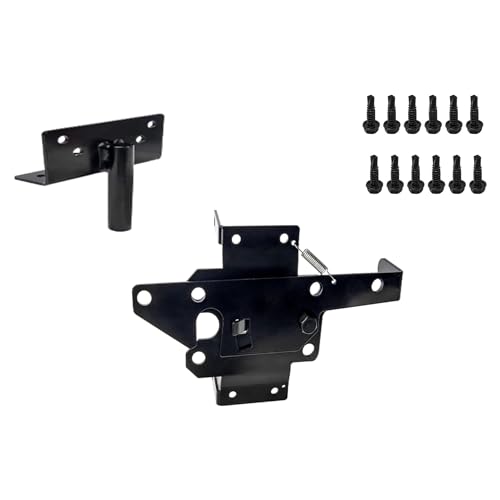
The RS Industries latch is the classic post-mount gravity design, built from heavy gauge steel with a black powder coat over zinc plating for weather resistance. A 90-degree bracket ties the latch to the gate frame, and the lever drops into the catch under its own weight each time the gate closes, so the gate locks itself without anyone flipping a lever.
At about 1.76 pounds, it is a substantial piece of hardware suited to gates that get pushed by wind or leaned on by large dogs. The listing covers wood, vinyl and metal gates and both inward and outward swing directions, which makes it a flexible replacement when an older latch wears out. Mounting fasteners are included, and the post-mount layout keeps the hardware on the post face rather than wrapping the gate edge.
Specs
- Material: Heavy gauge steel, black powder coat over zinc plating
- Gate material fit: Wood, vinyl and metal gates, post mount
- Locking: Self-locking gravity action on closing; no key cylinder
- Extras: 90-degree bracket, fasteners included, about 1.76 lb
SANKINS Thumb Latch Kit — Best Thumb Latch

The SANKINS thumb latch kit brings the traditional cabin-gate look: an ornamental handle on the street side and a thumb press that lifts the latch bar on the yard side, so the gate opens from either side without reaching over the top. When the gate swings shut, the bar drops into its catch and the latch holds on its own.
The kit is built from thickened steel with a black powder coat over zinc plating, and it is rated for gates up to 3 inches thick, which covers heavier framed wood gates that slim hardware cannot span. It works on in-swinging and out-swinging gates and mounts for left-hand or right-hand use. The latch bar can also be shifted to lock the gate in place. Because the thumb piece passes through the gate and must line up with the bar, the maker notes installation takes more care than a surface-mount latch, so it rewards patient measuring.
Specs
- Material: Thickened steel, black powder coat over zinc plating
- Gate material fit: Wood gates up to 3 in thick, in- or out-swinging
- Locking: Latch bar can be moved to lock; no key cylinder
- Extras: Ornamental handle, two-sided thumb operation, left or right hand
D&D Technologies LokkLatch Magnetic — Best Lever-Handle Latch
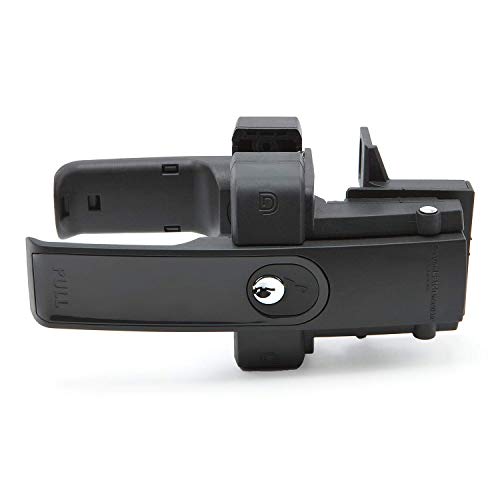
The LokkLatch Magnetic replaces the reach-over lever with proper handles on both faces of the gate. Its dual-sided push and pull handles operate the latch from either side, and the magnetic latching system pulls the bolt home as the gate closes. The body is molded from rust-free engineering polymers with stainless steel components, aimed at coastal and wet climates where painted steel gives up early.
This is also a genuinely keyed latch. It locks from both sides with two lock cylinders that the maker says can be rekeyed to match other locks at the house. Fit is specific: it suits square-posted gates in metal, wood and vinyl, with posts from 1-1/2 to 6 inches and a gate gap between 3/8 inch and 1-1/4 inches. Vertical and horizontal adjustment in the mounting lets the latch follow a gate that has sagged slightly, instead of missing its strike.
Specs
- Material: Engineering polymers with stainless steel components
- Gate material fit: Metal, wood and vinyl gates on square posts, 1-1/2 to 6 in
- Locking: Key-lockable from both sides, rekeyable 6-pin cylinders
- Extras: Handles on both sides, gate gap 3/8 to 1-1/4 in, adjustable mounting
Keystone Advantage Double-Sided Keyed Gate Latch — Best Keyed Pick
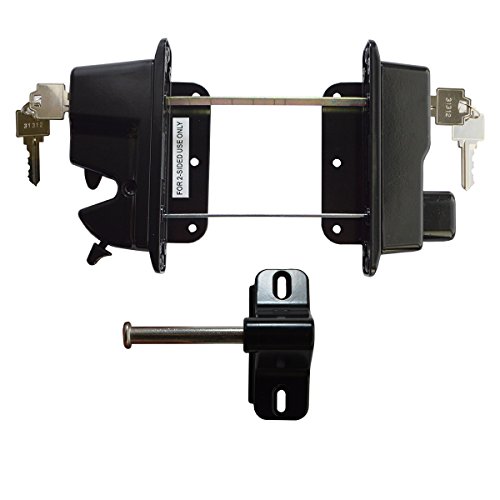
The Keystone Advantage is a keyed latch for shoppers who want a real key rather than a padlock hasp. The body is zinc diecast metal, and the latch operates and locks from both sides of the gate, so a key works whether you arrive from the street or the yard. Each latch ships keyed alike with four keys, and the cylinder can be rekeyed to a standard 5-pin house key if you prefer one key for the house and gate.
Fit notes matter here. The latch works on vinyl, wood and metal gates with square frames, on posts up to 5 inches, and needs a gate gap between 1/2 inch and 1-3/4 inches. It installs for left- or right-swinging gates, and the kit includes mounting hardware, a marking template and instructions. On double gates, the maker notes a drop rod, sold separately, is needed to anchor the fixed leaf.
Specs
- Material: Zinc diecast metal
- Gate material fit: Vinyl, wood and metal gates with square frames, posts up to 5 in
- Locking: Keyed alike, four keys included, rekeyable to a 5-pin house key
- Extras: Mounting hardware, marking template and instructions included
D&D Technologies MagnaLatch Vertical Pull — Best for Pool Gates
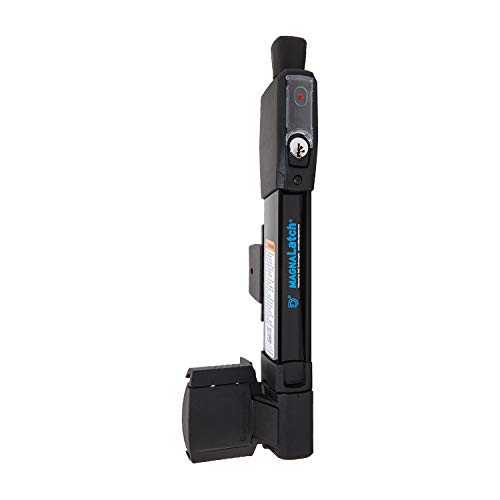
The MagnaLatch is the pool specialist in this roundup. It is a magnetic self-latching design, meaning the magnets draw the latch closed as the gate reaches the post rather than relying on the gate striking a gravity catch. The release is a vertical pull at the top of the tall housing, a layout the maker positions up high on the gate, and the housing is molded polymer with stainless steel components.
The maker builds this model for pool and other gates where the release placement matters, and it carries a keyed 6-pin lock cylinder that can be rekeyed, with a visible indicator showing whether the latch is locked. It fits wood, metal and vinyl gates on square posts of at least 1 inch, is designed around a 3/4 inch gate gap with an acceptable range from 1/2 inch to 1-7/16 inches, and adjusts vertically and horizontally to follow gate sag. Two cautions apply. A latch alone does not close a gate, so self-closing hinges are a separate purchase, and pool barrier rules vary, so check local pool codes for required latch height and self-closing hardware before installing.
Specs
- Material: Molded polymer housing with stainless steel components
- Gate material fit: Wood, metal and vinyl gates, square posts at least 1 in
- Locking: Keyed 6-pin cylinder, rekeyable, with lock indicator
- Extras: Magnetic self-latching, vertical pull release, gap range 1/2 to 1-7/16 in
How the Five Latches Compare
| Product | Type | Gate fit | Locking |
|---|---|---|---|
| RS Industries Post Mount Latch | Gravity self-latching | Wood, vinyl, metal | Self-locking, no key |
| SANKINS Thumb Latch Kit | Thumb latch | Wood, up to 3 in thick | Bar can be moved to lock |
| D&D LokkLatch Magnetic | Lever-handle, magnetic | Metal, wood, vinyl, square posts | Keyed both sides, rekeyable |
| Keystone Advantage | Keyed latch | Vinyl, wood, metal, square frames | Keyed alike, four keys |
| D&D MagnaLatch Vertical Pull | Magnetic pool latch | Wood, metal, vinyl, square posts | Keyed 6-pin, rekeyable |
The pattern is simple. Gravity latches are the low-effort default for ordinary yard gates. Thumb and lever-handle designs trade a little installation effort for opening the gate from both sides. Keyed models suit gates that genuinely need a key. The magnetic pool latch adds a high release and sag adjustment for gates covered by barrier rules.
Frequently Asked Questions
What is the difference between self-closing and self-latching?
They are two separate jobs. Self-closing means the gate swings shut on its own, usually through spring hinges or a gate closer. Self-latching means the latch catches automatically once the gate arrives at the post. A latch cannot close an open gate by itself, so a gate that must do both needs self-closing hinges paired with a self-latching latch.
How do I measure before ordering a gate latch?
Measure the gap between the closed gate and the post, the thickness of the gate, and the width and shape of the post, square or round. Compare those numbers with the gap range and post limits in the latch listing. Also confirm the swing direction and whether the latch mounts on the left or right, since some models are limited to one swing direction.
Which of these latches can be opened from both sides?
The SANKINS thumb latch, the LokkLatch Magnetic and the Keystone Advantage all operate from both faces of the gate, through a thumb press, dual handles or two-sided key cylinders. The RS Industries gravity latch and the MagnaLatch are worked from the gate side, and the MagnaLatch release is deliberately placed high, which suits pool fencing rather than casual two-sided access.
What should I check before fitting a latch to a pool gate?
Check your local pool barrier code first, because it sets the required fence height, latch release height and self-closing requirements, and those rules vary by area. Then confirm the gate swings the required direction, closes on its own from any open position, and that the latch catches every time. Recheck alignment each season, since posts move with frost and soil shift.
Final Verdict
For most wood, vinyl and metal yard gates, the RS Industries post-mount latch is the straightforward pick: heavy steel, self-locking action and fit across all three gate materials. Choose the SANKINS thumb latch for a framed wood gate where the traditional handle look matters, or the LokkLatch Magnetic when two-sided handles and a rekeyable lock are worth the step up. The Keystone Advantage suits anyone who wants a keyed-alike key in hand, and the MagnaLatch is the deliberate choice for pool gates, paired with self-closing hinges and a check of local codes. Whichever style you pick, the measurements decide the result, so take the gap and post numbers before ordering.
Product and ASIN Reference
| Product | ASIN |
|---|---|
| RS Industries Heavy Duty Self-Locking Post Mount Gate Latch | B0D41P5SD7 |
| SANKINS Thumb Latch Kit | B09XTM63N4 |
| D&D Technologies LokkLatch Magnetic (LLMKDBT) | B00INA09OQ |
| Keystone Advantage Double-Sided Keyed Gate Latch | B01K7YIMMQ |
| D&D Technologies MagnaLatch Vertical Pull (ML3VPKA) | B00J5TKCUK |
FAQ
What is the difference between self-closing and self-latching?
How do I measure before ordering a gate latch?
Which of these latches can be opened from both sides?
What should I check before fitting a latch to a pool gate?
More from Amazon
Programs that pair well with the guide above. Offers and eligibility are set by Amazon and may change.
Free shipping on eligible items, Prime Video and more. Eligible new members can start with a free trial.
Start a Prime free trialAudiobooks and podcasts to listen to on the go. Eligible new members can start with a free trial.
Try Audible freeAd-free music streaming. Eligible new subscribers can start with a free trial.
Try Music Unlimited freeA free business account with business pricing and bulk-buying tools for work, shop or home office.
Create a business accountAs an Amazon Associate we earn from qualifying purchases.


Write Your Review
No reviews yet. Be the first to share your experience!