
Key takeaways
- Compare the best garden hoes for weeding and cultivating, from stirrup and Warren hoes to diamond and field hoes, with maker specs and buying tips.
A good garden hoe does two jobs that look simple and are not: it slices weeds off at the roots before they compete with your crops, and it breaks up the soil surface so beds stay loose and workable. The catch is that “garden hoe” covers several very different tools. A stirrup hoe skims just under the surface on a push-pull stroke, a Warren hoe points into tight spots and opens furrows, and a heavy field hoe chops through sod and packed ground. Choosing the wrong head shape for your soil and row spacing turns a quick chore into slow, frustrating work.
This guide compares five long-handled garden hoes from established tool makers, covering the main head styles used for weeding and cultivating: stirrup, Warren, diamond scuffle, field, and classic draw hoes. Every specification below is stated by the maker, and each pick was chosen for a distinct job, from fast passes down wide vegetable rows to careful work between closely spaced plants. Collinear and Dutch hoes are covered in the comparison section as well, so you can see where those designs fit before you buy.
As an Amazon Associate, we earn from qualifying purchases.
Quick answer
For most vegetable gardens, start with a stirrup hoe for fast, shallow weeding between rows, and add a pointed Warren or diamond hoe for tight spots and furrows. Gardeners breaking new or compacted ground should look at a heavy field hoe instead, while a wide draw hoe suits hilling, grading, and moving soil in open beds.
Hoss Tools Stirrup Hoe
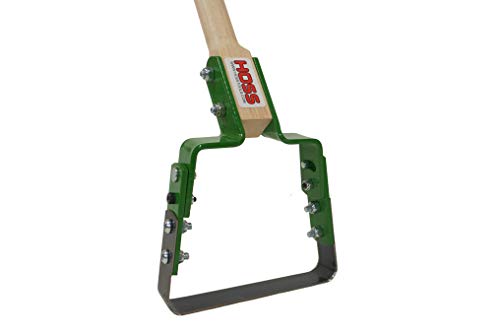
The Hoss stirrup hoe is built around the oscillating loop design that market gardeners rely on for quick weeding passes. Per Hoss Tools, the 6-inch blade is spring steel and sits in a powder-coated steel frame slotted so the blade rotates 20 degrees in either direction, which lets it cut on both the push and the pull stroke while staying at a shallow, consistent depth. The 60-inch handle is waxed ash, and per Hoss Tools the complete tool weighs 16 ounces, so it stays easy to guide down long rows. Because the blade works just below the surface, it severs small weeds without dragging much soil or disturbing the roots of established crops. Hoss Tools also sells replacement blades, which matters because a stirrup hoe only works well when the edge stays sharp. This is the pick for gardeners whose main job is frequent, light weeding in beds that are already in decent shape, rather than breaking new ground.
Specs
- Blade: 6-inch spring steel, per Hoss Tools
- Action: oscillating stirrup, rotates 20 degrees either way, per Hoss Tools
- Handle: 60-inch waxed ash, per Hoss Tools
- Weight: 16 ounces, per Hoss Tools
- Origin: made in the USA, per Hoss Tools
Truper 30002 Tru Tough Welded Warren Hoe
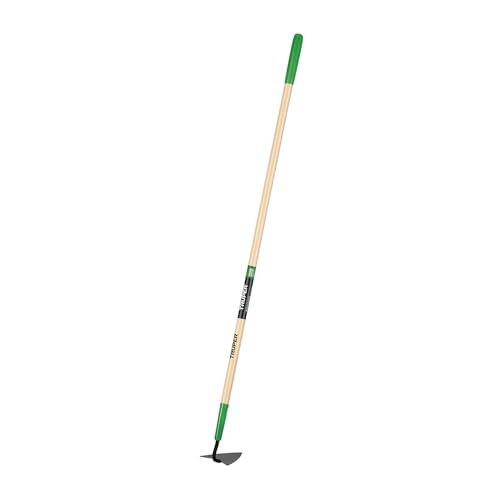
The Truper 30002 is a classic Warren hoe, the triangular-headed design used for opening furrows, transplanting, and cultivating in the tight spaces a wide blade cannot reach. Per Truper, the head measures 4-3/4 inches and is finished in gray steel with a silicone clear coat, and the welded construction keeps the head fixed firmly to a 54-inch ash wood handle. The pointed tip draws a clean seed furrow in one pass, and turning the head lets the edges cultivate around individual plants without tearing at their roots. Per Truper, the Tru Tough line is aimed at everyday garden and light farm work, so this is a straightforward utility tool rather than a forged specialty piece. Gardeners who plant in rows, set out transplants, or work narrow beds will get the most from it. If your beds are wide open and your main problem is a carpet of small weeds, a stirrup or scuffle design will cover that ground faster.
Specs
- Model: 30002 Tru Tough, per Truper
- Head: 4-3/4-inch Warren (triangular) steel head, per Truper
- Handle: 54-inch ash wood, per Truper
- Construction: welded head with clear coat finish, per Truper
Corona Clipper SH61000 Diamond Hoe
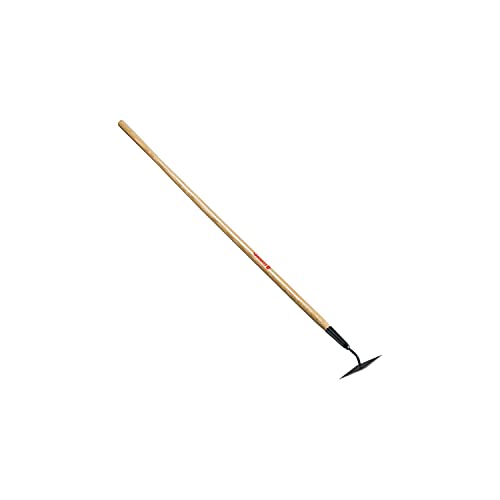
Corona’s Diamond Hoe takes the flat scuffle-hoe idea and sharpens it on every side. Per Corona Clipper, the diamond-shaped blade is carbon steel and is sharpened on all four sides, so it cuts whether you push it away or pull it back, and the pointed corners reach into the gaps between plants where a straight edge leaves weeds standing. The Corona Clipper spec sheet lists a 60-inch handle, giving the tool enough reach to work down a row while standing in the path. Scuffle hoes like this one are at their best in loose, previously worked soil, where the blade can skate just under the surface and slice weed stems cleanly. In hard or rocky ground the thin blade has less bite than a chopping hoe, so treat this as a maintenance tool for beds you already keep in shape. Gardeners who weed a little and often, rather than rescuing overgrown beds, will find the push-pull rhythm quick to learn.
Specs
- Model: SH61000, per Corona Clipper
- Blade: diamond-shaped carbon steel, sharpened on all four sides, per Corona Clipper
- Handle: 60 inches, per Corona Clipper spec sheet
- Action: push-pull scuffle, per Corona Clipper
Rogue Hoe Field Hoe FB55H

The Rogue field hoe is the heavy option in this guide, built for chopping through sod, packed soil, and overgrown corners that would defeat a lighter weeding hoe. Per Prohoe, the 5-1/2-inch head is cut from recycled agricultural disc blade steel, the ferrule is welded directly to the head, and the handle is secured with a rivet and adhesive in addition to a pressure fit. The 40-inch curved hickory handle is shorter than the others here, which suits the chopping stroke this tool is made for and makes it easier to carry along rows, paths, and fence lines. Per Prohoe, the same design is also used for clearing fire lines and trail work, which says a lot about the intended workload. At just over 5 pounds per the listing data, it is noticeably heavier than the weeding hoes above, and that weight is the point: momentum does the work. Choose it for breaking ground and reclaiming neglected beds, not for delicate weeding around seedlings.
Specs
- Model: FB55H, per Prohoe
- Head: 5-1/2-inch, recycled agricultural disc blade steel, per Prohoe
- Handle: 40-inch curved hickory, per Prohoe
- Weight: 5.01 pounds, per Prohoe listing data
A.M. Leonard Garden Hoe AG700

The A.M. Leonard garden hoe is a wide draw hoe in the classic pattern, sized for hilling potatoes, grading beds, and pulling soil up around crops. Per A.M. Leonard, the 7-inch blade has three beveled sides, so the edges cut when the hoe is turned, and the sheared ears let you work close to plants by rolling the blade onto its side. The blade is high-carbon heat-treated steel per A.M. Leonard, mounted on a 60-inch ash handle, and the complete tool weighs 2.4 pounds per the maker, light enough for long sessions of row work. Draw hoes earn their keep moving soil as much as cutting weeds: building ridges, filling furrows after seeding, and leveling a bed before planting. If your garden work is mostly shallow weeding in finished beds, the stirrup and diamond hoes above are quicker, but for shaping soil this is the most versatile single hoe in the guide.
Specs
- Model: AG700, per A.M. Leonard
- Blade: 7-inch high-carbon heat-treated steel, three beveled sides, per A.M. Leonard
- Handle: 60-inch ash, per A.M. Leonard
- Weight: 2.4 pounds, per A.M. Leonard
- Overall length: 60.75 inches, per A.M. Leonard
Who it’s for / who should skip
These five hoes suit vegetable gardeners, allotment holders, and small-scale growers who weed and cultivate by hand and want a head shape matched to the job: a stirrup hoe for routine row weeding, a Warren hoe for furrows and tight spacing, a diamond hoe for push-pull maintenance, a field hoe for breaking ground, and a draw hoe for hilling and grading. Skip this category altogether if your beds are small enough that a hand hoe covers them, or if your ground is mostly untilled sod and rock, where a mattock or digging fork is the better first tool. Gardeners who are much taller or shorter than average should check handle length before ordering, since most of these handles are fixed rather than adjustable. A garden hoe is a cutting tool, not a safety device: follow the maker’s instructions, keep the edge maintained, and store it out of reach of children.
How the main garden hoe types compare
Draw hoes, like the A.M. Leonard above, cut with a pulling stroke and move real amounts of soil, which makes them the choice for hilling, furrow work, and grading, while heavy field hoes add a chopping stroke for breaking ground. Stirrup hoes trade that digging power for speed: the loop blade runs shallow and severs weeds on both strokes, so they win for routine weeding in soil that is already loose. Warren hoes put a point on the head for furrows and close work, and diamond or Dutch-style scuffle hoes push and pull a flat blade just under the surface, which suits maintenance weeding between established plants. Collinear hoes, designed for shallow skimming in closely spaced market-garden beds, are sold mainly through specialty seed and tool suppliers rather than the big marketplaces, so they are not among the picks here; gardeners who want that style usually order from a farm-supply specialist. Across all types, head width should match your row spacing, and a sharp edge matters more than head weight for weeding, while the reverse is true for breaking ground.
FAQ
What is the best garden hoe for weeding between rows?
A stirrup hoe is usually the fastest choice, because the loop blade runs just under the surface and cuts on both the push and the pull. Choose a blade width that fits between your rows with room to spare, and keep the edge sharp, since a dull stirrup blade rides over weeds instead of slicing them.
What is the difference between a draw hoe and a Dutch hoe?
A draw hoe has a blade set at an angle and is pulled toward you to chop, hill, and move soil. A Dutch hoe is a push-style scuffle hoe with a flat blade that is pushed forward just under the surface to slice weed stems, so it suits light maintenance weeding in loose, already-worked soil.
How long should a garden hoe handle be?
Most full-size garden hoes in this guide run from 54 to 60 inches per their makers, with the Rogue field hoe shorter at 40 inches for chopping work. Pick a length that lets the blade sit flat on the soil while you stand upright and walk the row, and check the maker’s stated length before ordering because most handles are fixed.
How do you maintain a garden hoe blade?
File the cutting edge back to a clean bevel when it dulls, wipe soil off the head after use, and store the tool dry so the steel does not rust. Wood handles last longer when kept out of the weather. Stirrup hoe blades are replaceable on some models; per Hoss Tools, replacement blades are available for the Hoss stirrup hoe.
Final verdict
Match the head to the job and any of these five will serve well. The Hoss stirrup hoe is the fastest route to clean rows in worked soil, the Truper Warren hoe covers furrows and tight corners, and the Corona Diamond Hoe keeps finished beds tidy with a push-pull stroke. When the ground itself is the problem, the Rogue field hoe brings the weight to break it, and the A.M. Leonard draw hoe remains the all-round choice for shaping, hilling, and grading soil. Many experienced gardeners end up owning two: one light weeding hoe and one heavy hoe for ground work.
Product and ASIN Reference
| Product | ASIN |
|---|---|
| Hoss Tools Stirrup Hoe | B07NTRRJJ9 |
| Truper 30002 Tru Tough Welded Warren Hoe | B0046VDYIE |
| Corona Clipper SH61000 Diamond Hoe | B001O2WNYO |
| Rogue Hoe Field Hoe FB55H | B07GQS4274 |
| A.M. Leonard Garden Hoe AG700 | B0DDVVW6ZV |
More from Amazon
Programs that pair well with the guide above. Offers and eligibility are set by Amazon and may change.
Free shipping on eligible items, Prime Video and more. Eligible new members can start with a free trial.
Start a Prime free trialAudiobooks and podcasts to listen to on the go. Eligible new members can start with a free trial.
Try Audible freeAd-free music streaming. Eligible new subscribers can start with a free trial.
Try Music Unlimited freeA free business account with business pricing and bulk-buying tools for work, shop or home office.
Create a business accountAs an Amazon Associate we earn from qualifying purchases.



Write Your Review
No reviews yet. Be the first to share your experience!