
Key takeaways
- Compare the best pry bars for trim, demolition and nail pulling, from flat utility bars and nail pullers to wrecking bars and handled pry bar sets.
A pry bar earns its place in the toolbox by doing work that fingers, screwdrivers and claw hammers cannot. The thin blade slips under baseboards, flooring and roofing shingles, the curved end multiplies your force so stubborn nails back out instead of snapping, and the flat profile lifts deck boards, pallets and panels with control. Because the category covers everything from a palm-sized nail puller to a three-foot wrecking bar, the right pick depends on the job in front of you.
This guide compares five well-documented pry bars across the main styles: a flat utility bar for remodeling, a compact nail puller for trim work, a three-piece handled set for shop tasks, a heavy demolition bar, and a full-length gooseneck wrecking bar for framing and deck removal. Every specification below is attributed to the maker, so you can match length, steel and end shape to your own projects.
As an Amazon Associate, we earn from qualifying purchases.
Quick answer
If you only buy one bar, make it the 15-inch Vaughan SuperBar B215: its flat spring-tempered blade, rocker head and three nail slots handle most household prying. Trim carpenters should add the compact Estwing Pro Claw PC210G, mechanics get the most range from the TEKTON LSQ42103 three-piece handled set, and demolition work calls for the Stanley FuBar III or the 36-inch Estwing gooseneck wrecking bar.
How to choose a pry bar
Start with length, because length is leverage. Short bars in the 7- to 10-inch range fit inside cabinets, under trim and in tool pouches, and they give you fine control near finished surfaces. Mid-length bars from 12 to 21 inches are the general-purpose sweet spot for pulling nails, lifting flooring and opening crates. Bars of 24 inches and longer trade maneuverability for raw force, which is what you want when deck boards, studs or roofing materials have to move.
Match the end shape to the task. A flat, wide blade spreads force across a broad area, so it lifts molding and flooring with less denting. A rocker or shepherd’s crook head rolls as you pull, which Vaughan credits with easier nail removal in a single stroke. A gooseneck wrecking bar puts a claw at the end of a long curve for maximum pull on framing nails, while a chisel end starts the gap on nailed-down boards. Nail slots matter too: beveled slots grip nail shanks at several points along the bar, so one tool fits many fastener sizes.
Pay attention to the steel the maker specifies. Vaughan forges the SuperBar from spring tempered steel, Estwing drop forges and tempers its Pro Claw, and TEKTON builds its handled set from chrome vanadium steel with a black oxide finish. Forged and tempered bars flex slightly under load and spring back, while cheaper cast bars can snap at the claw.
Work safely every time. Wear eye protection, because pulled nails and wood or paint chips can fly without warning. Keep your free hand behind the bar’s edge and clear of the nail slot, and brace yourself for the moment the fastener lets go so the bar cannot swing back into your body. Slip a wood block under the bar when you pry against finished surfaces; the block protects the surface and raises the fulcrum for extra lift. Never extend a bar with a pipe or cheater tube unless the maker rates that bar for it, since the added leverage can bend or break a bar that was not designed for it.
1. Vaughan SuperBar B215: the flat utility bar to own first

The SuperBar is the classic flat pry bar pattern, and Vaughan has made the B215 in the USA for decades. Its defining feature is the shepherd’s crook rocker head: instead of a simple bend, the head curves in a full arc, so the bar rolls as you press down and the nail walks out progressively. Vaughan forges the bar from spring tempered steel, which gives the thin blade enough flex to survive hard pulls without taking a permanent set.
Three beveled nail slots are cut along the bar, so you can grab a nail near the tip, mid-shaft or at the rocker end depending on how much leverage the fastener needs. The polished, sharpened blade edges slide under baseboards, shoe molding and tile with minimal damage to surrounding surfaces, and at 15 inches it handles flooring work yet still fits a standard toolbox. For homeowners and remodelers who want one bar that covers trim removal, pallet breakdown, scraping and nail pulling, this is the benchmark.
Specs (per Vaughan):
- Length: 15 in
- Material: Forged spring tempered steel
- Nail slots: 3 beveled slots
- Head: Shepherd’s crook rocker head
- Weight: 1.5 lb
- Origin: Made in the USA
2. Estwing Pro Claw Nail Puller PC210G: compact trim specialist
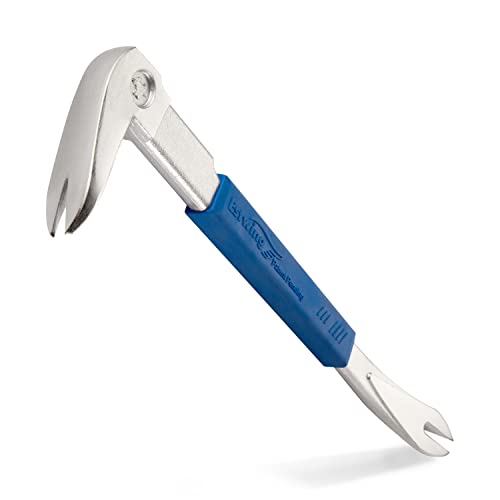
Estwing’s Pro Claw follows the Japanese nail puller pattern, with a thin, wide claw and a second pulling edge shaped to slip under nearly flush nail heads. At 9 inches long, the PC210G works in the tight spaces where a full-size flat bar cannot swing, such as inside cabinet carcasses, along stair treads and around window trim. Estwing drop forges the tool from fine tool steel and tempers it for durability, then adds a no-slip cushion grip that makes the short bar easier to control during careful pulls.
The claw geometry is the real advantage here. The forked end slips under brads and finish nails with very little prying room, and the polished face rides against wood instead of digging in, reducing dents in soft trim. This is a finishing tool rather than a demolition tool, so pair it with a longer bar for framing work. For carpenters and DIYers who remove and reinstall molding regularly, it is the most precise puller in this roundup.
Specs (per Estwing):
- Length: 9 in
- Material: Drop forged, tempered tool steel
- Grip: No-slip cushion grip
- Design: Japanese-style claw nail puller
- Model: PC210G
3. TEKTON Angled Tip Handled Pry Bar Set LSQ42103: three sizes for the shop

TEKTON’s set covers the middle ground with three handled bars at 12, 17 and 25 inches, so you pick the length that matches the job. The angled tips reach behind panels, trim clips and seals, and the molded handles give you a secure grip when your hands are greasy, which is why this style is popular for automotive work such as separating suspension parts, popping clips and lifting alternator brackets. TEKTON specifies chrome vanadium steel for the shafts with a black oxide finish.
Each handle ends in a steel striking cap, so a bar can be tapped with a hammer to start it under a stubborn part when hand pressure fails. The three sizes nest the leverage range nicely: the 12-inch bar for interior and under-dash work, the 17-inch for general engine-bay prying, and the 25-inch for suspension and exhaust jobs. The whole set weighs 3.42 lb per TEKTON’s listing, light enough to keep in a service cart drawer. If your prying happens around vehicles and machinery more than lumber, start here.
Specs (per TEKTON):
- Pieces: 3 bars at 12, 17 and 25 in
- Material: Chrome vanadium steel
- Finish: Black oxide
- Handles: Molded grips with steel striking caps
- Set weight: 3.42 lb
- Model: LSQ42103
4. Stanley FatMax Xtreme FuBar III 55-120: the demolition multi-tool

The FuBar III is Stanley’s answer to carrying four demolition tools in one hand. At 30 inches, this one-piece steel utility bar combines two pry ends, a nail puller slot, a hammer face for striking and resetting, and a board-grabbing jaw that twists and pulls nailed lumber apart. Stanley rates the design for the heavy end of remodeling: tearing out stud walls, stripping decking, splitting pallets and repositioning loosened boards.
The extra length and mass are the point. A 30-inch bar multiplies force far beyond what a flat bar can deliver, and the splayed pry end gets under sill plates and joists where a claw cannot fit. This is not a trim tool, and it will dent finished surfaces if you use it carelessly, so keep a wood block handy as a fulcrum pad. For contractors and serious renovators, the FuBar III replaces a wrecking bar, a cat’s paw and a framing hammer’s pulling duties in one tool roll slot.
Specs (per Stanley):
- Length: 30 in
- Construction: One-piece steel utility bar
- Functions: Pry ends, nail puller, hammer face, board-grabbing jaw
- Model: 55-120 (FatMax Xtreme FuBar III)
5. Estwing Gooseneck Wrecking Bar PRO EWB-36PS: maximum pulling power
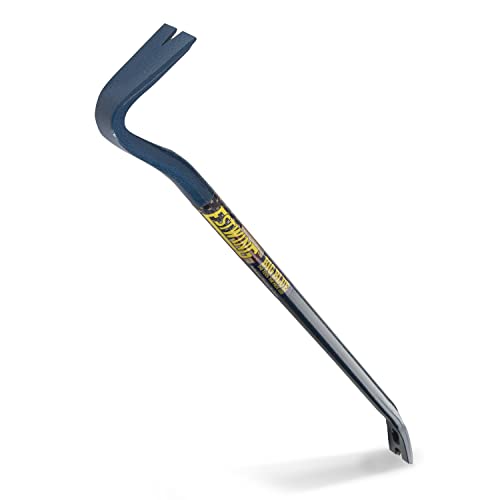
When the job is pulling a deck apart or stripping a roof, leverage wins, and the 36-inch EWB-36PS delivers the most of any bar in this guide. Estwing forges the bar from steel in the USA, with an angled chisel end that starts the separation between nailed boards and a gooseneck claw end that converts the long curve into straight-line pulling force on spikes and framing nails. The gooseneck shape also raises your hands above the work surface, so your knuckles stay clear of splintered lumber as the bar rocks.
A bar this long is a two-handed tool, and it rewards good technique: start the gap with the chisel end, work the claw under the nail head, then pull in a smooth arc and reset rather than jerking. The forged construction matters at this length because the shaft sees serious bending loads mid-pull. Homeowners with one big deck or fence project may find it more tool than they need, but anyone who demos framing regularly will reach for it first.
Specs (per Estwing):
- Length: 36 in
- Material: Forged steel
- Ends: Angled chisel end and gooseneck claw end
- Model: EWB-36PS
- Origin: Made in the USA
How the five compare
The Vaughan SuperBar and Estwing Pro Claw are both flat-pattern bars, but they sit at opposite ends of the control spectrum: the 15-inch Vaughan gives general leverage for remodeling, while the 9-inch Estwing trades force for precision around finished trim. The TEKTON set solves a different problem, giving mechanics three handled lengths with striking caps instead of one bare bar. At the heavy end, the Stanley FuBar III packs demolition functions into 30 inches, while the Estwing gooseneck’s extra six inches and curved claw produce the highest nail-pulling force here. Most complete toolkits end up with one bar from each end of this range.
FAQ
What size pry bar should I buy first?
A flat bar around 15 inches long is the most versatile first purchase. It is long enough to pull framing nails and lift flooring, yet flat and thin enough for baseboards and trim. Add a shorter nail puller later if you do finish work, and a longer wrecking bar when demolition projects appear.
What is the difference between a flat bar and a wrecking bar?
A flat bar is a thin, wide blade made to slip into seams and lift surfaces gently, often with nail slots at both ends. A wrecking bar is a thicker round or hex bar with a gooseneck claw, built for maximum pulling force on large nails and lumber, with little concern for the surface underneath.
Will a pry bar damage the surface I am prying against?
It can, which is why technique matters. Always slip a wood block or a stiff putty knife under the bar where it bears on a finished surface. The block spreads the load, protects paint and wood, and raises the fulcrum so you get more lift with less force.
How do I pull a nail without bending it or snapping it?
Seat the nail slot fully around the shank, keep the bar’s bearing point close to the nail, and pull in a smooth rolling motion. If the nail starts to bend, add a wood block under the head of the bar to raise the fulcrum and pull straighter. Wear eye protection, since a nail that does snap can fly.
Final verdict
For most households, the Vaughan SuperBar B215 is the single best pry bar to own: honest spring tempered steel, a rocker head that pulls nails cleanly, and a size that suits everything from baseboards to pallets. Finish carpenters should add the Estwing Pro Claw PC210G for delicate trim, mechanics should choose the TEKTON LSQ42103 set for its three handled lengths, and demolition work calls for the Stanley FuBar III or the 36-inch Estwing EWB-36PS gooseneck. Pick by the work you actually do, keep a wood block in the same toolbox, and any of these five bars will serve for decades.
Product and ASIN Reference
| Product | ASIN |
|---|---|
| Vaughan SuperBar B215 (VN45001) 15-Inch Flat Pry Bar | B00002N5VN |
| Estwing Pro Claw Nail Puller PC210G 9-Inch Pry Bar | B00DT0OYRI |
| TEKTON Angled Tip Handled Pry Bar Set LSQ42103 (12, 17, 25 in.) | B075MDC259 |
| Stanley FatMax Xtreme FuBar III (55-120) 30-Inch Utility Bar | B000VSSG3O |
| Estwing Gooseneck Wrecking Bar PRO EWB-36PS 36-Inch Pry Bar | B00DT0OY0A |
More from Amazon
Programs that pair well with the guide above. Offers and eligibility are set by Amazon and may change.
Free shipping on eligible items, Prime Video and more. Eligible new members can start with a free trial.
Start a Prime free trialAudiobooks and podcasts to listen to on the go. Eligible new members can start with a free trial.
Try Audible freeAd-free music streaming. Eligible new subscribers can start with a free trial.
Try Music Unlimited freeA free business account with business pricing and bulk-buying tools for work, shop or home office.
Create a business accountAs an Amazon Associate we earn from qualifying purchases.





Write Your Review
No reviews yet. Be the first to share your experience!