
Key takeaways
- Compare five maker-rated plasma cutters for home workshops, from 50-amp dual-voltage units to a 65-amp 4-in-1 model, plus safety and air-supply checks.
A plasma cutter earns its place in a home workshop when it turns jobs that used to mean a grinder, a cutoff wheel, and a long cleanup into a single pass along a straightedge. Brackets, trailer repairs, rusted fasteners, sheet-metal panels, and farm-gate hinges all cut faster and with less distortion than abrasive methods, and a compact inverter machine does it from ordinary shop power and a modest air compressor.
The five machines below are all inverter plasma cutters sold for home and light fabrication use. Four are 50-amp dual-voltage units, and one steps up to 65 amps with extra cutting modes. Every amperage, cut thickness, and duty cycle figure in this guide comes from the maker or its published listing data, and each product was checked against two independent sources before it was included.
As an Amazon Associate, we earn from qualifying purchases.
Quick answer
For most home workshops, the PrimeWeld CUT50DP is the balanced pick: a 50-amp non-touch pilot arc cutter with automatic dual voltage, a maker-rated half-inch clean cut, and a three-year warranty. The YESWELDER CUT-65DS PLUS suits thicker plate and adds gouging and marking modes, while the LOTOS LT5000D, bestarc BTC500DP, and ARCCAPTAIN CUT50 cover the same half-inch class with different displays, torches, and control layouts.
How to choose a plasma cutter
Output amperage and rated cut thickness. Makers rate two numbers: a clean cut, which leaves an edge close to finish quality, and a severance or maximum cut, which separates thicker metal slowly with a rougher edge. Match the clean-cut rating to the thickest stock cut regularly, not the severance number. A 50-amp machine with a maker-rated half-inch clean cut handles most home fabrication; step up to 60 or 65 amps if three-quarter-inch plate is routine.
Input voltage. Dual-voltage 110/220V machines run on a household outlet at reduced output and reach full rating on a 220V or 240V circuit. Check the maker’s stated output range on each voltage, because several models cap amperage well below the headline figure on 110V input.
Arc starting method. A non-touch pilot arc starts the arc without the torch touching the work, which helps on painted, rusty, or expanded metal and extends consumable life. Blowback start achieves a similar non-contact start without high-frequency interference. Older high-frequency and scratch-start designs cost less but demand cleaner metal and closer technique.
Duty cycle. The duty cycle states how many minutes in ten a machine can cut at a given amperage before resting, written as a percent figure by makers. A rating of 60 percent at full output is typical in this class and is ample for intermittent home work, but it matters for long production-style cuts.
Air supply. Every machine here needs an external compressor. Makers specify a pressure and flow, commonly around 70 to 75 PSI at roughly 5 CFM, plus dry air through a filter or regulator. An undersized compressor is the most common cause of poor cuts blamed on the cutter itself.
Torch and consumables. Note the torch model each machine ships with, because tips, electrodes, and shield cups are torch-specific. Widely sold torch families are easier to keep in consumables than proprietary ones.
Safety first: read this before cutting
Plasma cutting is one of the highest-risk processes in a home shop, and the guardrails below apply to every machine in this guide.
- Protect eyes, face, and skin. The plasma arc emits intense ultraviolet and infrared radiation. Wear a shade-rated face or eye shield appropriate for plasma cutting, gloves, and clothing that covers all exposed skin, as the maker directs. Never look at the arc with unprotected eyes, and warn anyone nearby before striking an arc.
- Control sparks and fire risk. The spark stream travels several feet and can roll into cracks and sawdust. Clear combustibles from the spark area, cut over a non-flammable surface, and keep a fire extinguisher rated for shop use within reach. Watch the area after cutting, because smoldering material can flare up later.
- Ventilate. Cutting produces fumes and gases that accumulate in enclosed spaces, especially from galvanized, painted, or coated metal. Work with ventilation running or outdoors, and position breathing zones out of the fume plume, as maker manuals direct.
- Ground the work properly. Clamp the ground or work clamp to clean, bare metal close to the cut, per the maker’s instructions, so the cutting circuit does not hunt for a path through bearings, wiring, or the operator.
- Never cut sealed or fuel-holding containers. Never cut sealed containers, tanks, drums, or lines that held fuel or chemicals, even if they appear empty; trapped vapors can ignite. This rule has no exceptions for home shops.
- Respect the electrics. These machines carry high open-circuit voltage. Keep the work area dry, inspect torch leads before use, and follow the maker’s lockout and maintenance instructions.
1. PrimeWeld CUT50DP

The CUT50DP is PrimeWeld’s 50-amp pilot arc machine and the most support-oriented pick in this group. Its non-touch pilot arc starts without contact, which suits the painted and rusty steel that dominates home repair work, and the automatic dual-voltage input switches between 110V and 220V without a selector. PrimeWeld rates it for a half-inch clean cut and a three-quarter-inch severance cut, and backs it with a three-year warranty, which is long for this class.
Specs
- Output: 50 amps
- Input: automatic dual voltage, 110V/220V, dual frequency 50/60 Hz, per the maker
- Arc start: non-touch pilot arc
- Clean cut: 1/2 inch, maker rated
- Severance cut: 3/4 inch, maker rated
- Air requirement: 75 PSI at 5 CFM, per the maker
- Included: plasma torch, ground clamp with cable, air regulator, air hose and fittings
- Warranty: 3 years, per the maker
2. LOTOS LT5000D
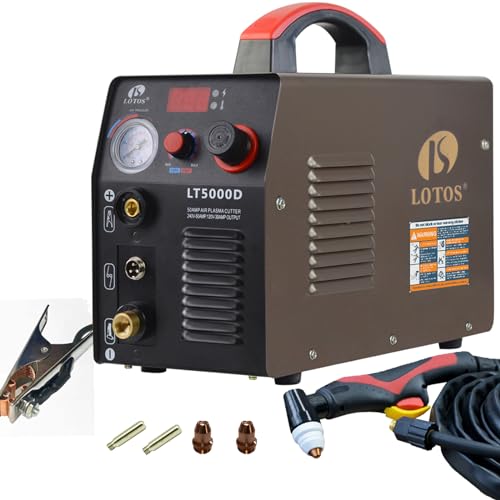
The LT5000D is the long-running budget benchmark in this class. The current listing describes a 50-amp inverter machine on dual voltage, with the upgraded version rated by the maker for a five-eighths-inch clean cut and a three-quarter-inch severance cut. It is a straightforward, knob-controlled cutter without the extra display modes of newer rivals, and its published duty cycle of 60 percent at 50 amps matches the class norm. Shoppers should note that LOTOS also sells the similarly named LTP5000D pilot arc model; the LT5000D listed here is the standard version.
Specs
- Output: 50 amps
- Input: dual voltage, 120V/240V, per the current listing
- Clean cut: 5/8 inch, maker rated
- Severance cut: 3/4 inch, maker rated
- Duty cycle: 60 percent at 50 amps, per maker specifications
- Weight: about 22.5 pounds, per listing data
- Model number: LT5000D (listing model CP-81S5-QR0Q)
3. bestarc BTC500DP (9th Generation)
The BTC500DP is bestarc’s 50-amp pilot arc cutter, sold in numbered generations; the current ninth-generation listing adds a large LED display and an air sensor that flags supply problems before they ruin a cut. The maker rates it for a half-inch clean cut and a three-quarter-inch maximum cut on dual voltage. Two-touch and four-touch trigger modes, adjustable post flow, and a mesh cutting mode round out a feature set aimed at beginners who want the machine to manage more of the setup.
Specs
- Output: 50 amps
- Input: dual voltage, 110V/220V
- Arc start: pilot arc
- Clean cut: 1/2 inch, maker rated
- Maximum cut: 3/4 inch, maker rated
- Display: large LED with air sensor, per the maker
- Trigger modes: 2T/4T, with post flow and mesh cutting mode
- Model number: BTC500DP 9GEN
4. YESWELDER CUT-65DS PLUS
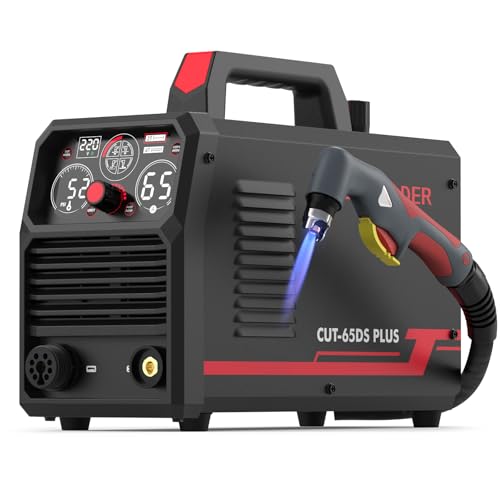
The CUT-65DS PLUS is the power pick. YesWelder rates it at up to 65 amps on 220V input, with output capped lower on 110V, and its blowback start fires a non-touch pilot arc without high-frequency interference near shop electronics. The 4-in-1 name refers to its cutting modes: plate cutting, grid cutting, gouging, and marking, which stretch one machine across repair and fabrication tasks. YesWelder’s own comparison rates the clean cut at five-eighths inch on 220V, with severance close to a full inch, and a duty cycle of 60 percent at 65 amps.
Specs
- Output: 20 to 65 amps at 220V; reduced range at 110V, per the maker
- Input: dual voltage, 110V/220V
- Arc start: blowback, non-high-frequency, non-touch pilot arc
- Modes: plate cutting, grid cutting, gouging, marking
- Clean cut: 5/8 inch at 220V, maker rated
- Severance cut: 63/64 inch at 220V, maker rated
- Duty cycle: 60 percent at 65 amps, per the maker
- Torch: IPT40, 13-foot lead, per the maker
- Weight: about 21.9 pounds, per the manual
5. ARCCAPTAIN CUT50
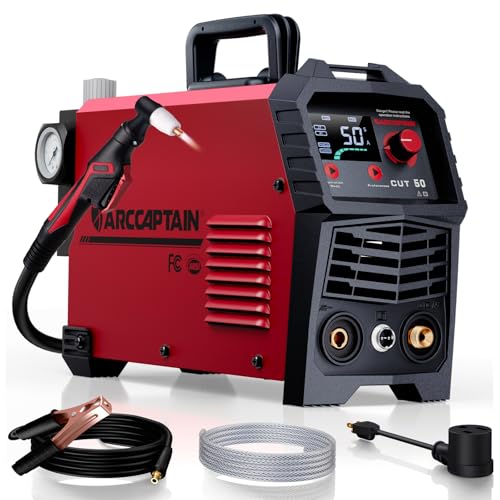
The CUT50 is ARCCAPTAIN’s entry in the 50-amp class, built around an IGBT inverter with an LED display, two-touch and four-touch trigger control, and adjustable post flow to cool the torch after each cut. The maker rates it for a half-inch clean cut on dual voltage, and the manual lists a duty cycle of 60 percent, with output spanning 20 to 50 amps on 220V input. It is the lightest machine here per the maker’s manual, which suits shops where the cutter moves between bench, driveway, and job site.
Specs
- Output: 50 amps (20 to 50 amps at 220V, per the manual)
- Input: dual voltage, 110V/220V
- Technology: IGBT inverter with LED display
- Clean cut: 1/2 inch, maker rated
- Duty cycle: 60 percent, per the maker’s manual
- Trigger modes: 2T/4T, with adjustable post flow
- Model number: CUT50
How the five compare
All five machines cut the same core materials: mild steel, stainless, aluminum, and copper, within their thickness ratings. The four 50-amp models cluster tightly on paper, each claiming a maker-rated clean cut around half an inch, so the real differences are in arc start, controls, and support. The CUT50DP and BTC500DP use pilot arc starts and add buyer-friendly extras, a long warranty on the PrimeWeld and an air sensor and large display on the bestarc. The LT5000D keeps controls simplest. The CUT50 matches the class on power while trimming weight. The CUT-65DS PLUS stands apart on output and modes, and it is the natural pick when plate regularly exceeds half an inch or gouging is on the task list. In every case, the compressor is half the system: budget for dry air at the maker’s stated flow, or none of these ratings will show up at the torch.
FAQ
What size air compressor do these plasma cutters need?
Makers in this class typically specify around 70 to 75 PSI at roughly 5 CFM, and the compressor must sustain that flow while cutting, not just reach it on the gauge. The PrimeWeld listing, for example, states 75 PSI at 5 CFM. Dry air matters as much as volume, so a filter or regulator, which several of these kits include, helps consumables last.
What is the difference between pilot arc, blowback, and high-frequency start?
A pilot arc starts a small arc inside the torch before the main cutting arc transfers, so cutting begins without touching the work. Blowback start is a mechanical method of firing that pilot arc without high-frequency energy, which avoids interference with nearby electronics. High-frequency start is an older approach that can disturb shop electronics and generally needs cleaner metal to start reliably.
Can a dual-voltage plasma cutter really cut on a 110V outlet?
Yes, within limits the maker states. Dual-voltage machines run on 110V or 120V input but cap output amperage lower, so the thick-cut ratings apply to 220V or 240V circuits. The YESWELDER manual, for instance, lists a reduced output range on 110V. Plan on thin sheet and light plate from a household outlet, and use the higher-voltage circuit for work near the clean-cut rating.
What safety gear is required for plasma cutting?
At minimum, follow each maker’s manual: a shade-rated face or eye shield for plasma cutting, gloves, and full skin coverage against ultraviolet radiation and sparks, plus ventilation for fumes. Keep a suitable fire extinguisher nearby, clear combustibles from the spark zone, clamp the ground to clean metal near the cut, and never cut sealed containers or anything that held fuel or chemicals.
Final verdict
For a single home-workshop machine, the PrimeWeld CUT50DP combines pilot arc starting, automatic dual voltage, and the strongest warranty in this group. The YESWELDER CUT-65DS PLUS is the upgrade path for thicker plate and gouging work, while the LOTOS LT5000D, bestarc BTC500DP, and ARCCAPTAIN CUT50 give the same half-inch class three different flavors of simple, feature-led, and lightweight. Whichever model lands on the bench, pair it with an adequate compressor and treat the safety section above as part of the purchase, not an accessory.
Product and ASIN Reference
| Product | ASIN |
|---|---|
| PrimeWeld CUT50DP 50A Air Inverter Plasma Cutter | B01AB0JP36 |
| LOTOS LT5000D 50A Plasma Cutter | B004VFJL14 |
| bestarc BTC500DP 9GEN Pilot Arc Plasma Cutter | B0D7CLNPWD |
| YESWELDER CUT-65DS PLUS 65A Plasma Cutter | B0FMDPKL83 |
| ARCCAPTAIN CUT50 50A Plasma Cutter | B0B5N7K2DJ |
FAQ
What size air compressor do these plasma cutters need?
What is the difference between pilot arc, blowback, and high-frequency start?
Can a dual-voltage plasma cutter really cut on a 110V outlet?
What safety gear is required for plasma cutting?
More from Amazon
Programs that pair well with the guide above. Offers and eligibility are set by Amazon and may change.
Free shipping on eligible items, Prime Video and more. Eligible new members can start with a free trial.
Start a Prime free trialAudiobooks and podcasts to listen to on the go. Eligible new members can start with a free trial.
Try Audible freeAd-free music streaming. Eligible new subscribers can start with a free trial.
Try Music Unlimited freeA free business account with business pricing and bulk-buying tools for work, shop or home office.
Create a business accountAs an Amazon Associate we earn from qualifying purchases.



Write Your Review
No reviews yet. Be the first to share your experience!