
Our Short List of 3
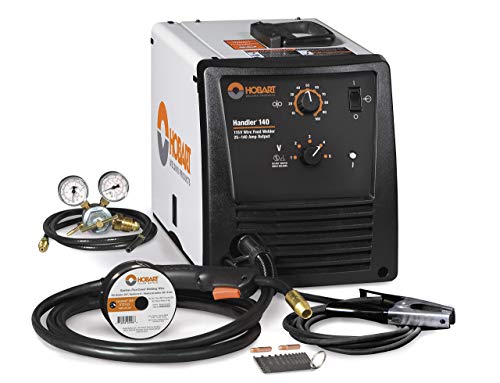
- Processes: MIG and flux-cored
- Input power: 115 volt
- Output range: 25 to 140 amps
- Rated output: 90 amps at a 20 percent duty cycle
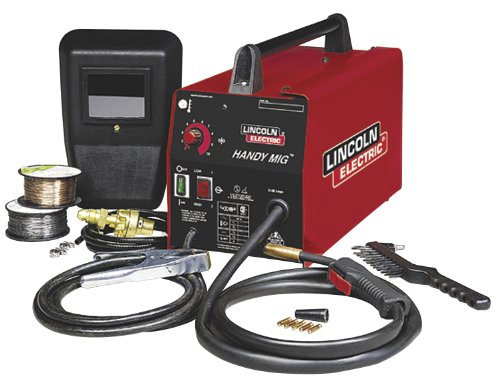
- Processes: MIG and flux-cored
- Input power: 115 volt
- Output range: 35 to 88 amps
- Rated output: 70 amps at a 20 percent duty cycle
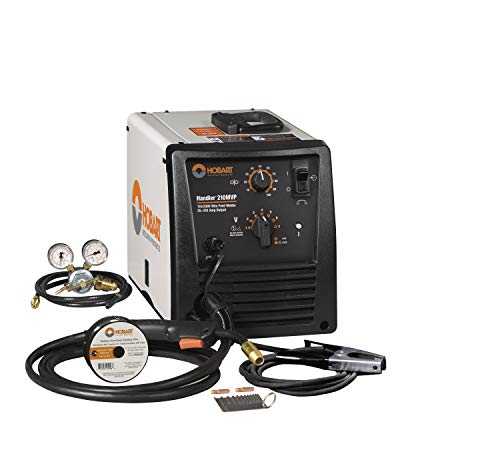
- Processes: MIG and flux-cored
- Input power: 115 volt or 230 volt with MVP plugs
- Output range: 25 to 140 amps on 115 volt; 25 to 210 amps on 230 volt
- Rated output: 90 amps at a 20 percent duty cycle on 115 volt; 150 amps at a 30 percent duty cycle on 230 volt
All 4 Picks at a Glance
| Product | Specs | Action |
|---|---|---|
| 1. Hobart Handler 140 (model 500559) |
| Check price on Amazon |
| 2. Lincoln Electric Handy MIG (K2185-1) |
| Check price on Amazon |
| 3. Hobart Handler 210 MVP (model 500553) |
| Check price on Amazon |
 4. PrimeWeld MIG180 |
| Check price on Amazon |
Key takeaways
- Compare five verified MIG welders for home workshops, from compact 115V units to dual-voltage multi-process machines, with maker specs and safety notes.
A home workshop MIG welder has to cover a wide spread of jobs: patching a mower deck, building a steel workbench frame, repairing a trailer fender, or tacking up brackets for shelving. The machines below were chosen because each one fills a clear role, from a compact 115 volt unit that runs on a household circuit to dual-voltage multi-process machines that also stick weld and run DC TIG.
Every specification in this guide comes from the maker of the machine, including output ranges, duty cycles, and wire sizes. Where two models look similar on paper, the notes point out the practical differences that matter in a small shop, such as input voltage, spool gun support, and how much steel the maker rates the machine to weld in a single pass.
As an Amazon Associate, we earn from qualifying purchases.
Quick answer
For most home workshops, the Hobart Handler 210 MVP is the most flexible single choice, with dual-voltage input, a maker rating up to 3/8 inch steel, and spool gun support. On a tighter brief, the Hobart Handler 140 and Lincoln Handy MIG run on household 115 volt power, while the PrimeWeld MIG180 and Lincoln POWER MIG 210 MP add stick and TIG processes.
How to choose a MIG welder for a home workshop
Start with your power supply. A 115 or 120 volt machine plugs into a standard household circuit and is the simplest route for light steel work, but the makers of these units rate them for thinner material. A dual-voltage machine also runs on 230 or 240 volt power, which raises its output and duty cycle for thicker sections, so it suits a shop that already has, or can add, a higher-voltage receptacle of the type the maker specifies.
Next, look at the maker’s rated output and duty cycle rather than the headline amperage alone. Duty cycle describes how long a machine can weld at a given output within a ten-minute period before it needs to rest, and makers state it at a specific amperage. A machine rated at 150 amps with a 30 percent duty cycle will handle sustained work on medium steel very differently from one rated at 90 amps with a 20 percent duty cycle, even if both advertise a similar maximum.
Then match the machine to your material. Makers rate each model for a steel thickness range in a single pass, and thicker work than that calls for multiple passes or a bigger machine. If you plan to weld aluminum, check whether the maker supports a spool gun, because soft aluminum wire feeds poorly through a standard torch lead. Finally, decide whether you only need MIG and flux-cored welding, or whether stick and TIG processes in the same box are worth having for outdoor repairs and finer work.
Safety first, every time you weld
Welding safety is not optional, and the makers of every machine in this guide print the same core warnings. Weld only with adequate ventilation or fume extraction running, because welding fumes should never be breathed in a closed garage. Wear a properly rated welding helmet and cover all exposed skin, since the arc gives off intense ultraviolet light that burns skin and eyes quickly. Clear the area of combustibles, including rags, solvents, and sawdust, and keep a fire watch for a while after you finish, because sparks can smoulder unseen. If you use shielding gas, secure the cylinder upright and chained so it cannot tip over. Supply power only on the circuit the maker specifies for the machine, and never weld on a sealed container or on anything that once held fuel, even if it looks empty and clean.
1. Hobart Handler 140 (model 500559)
- Processes: MIG and flux-cored
- Input power: 115 volt
- Output range: 25 to 140 amps
- Rated output: 90 amps at a 20 percent duty cycle
The Handler 140 is Hobart’s long-running answer for a shop that only has household power. It runs on 115 volt input and covers MIG and flux-cored welding, with a five-position voltage control and a wire feed speed control that Hobart pairs with a set-up chart inside the door. Hobart rates it for steel from 24 gauge up to 1/4 inch, which covers most repair and light fabrication work a home shop sees.
Choose this one if you want a straightforward, gas-ready MIG machine on household power and your projects stay at or under 1/4 inch steel. Skip it if you regularly weld thicker sections or want a second process in the same box.
2. Lincoln Electric Handy MIG (K2185-1)
- Processes: MIG and flux-cored
- Input power: 115 volt
- Output range: 35 to 88 amps
- Rated output: 70 amps at a 20 percent duty cycle
The Handy MIG is the smallest machine here, and Lincoln Electric positions it for light repair work on thin steel. It plugs into a 115 volt, 20 amp outlet, weighs 46 pounds, and welds with solid wire and gas or with self-shielded flux-cored wire. Lincoln rates it for mild steel from 24 gauge up to 1/8 inch, and the kit includes a gun, work clamp, gas nozzle, regulator and hose, and a hand shield.
Choose this one for thin sheet, brackets, and small repairs where portability matters more than output. Skip it if you need to weld 1/4 inch steel in a single pass, because that sits beyond the maker’s rating for this model.
3. Hobart Handler 210 MVP (model 500553)
- Processes: MIG and flux-cored
- Input power: 115 volt or 230 volt with MVP plugs
- Output range: 25 to 140 amps on 115 volt; 25 to 210 amps on 230 volt
- Rated output: 90 amps at a 20 percent duty cycle on 115 volt; 150 amps at a 30 percent duty cycle on 230 volt
The Handler 210 MVP is the dual-voltage step up in Hobart’s line. Its Multi-Voltage Plug system ships with both a 115 volt plug and a 230 volt plug, so the same machine runs in a home garage today and on a higher-voltage circuit later. Output rises with the input: Hobart rates it at 25 to 140 amps on 115 volt power and 25 to 210 amps on 230 volt power, with a single-pass rating up to 3/8 inch steel. It is also the spool-gun-ready model in the Hobart pair here, accepting the optional SpoolRunner 100 spool gun for aluminum wire.
Choose this one if you want one MIG machine that can grow with your shop’s power supply and handle thicker steel. Skip it if you need stick or TIG processes, because this is a MIG and flux-cored machine only.
4. PrimeWeld MIG180
- Processes: MIG, flux-cored, stick, and lift TIG
- Input power: 120 volt or 240 volt dual voltage
- MIG output range: 30 to 120 amps on 110 volt input; 30 to 180 amps on 220 volt input
- Duty cycle: rated at 30 percent at 180 amps
The MIG180 is a multi-process inverter machine that covers MIG, flux-cored, stick, and lift TIG welding in one 55 pound unit. It runs on dual-voltage 120 or 240 volt input, and PrimeWeld’s manual lists MIG output of 30 to 120 amps on 110 volt input and 30 to 180 amps on 220 volt input. A spool gun is included in the box for aluminum MIG wire, which removes the usual extra purchase before you can start on aluminum projects.
Choose this one if you want several processes plus an included spool gun without moving up to a large shop machine. Skip it if you prefer tapped voltage settings and a transformer-style control layout over an inverter menu.
5. Lincoln Electric POWER MIG 210 MP (K3963-1)
The POWER MIG 210 MP is Lincoln Electric’s multi-process entry, covering MIG, flux-cored, DC stick, and DC TIG from a 40 pound box with a color display and push-and-turn controls. It accepts dual-voltage 120 or 230 volt input. Lincoln rates it at 100 amps with a 40 percent duty cycle on 120 volt power and 200 amps with a 25 percent duty cycle on 230 volt power, with a single-pass rating up to 3/8 inch steel. For aluminum, it accepts the optional Magnum PRO 100SG spool gun.
Specs (per Lincoln Electric):
- Processes: MIG, flux-cored, DC stick, and DC TIG
- Input power: 120 volt or 230 volt dual voltage
- Output range: 20 to 140 amps on 120 volt; up to 220 amps on 230 volt
- Rated output: 100 amps at a 40 percent duty cycle on 120 volt; 200 amps at a 25 percent duty cycle on 230 volt
- Weld capacity: 24 gauge to 3/8 inch steel
- Wire feed speed: 50 to 500 inches per minute
- Weight: 40 pounds
Choose this one if you want a light multi-process machine from a major maker, with the strongest duty cycle figures here on household power. Skip it if the spool gun needs to be in the box, because on this model it is an optional extra.
How the five compare
On household power alone, the Handler 140 and Handy MIG are the simplest path, and they split by capacity: Hobart rates the 140 for up to 1/4 inch steel, while Lincoln rates the Handy MIG for up to 1/8 inch. The dual-voltage machines, the Handler 210 MVP, MIG180, and POWER MIG 210 MP, all reach a maker rating of 3/8 inch steel when fed with higher-voltage input, and their output and duty cycle figures step up accordingly.
Process coverage is the other dividing line. The two Hobart Handler models and the Handy MIG are MIG and flux-cored machines only. The PrimeWeld MIG180 and the Lincoln POWER MIG 210 MP add stick and DC TIG, which suits shops that repair outdoor equipment or want one machine for everything. For aluminum, the MIG180 includes its spool gun, while both the Handler 210 MVP and the POWER MIG 210 MP take an optional spool gun from their makers. Weight also spreads widely, from 40 pounds for the Lincoln multi-process unit to 79 pounds for the Handler 210 MVP, which matters if the welder moves between a bench and a vehicle often.
FAQ
Can a 120 volt MIG welder handle 1/4 inch steel?
It depends on the model, so check the maker’s rating rather than the amperage on the box. Hobart rates the Handler 140, a 115 volt machine, for up to 1/4 inch mild steel, while Lincoln rates the smaller Handy MIG for up to 1/8 inch. Thicker work on a small machine may need multiple passes with proper joint preparation.
What does duty cycle actually mean?
Duty cycle is the share of a ten-minute period that a machine can weld at a stated output before it must cool, expressed by the maker as a percent at a specific amperage. A rating of 150 amps at a 30 percent duty cycle means three minutes of welding at 150 amps out of every ten. Higher duty cycles suit longer, continuous runs.
Should I use shielding gas or flux-cored wire?
Makers design these machines for both. Solid wire with shielding gas gives cleaner welds with less spatter and is the usual choice indoors. Self-shielded flux-cored wire needs no gas cylinder and tolerates outdoor air movement better, but it leaves slag to chip and more spatter to clean. Many home shops keep both on hand.
When is a spool gun worth adding?
A spool gun helps when you weld aluminum with a MIG machine, because soft aluminum wire can tangle when pushed through a long standard torch lead. The gun carries a small spool at the handle, shortening the feed path. If aluminum is a regular material for you, a machine with spool gun support, or one included, saves frustration.
Final verdict
Pick the Hobart Handler 210 MVP if you want the most capable dedicated MIG and flux-cored machine here, with dual-voltage flexibility and a spool gun option. Pick the PrimeWeld MIG180 or the Lincoln POWER MIG 210 MP if stick and TIG processes matter as much as MIG, with the PrimeWeld standing out for its included spool gun and the Lincoln for its light weight and duty cycle on household power. Pick the Hobart Handler 140 for proven 115 volt MIG work up to 1/4 inch steel, and the Lincoln Handy MIG for the lightest, simplest option for thin steel repairs.
Product and ASIN Reference
| Product | ASIN |
|---|---|
| Hobart Handler 140 MIG Welder (500559) | B009X43F38 |
| Lincoln Electric Handy MIG Welder (K2185-1) | B000QFNZ74 |
| Hobart Handler 210 MVP MIG Welder (500553) | B004USV5UC |
| PrimeWeld MIG180 Mig Welder | B09WH4NFPT |
| Lincoln Electric POWER MIG 210 MP (K3963-1) | B00OGW47Q6 |
More from Amazon
Programs that pair well with the guide above. Offers and eligibility are set by Amazon and may change.
Free shipping on eligible items, Prime Video and more. Eligible new members can start with a free trial.
Start a Prime free trialAudiobooks and podcasts to listen to on the go. Eligible new members can start with a free trial.
Try Audible freeAd-free music streaming. Eligible new subscribers can start with a free trial.
Try Music Unlimited freeA free business account with business pricing and bulk-buying tools for work, shop or home office.
Create a business accountAs an Amazon Associate we earn from qualifying purchases.


Write Your Review
No reviews yet. Be the first to share your experience!