
Our Short List of 3
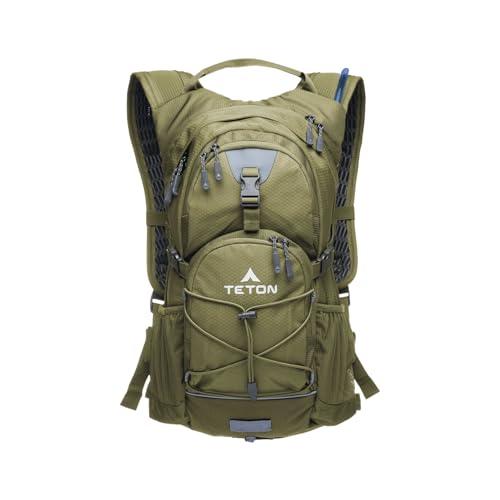
- Reservoir: 2L bladder, included (per TETON Sports)
- Pack volume: 18L (per TETON Sports)
- Rain cover: sewn-in (per TETON Sports)
- Fit: adjustable straps, listed for men and women

- Reservoir: 2.5L HydraPak reservoir, included (per Thule)
- Cargo volume: 8L (per Thule)
- Part number: 3204154 (Black)
- Lineup: also sold in 3L and 6L sizes (per Thule)

- Reservoir: Crux 2L with Quicklink, included (per CamelBak)
- Cargo volume: 5L, 7L total (per CamelBak)
- Back panel: Air Support Light (per CamelBak)
- Weight: 215 g (per CamelBak)
All 4 Picks at a Glance
| Product | Specs | Action |
|---|---|---|
| TETON Sports Oasis 18L |
| Check price on Amazon |
| Thule Vital 8L |
| Check price on Amazon |
| CamelBak Rogue Light 7 |
| Check price on Amazon |
 CamelBak Classic Light 70 oz |
| Check price on Amazon |
Key takeaways
- Hydration packs with reservoirs included for hiking, running and cycling, compared by maker-stated reservoir size, cargo volume, fit and carry features.
A hydration pack only earns its name when the reservoir comes in the box. Plenty of daypacks are merely hydration compatible, which means the bladder is a separate purchase and the hose routing is an afterthought. The five packs in this guide are hydration-specific designs sold with a reservoir included, sized and shaped for three different jobs: day hiking, trail running, and cycling. Each one below lists its reservoir capacity, cargo volume, and fit details exactly as its maker states them.
The picks span a wide range. The TETON Sports Oasis 18L is a full daypack with a rain cover sewn in. The Thule Vital 8L is a bike-first design with the largest reservoir here. The Nathan Pinnacle Pro 12L is a running vest that fits close to the torso, while the CamelBak Rogue Light 7 and Classic Light strip a bike pack down to the essentials in two different sizes. Matching the pack style to your main activity matters more than chasing the biggest numbers.
As an Amazon Associate, we earn from qualifying purchases.
Quick answer
For most hikers, the TETON Sports Oasis 18L is the balanced pick, pairing a 2-liter bladder with daypack storage and a sewn-in rain cover. Cyclists wanting more water should look at the Thule Vital 8L and its 2.5-liter reservoir. The Nathan Pinnacle Pro 12L suits runners wanting a vest fit, the CamelBak Rogue Light 7 adds cargo room for longer rides, and the Classic Light is the minimalist option.
How to choose a hydration pack
Start with the reservoir. The packs here run from 1.6 to 2.5 liters as the makers state, and the right size depends on the distance between your refill points, not on the length of the whole outing. A vest or bike pack with a 2-liter reservoir covers short, fast efforts, while hikers on dry trails with no water sources usually step up to the larger options. Every reservoir figure in this guide is maker-stated, because brands measure and describe their bladders differently.
Next, weigh cargo volume against fit style. A conventional daypack like the Oasis 18L carries layers, food, and a first aid kit in a bucket-style main compartment. A running vest like the Pinnacle Pro trades that open space for many small pockets you can reach without stopping, and it fits by chest size rather than torso length. Bike packs sit between the two, with compact shapes, ventilated back panels, and hose routing designed around a riding position.
Finally, check the details that decide daily usability: whether the bite valve has an on-off switch, whether the reservoir opening is wide enough for ice and cleaning brushes, and whether the hose detaches for filling. Makers advise rinsing and fully drying reservoirs after trips to prevent off tastes, and a wide opening makes that job much easier. A hydration pack is not a safety device, and it does not replace planning your water carry around the refill points on your route.
TETON Sports Oasis 18L
- Reservoir: 2L bladder, included (per TETON Sports)
- Pack volume: 18L (per TETON Sports)
- Rain cover: sewn-in (per TETON Sports)
- Fit: adjustable straps, listed for men and women
The Oasis 18L is the most conventional daypack in this guide. TETON Sports lists 18 liters of storage alongside the included 2-liter bladder, which makes it the pick for hikers who carry real gear: a shell, a lunch, and the ten essentials, with water riding in its own compartment. The listing describes an athletic cut with adjustable straps sized to fit both men and women.
Its signature extra is a rain cover sewn into the pack, per TETON Sports, so it cannot be left behind or lost on the trail. The bladder uses a push-lock cushioned bite valve on a kink-free tube, per the maker. This Olive listing is model 3218LV. Runners will find the Oasis bulkier than a vest, but for hiking and mixed use it is the most versatile shape here.
Thule Vital 8L
- Reservoir: 2.5L HydraPak reservoir, included (per Thule)
- Cargo volume: 8L (per Thule)
- Part number: 3204154 (Black)
- Lineup: also sold in 3L and 6L sizes (per Thule)
The Vital 8L is Thule’s bike-first entry, and it carries the largest reservoir in this guide: a 2.5-liter HydraPak reservoir included in the box, per Thule. The 8-liter cargo volume is sized for all-day rides, with room for a jacket, tools, and food, and the Black version is part number 3204154. Thule also sells the Vital in 3-liter and 6-liter sizes for shorter rides.
Because it was designed around a riding position, the Vital keeps its load compact and close to the back. Hikers who want a bucket-style main compartment should look at the Oasis instead, but cyclists who regularly run dry on a 2-liter bladder will appreciate the extra capacity here. Specs below are Thule’s own figures for the 8L model.
Nathan Pinnacle Pro 12L
The Pinnacle Pro 12L is a running vest, and it plays by different rules. Nathan lists 12 liters of gear capacity wrapped in a close, compression-style fit, with an insulated 1.6-liter hourglass bladder included. The Quick-Fit adjustment system and sternum slider cords let the wearer fine-tune the fit while moving, per Nathan, and sizing runs from XS to XL by chest measurement rather than torso length.
Storage is spread across front power-mesh pockets sized for 20-ounce soft flasks (flasks are not included, per Nathan), side pass-through pockets, a large back pocket, and a diagonal zip pocket, with four pole keepers for trekking poles. Nathan states a weight of 8.8 ounces without the bladder. This Black listing is size Large. Hikers who want one open compartment should choose a daypack instead; runners who hate bounce will prefer this vest layout.
Specs
- Reservoir: 1.6L insulated hourglass bladder, included (per Nathan)
- Gear capacity: 12L (per Nathan)
- Fit: unisex XS to XL, Quick-Fit adjustment (per Nathan)
- Weight: 8.8 oz without bladder (per Nathan)
- Storage: front power-mesh pockets, diagonal zip pocket, pole keepers
CamelBak Rogue Light 7
- Reservoir: Crux 2L with Quicklink, included (per CamelBak)
- Cargo volume: 5L, 7L total (per CamelBak)
- Back panel: Air Support Light (per CamelBak)
- Weight: 215 g (per CamelBak)
The Rogue Light 7 is CamelBak’s mid-size bike pack: 5 liters of cargo plus the included 2-liter Crux reservoir, for 7 liters total, per CamelBak. That extra cargo room over the Classic Light below is what makes it the better choice for longer rides, with space for a layer, tools, and food. The Air Support Light back panel and ventilated harness are CamelBak’s ventilation setup for the Light series.
CamelBak lists a weight of 215 grams and a torso fit range of 38 to 53 centimeters, and the Crux reservoir uses the maker’s Quicklink disconnect so the tube can be separated for filling and cleaning. This listing is the Latigo Teal colorway. Riders who carry almost nothing can save weight with the Classic Light; riders who pack for changing weather will use the Rogue Light’s extra room.
CamelBak Classic Light 70 oz
- Reservoir: Crux 2L with Quicklink, included (per CamelBak)
- Cargo volume: 2L (per CamelBak)
- Back panel: Air Support Light (per CamelBak)
- Weight: 410 g (per CamelBak)
The Classic Light is the minimalist of the group. CamelBak pairs the same style of 2-liter Crux reservoir with Quicklink disconnect with just 2 liters of cargo space, enough for keys, a phone, and a light layer stashed under the bungee overflow. It is built for short rides and fast hikes where a full daypack would be dead weight.
Per CamelBak, the pack weighs 410 grams and measures 40 by 16 by 23 centimeters, with an Air Support Light back panel and a ventilated harness. Reflective details are part of the design, per the maker. This listing is the Black colorway. Anyone who regularly carries more than the basics should step up to the Rogue Light 7 or the Oasis 18L instead.
Who it’s for / who should skip
These five packs are for hikers, runners, and cyclists who want the reservoir included and matched to the pack from the start, rather than buying a bladder separately and threading it through a general daypack. Choose by activity first: the Oasis 18L for hiking with real cargo, the Pinnacle Pro 12L for running, and the Thule or CamelBak models for riding.
Skip this category if you only carry water on short walks, where a bottle is simpler, or if you need overnight capacity, which calls for a larger backpacking pack with a hydration sleeve. Also skip the vest if you dislike a close, sized fit, and skip the minimalist bike packs if your typical outing includes bulky layers or a full lunch. None of these packs is a safety device, and none replaces checking where you can refill along your route.
How these compare with the alternatives
Hydration-compatible daypacks from general outdoor brands cost less up front, but the reservoir is a separate purchase and hose routing varies, so the total often ends up similar to a pack that includes the bladder. Larger backpacking packs add frames and hip belts for heavy loads, which is more support than a day outing needs. Waist packs and lumbar designs move the water low and leave the back bare, but they cap out at small volumes.
Bottles in a regular backpack remain the cheapest route, at the cost of stopping to drink. Handheld bottles and flask-only vests suit short runs but carry far less water than the reservoir packs here. The five packs above sit in the middle: activity-specific shapes with the reservoir in the box and capacities stated by their makers.
FAQ
What size reservoir do I need?
Match the reservoir to your longest stretch between refill points. Makers position 2-liter reservoirs for shorter outings and larger ones, like the 2.5-liter reservoir in the Thule Vital 8L, for longer gaps between water sources. In hot weather or on dry trails, plan refills conservatively and carry more than the minimum you expect to use.
Can one pack work for hiking, running, and cycling?
A daypack-style model like the Oasis 18L can cover all three at a casual pace. Dedicated shapes work better at speed: a running vest such as the Pinnacle Pro stays close and resists bouncing, while bike packs like the Rogue Light are shaped and ventilated for a riding position. Fit style, not reservoir size, is what separates the three designs.
Do these packs keep water cold?
Only where the maker says so. Nathan describes the Pinnacle Pro’s bladder as insulated; the other makers here make no insulation claims for these models, and no pack here guarantees a water temperature. Starting with cold water and ice, where the reservoir opening allows it, is the practical approach, and makers’ care guidance still applies.
How should I clean and store the reservoir?
Follow the maker’s care instructions: empty the reservoir after the trip, wash it with warm water and mild soap or the maker’s cleaning tablets, rinse well, and let it dry completely before storing it with the cap open. Makers advise cleaning and drying after each trip to prevent off tastes, and quick-disconnect tubes, like the Quicklink designs above, make the job easier.
Final verdict
Pick the TETON Sports Oasis 18L for hiking and general use, where its daypack storage and sewn-in rain cover earn their keep. Choose the Thule Vital 8L if you ride long and want the biggest reservoir here. Take the Nathan Pinnacle Pro 12L for running, the CamelBak Rogue Light 7 for rides that need real cargo room, and the Classic Light when the lightest, simplest carry is the whole point. Whichever you choose, size the reservoir to your longest stretch between refills.
Product and ASIN Reference
| Product | ASIN |
|---|---|
| TETON Sports Oasis 18L | B09DRT16P9 |
| Thule Vital 8L | B09MGDNYFK |
| Nathan Pinnacle Pro 12L | B0DSZ4CVR3 |
| CamelBak Rogue Light 7 | B07KPCD4Z8 |
| CamelBak Classic Light 70 oz | B0BDJX4H57 |
More from Amazon
Programs that pair well with the guide above. Offers and eligibility are set by Amazon and may change.
Free shipping on eligible items, Prime Video and more. Eligible new members can start with a free trial.
Start a Prime free trialAudiobooks and podcasts to listen to on the go. Eligible new members can start with a free trial.
Try Audible freeAd-free music streaming. Eligible new subscribers can start with a free trial.
Try Music Unlimited freeA free business account with business pricing and bulk-buying tools for work, shop or home office.
Create a business accountAs an Amazon Associate we earn from qualifying purchases.
Write Your Review
No reviews yet. Be the first to share your experience!