
Our Short List of 3
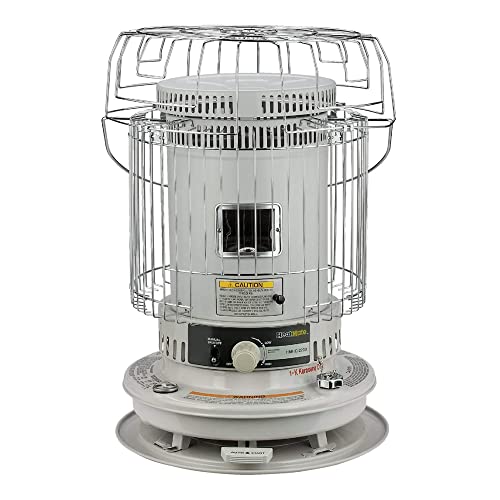
- Output: 23,500 BTU per hour (maker rating)
- Type: Convection, wick fed
- Coverage: up to 1,000 square feet (maker rating)
- Tank: 1.9 gallons
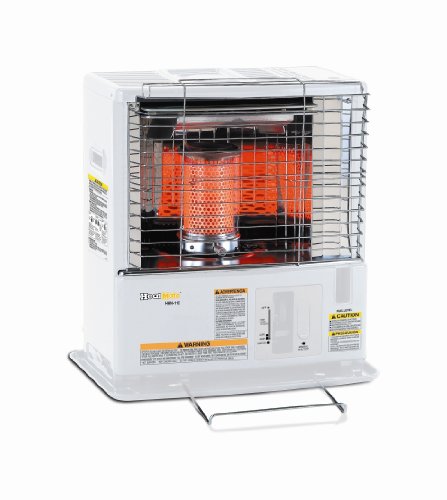
- Output: 10,000 BTU per hour (maker rating)
- Type: Radiant with reflector, wick fed
- Coverage: up to 400 square feet (maker rating)
- Tank: 1.2 gallons, lift-out cartridge

- Output: 80,000 BTU per hour (maker rating)
- Type: Forced air torpedo, fan driven
- Coverage: up to 1,900 square feet (maker rating)
- Tank: 5.0 gallons
All 3 Picks at a Glance
| Product | Specs | Action |
|---|---|---|
| 1. Sengoku HeatMate HMC-23K |
| Check price on Amazon |
| 3. Sengoku HeatMate HMN-110 |
| Check price on Amazon |
| 5. Dyna-Glo Delux KFA80DGD |
| Check price on Amazon |
Key takeaways
- Compare the best kerosene heaters by BTU output, tank size and run time, from indoor convection models to a forced-air torpedo for big shops.
When the power goes out in the middle of a cold snap, or when a garage or cabin has no ductwork at all, a kerosene heater keeps working because it carries its own fuel supply. Modern wick-fed models light with a push button, need no electricity, and burn slowly enough to run for many hours on a single tank. Forced-air torpedo models sit at the other end of the range, pushing large volumes of heated air through workshops and job sites. This guide compares five heaters from Sengoku and Dyna-Glo across both styles, using each maker’s own published output, tank and run time figures.
Every heater below burns kerosene as its primary fuel, and every output, tank size and run time figure is the number the manufacturer publishes, not an estimate. The list runs from a compact radiant unit sized for one room to an 80,000 BTU forced-air machine, so the main decision is how much space you need to warm and how the heater fits your routine. Read the safety section before the product sections, because ventilation and fuel handling matter more in this category than with almost any other heater type.
As an Amazon Associate, we earn from qualifying purchases.
Quick answer
For most homes, a convection heater in the 23,500 to 23,800 BTU class, such as the Sengoku HeatMate HMC-23K or Dyna-Glo WK24BK, heats the most space per tank. For one room, the 10,000 BTU Sengoku HeatMate HMN-110 radiant or the Dyna-Glo WK11C8 is easier to place. For workshops, the Dyna-Glo Delux KFA80DGD forced-air heater moves far more heat.
Safety first: read this before lighting any kerosene heater
Burning kerosene produces carbon monoxide, an odorless gas that can build up in an enclosed space. Run any of these heaters only with the ventilation the maker requires, and never in a sealed room. Keep a window opened to the width the manual specifies, or keep the door to an adjoining room open, whenever the room is small for the heater’s rating. Install a battery powered carbon monoxide alarm in any room where a kerosene heater runs, and test it on the schedule the alarm maker sets.
Fuel choice matters just as much. Burn only the grade the heater maker specifies: the indoor wick models below call for clear 1-K kerosene. Never put gasoline in a kerosene heater, and do not use dyed fuel unless the maker allows it, because the wrong fuel can foul the wick and change how the burner behaves. The forced-air Dyna-Glo is the exception in this list, since its maker rates it for several fuels.
Refuel only outdoors, and only after the heater has cooled down completely. Keep the clearances from walls, furniture, curtains and stored materials that the manual lists, and treat the top and grill as burn hazards while the heater runs and while it cools. Never leave a running heater unattended, and never use one while sleeping: shut it off before bed, every time.
How to choose a kerosene heater
Start with the heating style. Convection heaters warm the air around a cylindrical burner and let it circulate, which suits whole rooms and open-plan spaces. Radiant models aim heat in one direction through a reflector, which suits a single occupied area such as a workbench corner or a seating area. Forced-air torpedo heaters use a fan to throw heated air across large, open, well-ventilated spaces like shops and construction sites, and they are far louder than wick models.
Next, match output to the space using the maker’s coverage figure, then check the tank. A larger tank usually means fewer trips outside to refuel, and the maker’s run time per fill tells you whether a heater can cover a full evening or an overnight outage window while someone is awake to watch it. Wick models light from batteries and need no outlet, which is why they work during blackouts. The torpedo model needs a standard outlet for its fan and ignition, so it stops being useful the moment the power fails.
Finally, look at the safety hardware. A tip-over switch and an automatic shutoff are worth having on any indoor model, and a fuel gauge saves guesswork. Plan on wick maintenance as well: makers sell replacement wicks for every heater here, and a trimmed, clean wick is what keeps the flame even and the odor low.
The heaters
1. Sengoku HeatMate HMC-23K
- Output: 23,500 BTU per hour (maker rating)
- Type: Convection, wick fed
- Coverage: up to 1,000 square feet (maker rating)
- Tank: 1.9 gallons
The HMC-23K is Sengoku’s large convection heater, sold under its HeatMate line, and it is built for whole-space heating in a house, basement or garage. Sengoku rates it at 23,500 BTU with coverage up to 1,000 square feet, and the 1.9-gallon tank is rated for up to 12 hours per fill. Lighting is push-button with automatic ignition, and the heater shuts itself off if it is knocked over. A siphon pump and the ignition batteries are included in the box, per the maker, which makes the first fill simpler. An adjustable flame control lets you trim output down once a room is warm.
2. Dyna-Glo WK24BK
The WK24BK is Dyna-Glo’s black-finish convection heater in the same output class. Dyna-Glo rates it at 23,800 BTU for areas up to 1,000 square feet, with 8 to 12 hours of run time from the 1.9-gallon tank. The manual specifies 1-K kerosene only. Ignition is an automatic side system powered by batteries, and a one-touch control extinguishes the flame, which is a calmer way to shut down than smothering a wick. A built-in safety switch shuts the heater off if it is knocked over. Like the Sengoku above, it needs no electricity, so it doubles as emergency heat during an outage.
Specs
- Output: 23,800 BTU per hour (maker rating)
- Type: Convection, wick fed
- Coverage: up to 1,000 square feet (maker rating)
- Tank: 1.9 gallons
- Run time: 8 to 12 hours per tank (maker rating)
- Fuel: 1-K kerosene only, per the manual
- Ignition: automatic side ignition, battery powered
- Safety: tip-over safety switch, one-touch shutoff
- Included: siphon pump and batteries, per the maker
3. Sengoku HeatMate HMN-110
- Output: 10,000 BTU per hour (maker rating)
- Type: Radiant with reflector, wick fed
- Coverage: up to 400 square feet (maker rating)
- Tank: 1.2 gallons, lift-out cartridge
The HMN-110 is the radiant entry in Sengoku’s HeatMate line, aimed at heating one occupied area rather than a whole floor. Sengoku rates it at 10,000 BTU for rooms up to 400 square feet. Its 1.2-gallon tank lifts out as a cartridge, so you carry only the tank outside to fill it, which keeps fuel handling away from the living space. The maker rates run time at up to 14 hours per fill, the longest figure in this guide relative to tank size. Push-button ignition, a tip-over switch and an automatic shutoff round out a heater that suits a cabin room, a small office or a garage corner.
4. Dyna-Glo WK11C8
The WK11C8 is Dyna-Glo’s compact convection heater for smaller rooms. The owner’s manual rates it at 10,500 BTU with an integral 1.1-gallon tank and a continuous combustion time of roughly 8 to 12 hours, and Dyna-Glo positions it for areas up to about 500 square feet. A fuel gauge on the tank shows roughly how much run time remains, which helps you plan a refill before the wick runs dry. Push-button ignition and one-touch shutoff mirror the larger Dyna-Glo above, and a tip-over switch cuts the flame if the unit is bumped over. It is the lightest heater in this guide, per the manual, which makes it the easiest to move between rooms.
Specs
- Output: 10,500 BTU per hour (maker rating)
- Type: Convection, wick fed
- Coverage: up to 500 square feet (maker rating)
- Tank: 1.1 gallons, integral
- Run time: about 8 to 12 hours per tank (owner’s manual)
- Fuel: 1-K kerosene, per the manual
- Ignition: push-button, battery powered
- Safety: tip-over switch, one-touch shutoff, fuel gauge
5. Dyna-Glo Delux KFA80DGD
- Output: 80,000 BTU per hour (maker rating)
- Type: Forced air torpedo, fan driven
- Coverage: up to 1,900 square feet (maker rating)
- Tank: 5.0 gallons
The KFA80DGD is a different kind of machine: a forced-air torpedo heater for construction sites, workshops and other large, well-ventilated spaces. Dyna-Glo rates it at 80,000 BTU with coverage up to 1,900 square feet, and the 5.0-gallon tank is rated for up to 9 hours of run time. Unlike the wick models, it needs a 120 volt outlet for its fan and ignition. The maker rates it for 1-K kerosene and also for the diesel and fuel oil grades listed in its manual. Dyna-Glo states this heater is for construction, industrial and commercial applications and not for residential living areas, so treat it as job-site equipment rather than a home heater.
How the five compare
The two big convection heaters are near-twins on paper: both carry 1.9-gallon tanks and maker coverage figures of 1,000 square feet, with the Sengoku claiming the longer single-fill run time and the Dyna-Glo claiming slightly higher output. The two small heaters split by style rather than size: the HMN-110 throws radiant heat in one direction and runs longest per fill, while the WK11C8 circulates warm air around a room and adds a fuel gauge. The KFA80DGD is in a class of its own, with several times the output of the wick models, fan noise to match, and a maker restriction to non-residential spaces.
FAQ
Can a kerosene heater run indoors overnight while everyone sleeps?
No. Makers instruct owners never to leave a burning heater unattended, and that includes sleeping hours. Shut the heater off before bed, keep a battery carbon monoxide alarm in the room, and follow the ventilation steps in the manual for every hour the heater runs.
What fuel should I buy for a wick-fed kerosene heater?
Buy clear 1-K kerosene, the grade both Sengoku and Dyna-Glo specify for the indoor models here. Never use gasoline, and avoid dyed fuel unless the maker allows it, since off-spec fuel can damage the wick and increase odor. Store fuel in a labeled kerosene container away from the living space.
How long does one tank of kerosene last?
It depends on the model and the wick setting. Maker figures in this guide run from up to 9 hours for the forced-air Dyna-Glo’s 5.0-gallon tank, to 8 to 12 hours for the 1.9-gallon convection heaters, to up to 14 hours for the HMN-110 on 1.2 gallons. Running at a lower flame setting stretches a fill further.
Do kerosene heaters work during a power outage?
The four wick-fed models do, because their ignition runs on batteries and they need no outlet. The forced-air KFA80DGD does not, since its fan and ignition need household power. If outage heat is the goal, choose a wick model and keep spare ignition batteries with the fuel.
Final verdict
For outage-proof heat in a main living area or garage, the Sengoku HeatMate HMC-23K and Dyna-Glo WK24BK are the strongest fits, and the choice between them comes down to finish and which maker’s controls you prefer. For a single room or cabin corner, the HMN-110’s radiant output and lift-out tank are hard to beat, with the WK11C8 close behind for convection warmth in a compact frame. Save the KFA80DGD for the shop or job site it was built for. Whichever you pick, budget for fresh 1-K kerosene, a carbon monoxide alarm and a spare wick from day one.
Product and ASIN Reference
| Product | ASIN |
|---|---|
| Sengoku HeatMate HMC-23K | B016Q4YU4K |
| Dyna-Glo WK24BK | B07JMF9JGY |
| Sengoku HeatMate HMN-110 | B002JPRKYI |
| Dyna-Glo WK11C8 | B0099FRIPW |
| Dyna-Glo Delux KFA80DGD | B0146E0KRS |
More from Amazon
Programs that pair well with the guide above. Offers and eligibility are set by Amazon and may change.
Free shipping on eligible items, Prime Video and more. Eligible new members can start with a free trial.
Start a Prime free trialAudiobooks and podcasts to listen to on the go. Eligible new members can start with a free trial.
Try Audible freeAd-free music streaming. Eligible new subscribers can start with a free trial.
Try Music Unlimited freeA free business account with business pricing and bulk-buying tools for work, shop or home office.
Create a business accountAs an Amazon Associate we earn from qualifying purchases.

Write Your Review
No reviews yet. Be the first to share your experience!