
Key takeaways
- Compare the best foam pipe insulation sleeves for exposed basement pipes, with sizing, wall thickness and fit guidance for cold basements and hot lines.
Exposed pipes in a basement lose heat fast, sweat in humid weather, and sit in the coldest part of many homes, so the real decision is not simply which sleeve looks thickest. You need a sleeve whose inner diameter matches the outside of your pipe, whose length covers the run without leaving gaps at joints and elbows, and whose material suits hot water lines, cold water lines, or both. A sleeve that is too loose leaves air pockets, a sleeve that is too tight will not close, and a short pack that runs out halfway along a joist leaves the most exposed section unprotected.
This guide is for homeowners insulating a cold basement, landlords preparing a rental before winter, and anyone replacing cracked or missing sleeves on hot and cold water lines. The four products below were chosen from their names and specifications on their Amazon product pages, with attention to pipe size, pack length, wall thickness, material, and how the sleeve closes. Together they cover standard three-quarter-inch runs, smaller half-inch lines, thicker rubber insulation for damp basements, and short foil-faced pieces for fittings and awkward spots.
Quick Picks
As an Amazon Associate we earn from qualifying purchases.
| Product | Best for | Key spec from title |
|---|---|---|
| Duck Brand Foam Pipe Covers | Straight runs of three-quarter-inch pipe | 0.75 in. x 1 ft., 6 sticks per package |
| Foam King Insulating Foam Pipe Covers | Covering many half-inch lines in one purchase | 12 pack, 1/2 inch size |
| K-FLEX Elastomeric Pipe Insulation | Damp basements needing thicker rubber insulation | 2 in. x 6 ft., 3/4 in. wall |
| Wazitin Pipe Insulation Foam Tube | Short lengths and fittings with a foil face | 10 pcs, 1.3 ft x 0.8 inch |
How to Choose
Match the sleeve to the outside of the pipe
Pipe size on a listing usually means the nominal size of the pipe it fits, not the exact outside diameter, so measure first with a tape around the pipe or across its widest point. A three-quarter-inch copper pipe, for example, has a larger outside diameter than its name suggests, while PEX and CPVC of the same nominal size can differ again. The Duck Brand covers in this guide are listed for 0.75-inch pipe, the Foam King set is listed in a half-inch size, and the Wazitin tubes list an inside diameter of 0.85 inches and suitability for pipes of three-quarter inch or smaller. If your basement mixes sizes, buy for the largest run first and keep a second size on hand for branches.
Check wall thickness and material for a cold basement
Wall thickness decides how much heat a sleeve can hold back and how well it resists condensation on cold water lines. The K-FLEX insulation in this guide lists a three-quarter-inch wall and a rubber material, which suits a damp basement where a thin polyethylene sleeve may feel flimsy. The Wazitin tubes list a thickness of 0.39 inches and a neoprene rubber and fiberglass aluminum film material, giving a foil face that helps at joints. Thicker is not always better if it makes the sleeve hard to bend around a joist, so balance thickness against the bends in your run.
Add up the total length before you buy
Foam sleeves are sold by the stick, by the pack, and by total coverage, and those numbers are easy to confuse. The Duck Brand pack contains six one-foot sticks for six feet total, while the Foam King set contains twelve pieces and the Wazitin kit contains ten pieces of about 1.31 feet each for about 13.1 feet total. Walk the basement with a tape, add the straight runs, allow extra for elbows and valves, and then add a spare stick for cutting mistakes. Buying one pack short means a return trip in cold weather, while buying far too much leaves foam stored in a damp corner.
Look at how the sleeve closes and stays closed
Most foam sleeves for basement pipes are pre-slit so you can press them around a pipe that is already connected, and many add a self-sealing adhesive edge. That edge matters because a sleeve that springs open at the seam loses much of its value, especially on a cold water line that sweats. The Duck Brand covers list a pre-slit design with a self-sealing adhesive edge, and the Wazitin tubes are listed as self-adhesive with an aluminum foil face. For rubber tubes without an adhesive edge, plan on tape at the seams and joints, and check elbows separately because a straight sleeve will gap at a bend.
The 4 Best Options
Duck Brand Foam Pipe Covers

This is the straightforward choice for a basement with long, straight runs of three-quarter-inch pipe. The pre-slit sticks press around the pipe without disconnecting anything, the self-sealing edge helps the seam stay shut, and the one-foot length makes it easy to work in tight spaces between joists and along a wall. It suits hot and cold water pipes, so one pack can cover both the line from the water heater and the cold feed beside it. Homeowners who want a simple, familiar foam sleeve for a standard basement run will find this the easiest place to start.
Specs
- Material: Foam
- Fits: 0.75-inch pipe
- Size: 0.75 in. x 1 ft. sticks
- Pack: 6 sticks per package, 6 feet total
- Design: Pre-slit with self-sealing adhesive edge
- Recommended uses: Insulating hot water pipes and insulating cold water pipes
- Color: Black
- Item thickness: 0.75 inches
- Coverage: 6 feet
- Manufacturer: Shurtape Technologies, LLC
- Part number: 288235
Best for: Straight runs of three-quarter-inch hot and cold water pipe in a basement.
Watch out for: Measure the outside of your pipe first, because the 0.75-inch size fits that pipe size only and will not stretch to a larger line.
Foam King Insulating Foam Pipe Covers
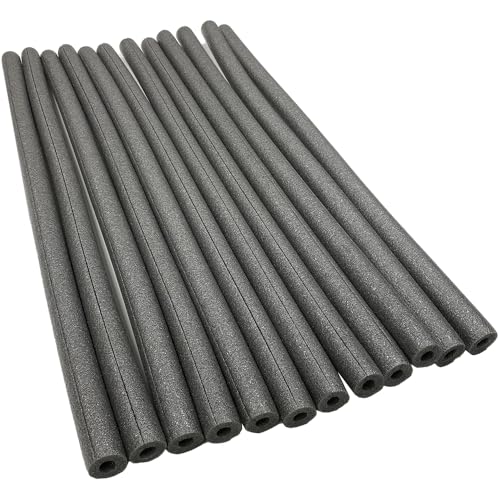
This twelve-piece set suits a basement with many half-inch lines, such as branches to sinks, a laundry area, and a bathroom above. Buying twelve pieces at once means you can cover several short runs without ordering again, and the smaller size fits the narrower pipes that often run alongside a main three-quarter-inch line. It is a practical pick for a homeowner who has already insulated the main run and now needs to finish the smaller branches, or for a rental where several exposed lines need covering before winter. Keep the pieces dry during storage so they hold their shape until installation.
Specs
- Brand: Foam King
- Size: 1/2 inch
- Pack: 12 pack
- Color: Black
- Manufacturer: Honor Trading
- Part number: HT-PIPE-1-2IN-12PK
- Item model number: HT-PIPE
- Coverage: Temperature control and noise reduction
- Item package quantity: 12
Best for: Covering many half-inch pipe runs in one purchase.
Watch out for: Confirm that your pipes are half-inch lines before ordering, because this size is listed for half-inch pipe and is not a fit for larger mains.
K-FLEX Elastomeric Pipe Insulation
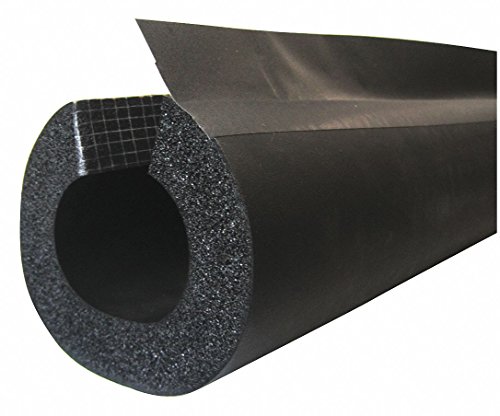
This rubber insulation suits a basement that stays damp, where condensation and temperature swings matter as much as freezing. The listed three-quarter-inch wall is thicker than a standard foam sleeve, and the rubber material is made for temperature maintenance and protection on pipes that run through unheated space. A single six-foot length covers a long straight section with fewer joints than a pack of one-foot sticks, which also means fewer seams for cold air to reach. It is a good fit for a main hot water line, a cold line that sweats in summer, or a run near an exterior wall.
Specs
- Brand: K-FLEX
- Manufacturer: K-FLEX USA
- Size: 2 in. x 6 ft.
- Wall: 3/4-inch wall
- Material type: Rubber
- Item dimensions: 72 in. L x 2 in. W
- Item weight: 16 ounces
- Recommended uses: Pipe insulation for temperature maintenance and protection
- Coverage: Temperature maintenance and protection
Best for: A damp basement where thicker rubber insulation and fewer seams matter.
Watch out for: Check the fit for your pipe diameter and the clearance around joists and brackets, because the thicker wall needs more room than a thin foam sleeve.
Wazitin Pipe Insulation Foam Tube

This ten-piece kit suits short lengths, fittings, and spots where a long sleeve is hard to handle. Each piece is about 1.31 feet long, giving about 13.1 feet in total, and the foil face and self-adhesive design help seal short sections around spigots, sprinkler lines, and water heater pipes. The listed inside diameter of 0.85 inches and suitability for pipes of three-quarter inch or smaller make it useful for finishing a job after the main runs are done. It is also handy as a spare kit, since a few short pieces can patch a gap without opening a full pack of long sleeves.
Specs
- Brand: Wazitin
- Pack: 10 pieces
- Length per piece: 1.31 ft, about 13.1 ft total
- Inside diameter: 0.85 inches
- Thickness: 0.39 inches
- Material: Neoprene rubber and fiberglass aluminum film
- Style: Black, 3/4-inch ID, 10-piece set
- Color: Black
- Part number: Fh047
- Item model number: Fh047
- Item weight: 8.8 ounces
- Included components: Pipe insulation foam tube
- Suitable for: Pipes 0.8 in., 3/4 in. or smaller
Best for: Short lengths, fittings, and finishing work around spigots and water heater pipes.
Watch out for: Check the inside diameter against your pipe before buying, because the listing states suitability for three-quarter-inch or smaller pipes.
Which One Fits Your Situation
Your basement has long, straight three-quarter-inch runs
Choose the Duck Brand Foam Pipe Covers. The six one-foot sticks are easy to carry along a joist, the pre-slit design fits around connected pipe, and the self-sealing edge helps each seam stay closed. Six feet per pack also makes it simple to count how many packs a run needs, and the same sleeve suits both hot and cold lines in that run.
You need to cover many smaller half-inch branches
Choose the Foam King Insulating Foam Pipe Covers. The twelve-piece pack is made for the smaller lines that branch off a main run, and buying them together avoids repeated orders for each sink, laundry line, or bathroom feed. Check each branch with a tape first, since a half-inch sleeve will not fit a larger main.
Your basement stays damp and your pipes sweat
Choose the K-FLEX Elastomeric Pipe Insulation. Its rubber material and three-quarter-inch wall are built for temperature maintenance in unheated, damp space, and a single six-foot length leaves fewer seams than a set of short sticks. Give it extra clearance at brackets and bends so the thicker wall does not pinch or gap.
You are finishing fittings, short sections, and awkward spots
Choose the Wazitin Pipe Insulation Foam Tube set. Ten short pieces with a foil face and self-adhesive design are easier to cut and fit around spigots, valves, and water heater connections than a long sleeve. The total length of about 13.1 feet is enough for finishing work, provided your pipes are three-quarter inch or smaller.
Common Mistakes
- Buying by nominal pipe size without measuring the outside diameter, then finding the sleeve will not close around the pipe.
- Counting only straight runs and forgetting elbows, valves, and tees, which leave bare metal exposed at the coldest points.
- Leaving seams and joints unsealed, so cold air and moisture reach the pipe through the gap the sleeve was meant to cover.
- Using a thin indoor foam sleeve on a damp basement line that sweats, instead of a thicker rubber or foil-faced option for that spot.
- Ordering exactly enough foam for the measured length, with no spare piece for a bad cut or a missed branch.
Frequently Asked Questions
What size foam pipe insulation sleeve do I need for basement pipes?
Measure the outside diameter of the pipe, not just its nominal size, and match that measurement to the size listed for the sleeve. A three-quarter-inch copper pipe has a larger outside diameter than its name, and PEX and CPVC can differ again. If two sizes seem close, check the listing for the inside diameter and choose the size that fits snugly without forcing the seam open.
Can foam pipe insulation sleeves prevent pipes from freezing?
Foam sleeves slow heat loss and give exposed pipes useful protection in a cold basement, but they do not add heat. In a long cold spell, pipes in an unheated basement still need warmth from the house, occasional water flow, and sealed drafts around them. Insulation works best as part of that wider preparation, not as a single fix on its own.
Should I insulate hot water pipes as well as cold water pipes?
Yes, in most basements both lines benefit. Insulating a hot water line keeps water warmer on its way to a tap, so less hot water is wasted while waiting. Insulating a cold water line reduces condensation in humid weather and slows warming in summer. The Duck Brand covers in this guide are listed for both hot and cold water pipes.
How do I install pre-slit foam pipe insulation sleeves?
Open the pre-slit seam, press the sleeve around the pipe, and close the self-sealing edge or tape the seam shut. Cut pieces to length with a sharp knife, butt the ends tightly at joints, and add extra pieces or tape at elbows and valves where a straight sleeve leaves a gap. Work from one end of the run to the other so you can see any bare section before you finish.
FAQ
What size foam pipe insulation sleeve do I need for basement pipes?
Can foam pipe insulation sleeves prevent pipes from freezing?
Should I insulate hot water pipes as well as cold water pipes?
How do I install pre-slit foam pipe insulation sleeves?
More from Amazon
Programs that pair well with the guide above. Offers and eligibility are set by Amazon and may change.
Free shipping on eligible items, Prime Video and more. Eligible new members can start with a free trial.
Start a Prime free trialAudiobooks and podcasts to listen to on the go. Eligible new members can start with a free trial.
Try Audible freeAd-free music streaming. Eligible new subscribers can start with a free trial.
Try Music Unlimited freeA free business account with business pricing and bulk-buying tools for work, shop or home office.
Create a business accountAs an Amazon Associate we earn from qualifying purchases.


Write Your Review
No reviews yet. Be the first to share your experience!