
Key takeaways
- Compare LiFePO4 portable power stations for long term home backup planning, with expansion options, output checks and storage advice for outages.
Long term home backup planning is not really about surviving one dramatic blackout. The harder decision is choosing a battery you will still trust after years of sitting in a corner, being topped up, borrowed for a garden job, and then suddenly asked to run a fridge overnight. Capacity on day one matters less than capacity that survives the calendar, and a plan that still makes sense five winters from now.
This guide is for homeowners building a backup plan in stages, renters who cannot install fixed equipment, and households that want one expandable unit instead of a shelf of small gadgets. Every product below was selected from the name and specifications stated on its Amazon product page, and only models whose pages state LiFePO4 chemistry clearly were considered.
Quick Picks
As an Amazon Associate we earn from qualifying purchases
| Product | Best for | Key spec from title |
|---|---|---|
| BLUETTI AC200L Portable Power Station | Staged home backup that grows over time | 2048Wh LiFePO4 Battery Backup, Expandable to 8192Wh |
How to Choose
A station bought for a decade of standby duty is judged differently from one bought for a single camping season. Four checks decide whether a unit fits a long horizon: whether its capacity can grow, what its cycle rating promises, whether its output covers real household loads, and how it asks to be stored between emergencies. Work through them in that order, because expansion and chemistry are hard to change later, while cables and habits are easy.
Plan for Expansion Before You Need It
A fixed-capacity station locks your plan at the size of your first purchase. An expandable one lets you start with the loads that matter most, then add battery packs in later years as budgets or needs change. Check exactly which expansion packs the product page names, and how far total capacity can climb. For example, the station listed below starts at 2048Wh and its page describes expansion to 8192Wh using named battery packs, which turns a one-room backup into a much longer runtime reserve without replacing the main unit.
Read the Cycle Life Rating as a Calendar
Cycle life tells you how many full charge and discharge rounds a battery can complete before its capacity fades to a stated level. For long term planning, that number matters more than a small difference in starting capacity, because a station cycled weekly for power cuts, solar shifting, or workshop use ages far faster than one touched twice a year. Compare the rating printed on the product page rather than relying on the chemistry name alone, and favour a higher stated rating when two units otherwise look similar.
Match Output to Starting Loads, Not Labels
Running wattage is only half the story in a home. Fridge compressors, pumps, and power tools draw a brief surge when they start, and a station that cannot cover that moment will shut down even with a full battery. Look for both the continuous output and any higher lifting or surge figure on the product page. A unit rated at 2400W with a higher short burst figure gives far more headroom for motor loads than the headline capacity suggests, so list your essential appliances and their starting demands before choosing.
Think About Storage and Recharging Habits
Backup batteries spend most of their lives waiting, so storage behaviour shapes real readiness. Note what recharge speeds the page states, because a station that refills quickly after an outage is easier to keep in a ready routine. Fast AC input and a healthy solar input ceiling both help here. Also consider where the unit will live: it needs a dry spot with room around its vents, close enough to the loads it serves that you will actually bother to plug them in when the lights go out.
The 1 Best Options
Only one model is listed here, and that is deliberate. Each candidate had to have its Amazon page opened and checked, with LiFePO4 stated in the product name and expansion options described on the page itself. Several well known models could not be page-verified during this research round, so rather than pad the list with unchecked names, this guide keeps a single fully verified pick and explains exactly where it fits and where it does not.
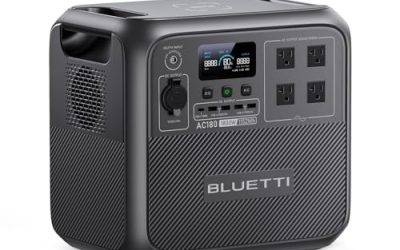
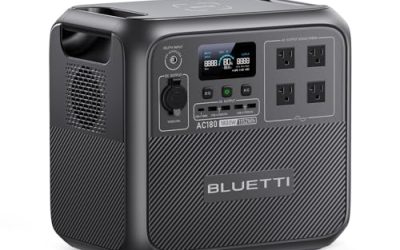
BLUETTI AC200L Portable Power Station

Households planning in stages are the natural audience for this unit. It begins at a size that covers refrigeration, lighting, communications, and a router through a long evening outage, then grows through named expansion batteries when the plan matures. The page lists home backup among its recommended uses, and its output suits ordinary plug-in appliances rather than hardwired circuits. Because it stays portable, the same unit can serve a garage workshop or an RV trip between emergencies, which helps justify keeping it charged and exercised instead of forgotten.
Specs
- Battery: LiFePO4, as stated in the product name
- Capacity: 2048Wh
- Expandable to: 8192Wh maximum
- Expansion options named on the page: 2 B300K (2764Wh each), 2 B210 (2150Wh each), 2 B300 (3072Wh each), or 1 B230 (2048Wh each)
- AC output: 2400W, with 3600W Power Lifting
- AC outlets: 4, plus a 30A RV output
- Ports: 11 in total, including 100W PD USB-C and a 48V/8A DC port
- AC charging input: up to 2400W, reaching 0 to 80 in 45 minutes as stated on the page
- Solar input: up to 1200W, with a full charge in 1.7 to 2.2 hours as stated on the page
- Item weight: 61.41 pounds
- Voltage: 110 Volts (AC)
- Recommended uses on the page: Camping, Home Backup, RV
Best for: Buyers who want one verified LiFePO4 station now and a clear expansion path for longer outages later.
Watch out for: At 61.41 pounds it is a two-hand lift, and expansion batteries are separate purchases, so confirm pack compatibility and your total plan before ordering.
ASIN: B0CLGZB3L6
Which One Fits Your Situation
With a single verified pick, the real question becomes how you would configure and use it. The situations below map common household plans onto the AC200L, including the cases where patience, an expansion pack, or a different kind of system entirely is the honest answer.
You Want Essentials Covered Tonight
Choose the BLUETTI AC200L on its own. Its built-in 2048Wh and 2400W output cover the classic first outage list: a fridge, a few lights, phone charging, a laptop, and the internet router. Starting with the base unit keeps the plan simple, and the fast AC recharge stated on the page means it can be refilled quickly once grid power returns, ready for a second night.
You Are Building Toward Multi-Day Outages
Choose the BLUETTI AC200L as the base of a staged system rather than buying a larger fixed unit immediately. Its page describes growth to 8192Wh through named expansion packs, so you can add capacity in a later season when you know which loads actually ran longest. Plan the space and cable runs for those extra packs now, even if the packs themselves arrive next year.
You Split Time Between Home and an RV
Choose the BLUETTI AC200L if one unit must serve both addresses. The page lists RV use alongside home backup, and it includes a 30A RV output, which suits that double life. At home it guards the fridge; on the road it rides as the house battery supplement. Just respect the 61.41 pound weight when planning who lifts it into the vehicle.
You Need Whole-Home or Hardwired Coverage
Choose the BLUETTI AC200L only as the portable layer of a bigger plan, not as the whole answer. It powers plug-in loads through its own outlets and cannot replace a fixed system designed for hardwired circuits, well pumps on dedicated lines, or central heating equipment. Households with those needs should treat this station as flexible backup for essentials while they arrange a properly designed fixed installation.
Safety Notes for Portable Power Stations
Charge and run the station in a dry, ventilated place, on a stable surface, with its cooling vents uncovered and nothing stacked against the sides while it works or recharges. Heat is the quiet enemy of a battery kept for years, so follow the storage temperature range the manufacturer states for your model, and avoid leaving the unit in a sealed vehicle or an uninsulated space through extreme seasons. Never open the casing or attempt to service the battery pack yourself; the cells and inverter inside are not user-serviceable parts. If a unit is dropped hard, swells, smells unusual, or shows damage, stop using it and follow the manufacturer guidance for inspection and disposal of a damaged battery rather than charging it again to see what happens. Keep charging cables in good condition, and store the station where children cannot treat its outlets as toys.
Common Mistakes
- Buying for the largest appliance you own instead of the essentials list you will actually run, then discovering the battery empties in a few hours.
- Ignoring expansion compatibility and assuming any extra battery from the same brand will connect to any station.
- Storing the station fully forgotten in a hot garage for years, then expecting full capacity during the first real outage.
- Adding up running wattages but forgetting the starting surge of fridges and pumps, which is what trips a station mid-outage.
- Treating a portable station as a whole-home system and planning hardwired loads it was never designed to supply.
Frequently Asked Questions
How long will a 2048Wh station run a fridge?
It depends on the fridge and how often its compressor runs, plus what else shares the battery. A 2048Wh unit like the one listed here is sized for overnight essentials rather than days of full household use. Adding expansion capacity, as this model allows, stretches that window considerably, which is why planning the growth path matters from the start.
Is LiFePO4 worth choosing for a backup battery?
For a battery bought to serve for years, LiFePO4 is a sensible focus because this guide only considered models whose pages state that chemistry. What matters in practice is the combination of the stated chemistry, the cycle rating printed for the specific model, and storage habits you can actually maintain. Chemistry alone does not rescue a station stored badly or sized wrongly.
Can I add batteries to this station later?
Yes, within the options its page names. The AC200L listing describes expansion to 8192Wh using specified packs, including the B300K, B210, B300, and B230 in stated combinations. Because compatibility is model specific, match the pack name and count to the listing for your exact station instead of assuming another pack from the same brand will fit.
Where should I keep a backup power station?
Keep it somewhere dry, ventilated, and reachable, with space around its vents and a storage temperature inside the range the manufacturer states. A hallway cupboard or a shaded corner of a utility room beats a sealed attic or a vehicle boot. Check its charge level on a regular schedule so readiness becomes a habit rather than a hope.
FAQ
How long will a 2048Wh station run a fridge?
Is LiFePO4 worth choosing for a backup battery?
Can I add batteries to this station later?
Where should I keep a backup power station?
More from Amazon
Programs that pair well with the guide above. Offers and eligibility are set by Amazon and may change.
Free shipping on eligible items, Prime Video and more. Eligible new members can start with a free trial.
Start a Prime free trialAudiobooks and podcasts to listen to on the go. Eligible new members can start with a free trial.
Try Audible freeAd-free music streaming. Eligible new subscribers can start with a free trial.
Try Music Unlimited freeA free business account with business pricing and bulk-buying tools for work, shop or home office.
Create a business accountAs an Amazon Associate we earn from qualifying purchases.




Write Your Review
No reviews yet. Be the first to share your experience!