
Key takeaways
- Seal exterior door gaps with foam tape matched to gap width, from narrow stops to wide, settled frames, with practical fitting tips before winter.
An exterior door gap is easy to ignore in autumn and impossible to ignore in January, when cold air pours in at the sides and bottom and the hallway never quite warms up. Doors settle, frames shift, and weatherstripping wears thin, leaving a channel that no amount of heating can close. Foam tape fills that channel from the inside, compressing when the door shuts and springing back when it opens, without a single screw or a visit from a contractor.
This guide is for homeowners who can feel a draft around a front, back, or side door and want to seal it before the coldest weather arrives. It suits people with older doors that have settled, people with new doors that never sealed tightly, and people who want a fix that can be fitted with scissors and a clean cloth. Every pick below comes from the name and specifications shown on its Amazon product page, with width, thickness, and length stated for a direct comparison.
Quick Picks
As an Amazon Associate we earn from qualifying purchases
| Product | Best for | Key spec from title |
|---|---|---|
| Frost King R538H Foam Tape | Medium gaps on a settled door | 3/8 inch wide, 5/16 inch thick, 10 ft long |
| Frost King R734H Sponge Rubber Foam Tape | Wide gaps on older doors | 3/4 inch wide, 7/16 inch thick, 10 ft long |
| Frost King R930H Sponge Rubber Foam Tape | Deep gaps that need a thick seal | 9/16 inch thick sponge rubber foam tape |
| MAGZO Weather Stripping Door Seal | A full door perimeter from one pack | 1 inch wide, 1 inch thick, 13 ft total, 2 rolls |
| Yotache Foam Weather Stripping | Wide door jambs and thick gaps | 2 inch wide, 3/8 inch thick, 6.5 ft long |
How to Choose
Measure the gap at three points on each side
A door gap is rarely even. The top may be tight while the bottom is wide, or one side may have opened up as the frame settled. Measure the gap at the top, middle, and bottom of each side, and at both ends of the top, before buying tape. Choose a thickness that seals the widest point without stopping the latch at the narrowest point, and consider using a thicker tape on one side and a thinner tape on the other if the gap varies a lot.
Choose sponge rubber for a door that opens daily
An exterior door opens and closes many times a day, so the tape on it must survive repeated compression. Sponge rubber holds its shape after being squeezed, while softer foams can stay flat and lose their seal over time. Look for the material wording on the listing, and favour sponge rubber or closed-cell foam for the sides and top of a busy door. Softer open-cell foam suits a door that opens rarely, such as a side door used only in summer.
Width must match the door stop
The door stop is the flat strip the door closes against, and the tape must sit flat on it without overhanging. Measure the width of the stop, then choose a tape that fits within it with a small margin. A tape that is too wide will catch on the door edge, peel away, and leave a ragged seal. A tape that is too narrow will leave part of the gap uncovered, so the draft finds a way around the edge.
Plan the bottom gap separately
Foam tape on the sides and top does not fix a gap under the door. That gap needs a different answer, such as a door sweep or a threshold seal, because tape on the bottom edge would drag on the floor and wear away. Measure the bottom gap as well, and treat it as a separate job. A door that is sealed on three sides but open at the bottom will still let in a noticeable draft, especially on a windy night when cold air pools at floor level.
The 5 Best Options
Frost King R538H Foam Tape
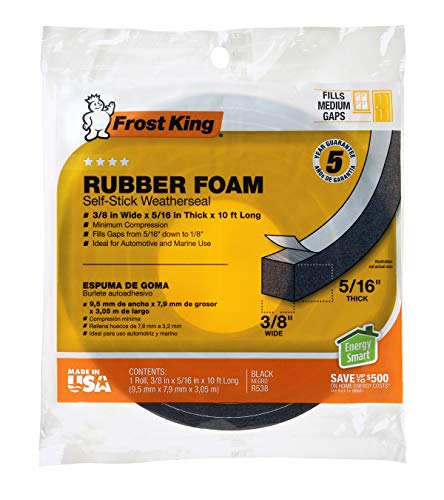
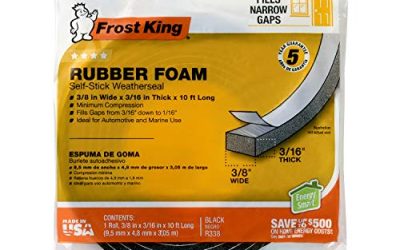
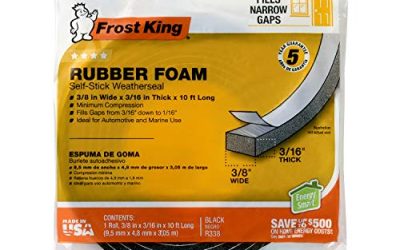
The R538H is the middle-ground tape for a door that has settled just enough to let in cold air. At 3/8 inch wide and 5/16 inch thick, it fits a standard door stop and fills a medium gap without demanding a hard push to latch the door. The black foam blends into most door frames, and a single 10-foot roll covers the sides and top of a standard door in one run.
Specs
- 3/8 inch wide, 5/16 inch thick, 10 ft long
- Black foam tape with self-stick backing
- Fills medium gaps as stated on the listing
- Rubber foam construction
- Model R538H
Best for: Medium gaps on a settled exterior door where the latch must still work easily.
Watch out for: Test the latch after fitting a short piece, because a settled door may have a narrower gap at one end than the other.
Frost King R734H Sponge Rubber Foam Tape
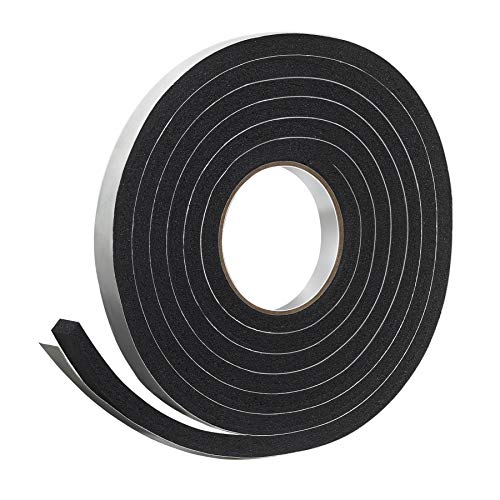
The R734H is the wide tape for an older door with a gap that a medium tape cannot close. Its 3/4 inch width covers a broad door stop, and its 7/16 inch thickness fills a gap that has grown with age and movement. Sponge rubber holds its shape after repeated compression, which matters on a front door that opens many times a day, and the tape is listed as filling gaps from 7/16 inch down to 3/16 inch.
Specs
- 3/4 inch wide, 7/16 inch thick, 10 ft long
- Black sponge rubber foam tape
- Self-stick backing
- Fills gaps from 7/16 inch down to 3/16 inch as stated on the listing
- Model R734H
Best for: Wide gaps on older exterior doors where a thick, wide tape is needed.
Watch out for: Check the door stop width first, because the 3/4 inch width needs a broad flat surface to sit on.
Frost King R930H Sponge Rubber Foam Tape

The R930H is the thickest tape in this guide, at 9/16 inch thick, for a door gap that is deep rather than wide. It suits a door where the stop sits far from the door face, or where the frame has shifted and left a deep channel. Sponge rubber construction helps it keep its shape through repeated use, and the black colour suits most exterior frames without drawing attention to the repair.
Specs
- 9/16 inch thick sponge rubber foam tape
- Black colour
- Self-stick backing
- Sponge rubber construction
- Model R930H
Best for: Deep gaps on exterior doors where a thick sponge rubber seal is needed to reach the door face.
Watch out for: Measure the depth of the gap carefully, because a tape this thick can stop a door from latching if the gap is narrower than expected.
MAGZO Weather Stripping Door Seal

MAGZO’s thick tape is the option for a door jamb that needs a deep, soft seal. At 1 inch wide and 1 inch thick, it fills a large gap and compresses under the closing door, and the two rolls totalling 13 feet cover the sides and top of a standard door. The listing describes it as a high-resilience foam for windows and air-conditioner seals as well, which makes it a flexible choice for a large, uneven gap.
Specs
- 1 inch wide, 1 inch thick
- Total length 13 ft, 2 rolls of 6.5 ft each
- Strong adhesion and high resilience as stated on the listing
- Open-cell foam tape
- Black colour
Best for: Large, uneven gaps around an exterior door jamb where a deep foam seal is needed.
Watch out for: A 1 inch thick tape is very deep, so test the door closure with a short piece before fitting a full run.
Yotache Foam Weather Stripping

Yotache’s wide tape is the choice for a broad door jamb where a narrow tape would leave part of the gap uncovered. At 2 inches wide and 3/8 inch thick, it covers a wide flat surface and seals a gap along the jamb, and the 6.5-foot length covers one side of a standard door. The neoprene foam is described as a weather seal for doors and windows, and the self-adhesive backing makes it easy to fit along a straight jamb.
Specs
- 2 inch wide, 3/8 inch thick
- Total length 6.5 ft
- Neoprene foam weather seal
- Adhesive backing
- Model YO-PM-5010
Best for: Wide door jambs where a broad tape is needed to cover the full sealing surface.
Watch out for: One roll covers a single side, so count the sides you need to seal before buying.
Which One Fits Your Situation
A front door with a medium gap all round
Choose the Frost King R538H, because its 5/16 inch thickness fills a medium gap without stopping the latch. Fit it along the sides and top of the door stop, test the latch, and trim the ends at the corners so the seal is continuous. A single 10-foot roll covers a standard door.
An old back door with a wide, uneven gap
Choose the Frost King R734H, because its wide, thick sponge rubber profile seals a gap that varies along the frame. Measure the gap at the top, middle, and bottom first, and fit the tape to the side where the gap is widest. Sponge rubber holds its shape after many openings, which suits a door used daily.
A door frame that has shifted and left a deep channel
Choose the Frost King R930H or the MAGZO 1 inch tape, depending on the depth of the channel. The R930H suits a deep gap on a standard stop, while the MAGZO tape suits a very deep, uneven jamb. Test a short piece first, because a deep tape can change how the door latches.
A side door with a broad, flat jamb
Choose the Yotache 2 inch tape, because its width covers a broad jamb in one run. Fit it along the jamb where the door meets the frame, press it firmly into place, and check that the door still closes without catching on the edge of the tape or pulling it loose.
Common Mistakes
- Measuring the gap at one point only, then discovering the door is tight at the top and wide at the bottom.
- Fitting tape to a dirty or wet door stop, which weakens the adhesive and lets the tape peel away in weeks.
- Using a tape that is too thick, so the door needs a hard push and the latch wears out faster.
- Sealing the sides and top but ignoring the gap under the door, which needs a sweep rather than tape.
- Choosing a narrow tape for a wide door stop, leaving part of the gap uncovered and the draft still coming through.
Frequently Asked Questions
How much foam tape do I need for one exterior door?
Measure the perimeter of the door stop on the sides and top, then add a little extra for corners and mistakes. A standard door usually needs about 10 feet for the sides and top, which is why many tapes are sold in 10-foot rolls. Measure your own door rather than assuming a standard size.
Can foam tape fix a door that will not latch?
It can make a latching problem worse if the tape is too thick, because the extra thickness holds the door away from the strike plate. If the door already struggles to latch, check the hinges and strike plate first, then choose the thinnest tape that seals the gap. A door that latches cleanly before fitting tape should latch cleanly after it.
Should I put foam tape on the hinge side of a door?
Yes, the hinge side can leak just as much as the lock side, and tape on the stop there seals the gap when the door closes. Fit the tape to the stop rather than the door itself, and make sure the tape does not interfere with the hinge movement when the door opens.
How do I prepare a door frame for foam tape?
Clean the stop with a damp cloth, let it dry fully, and remove loose paint flakes or old adhesive. A clean, dry surface lets the self-adhesive backing grip properly. Fit the tape on a mild day if possible, because a very cold frame can weaken the initial bond.
FAQ
How much foam tape do I need for one exterior door?
Can foam tape fix a door that will not latch?
Should I put foam tape on the hinge side of a door?
How do I prepare a door frame for foam tape?
More from Amazon
Programs that pair well with the guide above. Offers and eligibility are set by Amazon and may change.
Free shipping on eligible items, Prime Video and more. Eligible new members can start with a free trial.
Start a Prime free trialAudiobooks and podcasts to listen to on the go. Eligible new members can start with a free trial.
Try Audible freeAd-free music streaming. Eligible new subscribers can start with a free trial.
Try Music Unlimited freeA free business account with business pricing and bulk-buying tools for work, shop or home office.
Create a business accountAs an Amazon Associate we earn from qualifying purchases.


Write Your Review
No reviews yet. Be the first to share your experience!