
Key takeaways
- Find foam weatherstripping tapes that seal drafty windows, with thin profiles, white options, and sizes matched to sash gaps and frames this winter.
A drafty window makes a room feel cold even when the heating is working hard, because cold air slips in at the sash and pools near the floor. Curtains hide the problem, but they do not stop it. Foam weatherstripping tape does, by filling the narrow channel where the sash meets the frame and turning a rattling window into a sealed one. The trick is choosing a tape thin enough to let the sash move, yet thick enough to close the gap.
This guide is for homeowners and renters with windows that whistle, rattle, or let in a cold edge of air on windy nights. It suits people in older houses with wooden sashes, people in apartments with single-hung windows, and people who want a fix that can be fitted in an evening without tools. Every pick below comes from the name and specifications shown on its Amazon product page, with width, thickness, and length stated so the sizes can be matched to a real window.
Quick Picks
As an Amazon Associate we earn from qualifying purchases
| Product | Best for | Key spec from title |
|---|---|---|
| Frost King R338H Rubber Foam Weatherseal | Thin sash gaps on wooden windows | 3/8 inch wide, 3/16 inch thick, 10 ft long |
| Yotache White Thin Weather Stripping | White frames where black tape would show | 1/2 inch wide, 1/16 inch thick, 33 ft total |
| MAGZO Weather Stripping Door Seal | Many windows from one pack | 1/2 inch wide, 1/16 inch thick, 33 ft, 1 roll |
| Yotache White Foam Insulation Tape | Sash gaps that need a thicker white seal | 1/2 inch wide, 1/2 inch thick, 13 ft total |
| Frost King R534H Sponge Rubber Foam Tape | Sashes with a medium, uneven gap | 5/16 inch sponge rubber foam tape, black |
How to Choose
Find where the window actually leaks
A drafty window rarely leaks everywhere at once. Hold a hand, a lit candle held safely away from curtains, or a thin strip of tissue near the sash edges on a windy day and watch where the air moves. Most leaks sit along the meeting rail, where the upper and lower sashes meet, or along the sides where the sash slides. Knowing the exact spot tells you whether the tape belongs on the sash, the frame, or the meeting rail, and how long each run needs to be.
Choose a thin profile for a moving sash
A window sash has to slide, tilt, or swing, so the tape on it must be thin and compressible. A tape that is too thick will jam the sash, strain the lock, or peel away the first time the window is opened. Thin tapes in the 1/16 inch to 3/16 inch range suit most sashes, while thicker tapes belong on fixed frames and stops where nothing moves. Test the sash after fitting a short piece, and open and close it several times before committing to a full run.
Match the colour to the frame
Black foam tape disappears on a dark frame and stands out on a white one. White tape does the opposite, blending into painted wood and vinyl while showing clearly on a dark sash. Colour does not change how well the tape seals, but it changes whether the repair is visible from across the room. Choose the colour that matches the frame where the tape will sit, and remember that the tape is usually seen edge-on rather than face-on, which keeps a simple repair looking tidy from across the room.
Plan for removal at the end of the season
Some window tape is meant to stay for years, while other tape is a seasonal fix that comes off in spring. A tape that is easy to peel away suits a renter or a homeowner who opens windows widely in summer. A tape with a stronger bond suits a window that stays closed all winter. Check how the listing describes the adhesive, and test a small piece on an inconspicuous corner before covering a whole window, and keep the packaging so the tape can be matched later.
The 5 Best Options
Frost King R338H Rubber Foam Weatherseal

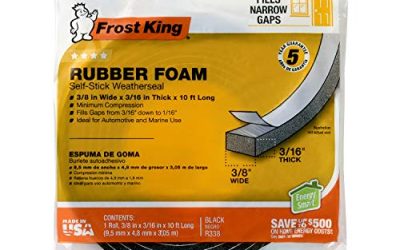
The R338H is the classic answer for a thin sash gap. Its 3/8 inch width and 3/16 inch thickness fit the edge of a wooden sash without stopping the window from locking, and the rubber foam compresses when the sash closes and recovers when it opens. It is the tape to reach for first when the gap is narrow and the window still needs to move freely through the winter.
Specs
- 3/8 inch wide, 3/16 inch thick, 10 ft long
- Black rubber foam self-stick weatherseal
- Fills narrow gaps as stated on the listing
- Self-adhesive backing
- Model R338H
Best for: Thin gaps on wooden window sashes where the window must still slide and lock.
Watch out for: Clean the sash edge before fitting, because dust and old paint flakes weaken the adhesive bond.
Yotache White Thin Weather Stripping

Yotache’s white thin tape suits the window where a black strip would be obvious from across the room. At 1/2 inch wide and only 1/16 inch thick, it fits the finest sash gaps and sits flat on white painted wood or vinyl. The 33-foot total length covers several windows in one buy, which helps when every window in a room has the same thin leak along the meeting rail and the job must be finished in one session.
Specs
- 1/2 inch wide, 1/16 inch thick
- Total length 33 ft
- White foam gasket seal tape
- For window, sliding door jamb, and similar flat surfaces as stated on the listing
- Self-adhesive backing
Best for: White window frames with a very thin gap, where a discreet seal matters.
Watch out for: The thin profile will not close a wider gap, so measure the sash gap before choosing this tape.
MAGZO Weather Stripping Door Seal

MAGZO’s 1/16 inch tape in a single 33-foot roll is the bulk choice for a house full of drafty windows. The 1/2 inch width gives a good adhesive area on the sash or frame, and the thin profile lets the window close and lock without extra force. One roll covers several windows, so a buyer can work through a room methodically, measuring and cutting as they go rather than rationing a short roll.
Specs
- 1/2 inch wide, 1/16 inch thick adhesive foam tape
- 1 roll, 33 ft total
- Black colour
- Soundproof weatherstripping for windows as stated on the listing
- Part number USBFOAM12015
Best for: Covering several drafty windows from a single long roll, where the gaps are thin.
Watch out for: The tape is thin, so a window with a wider or uneven gap will need a thicker option instead.
Yotache White Foam Insulation Tape

This white Yotache tape is the thicker white option, at 1/2 inch wide and 1/2 inch thick, for sashes where a thin tape leaves the draft untouched. The foam is soft enough to compress under a closing sash, and the white colour blends into painted frames. Two rolls totalling 13 feet cover a pair of windows or one large window with a wide, uneven gap along the sides, and the soft foam presses easily into place around corners.
Specs
- 1/2 inch wide, 1/2 inch thick
- Total length 13 ft, 2 rolls of 6.5 ft each
- White rubber weather stripping seal
- Foam insulation tape as stated on the listing
- Self-adhesive backing
Best for: White-framed windows with a thicker sash gap that a thin tape cannot close.
Watch out for: Test the sash movement after fitting, because a 1/2 inch thick tape can stop a tight sash from closing fully.
Frost King R534H Sponge Rubber Foam Tape

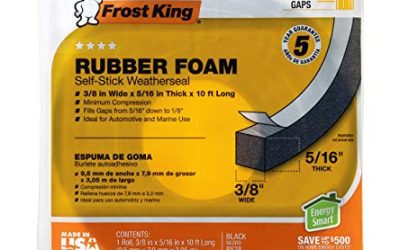
The R534H is a 5/16 inch sponge rubber tape for windows where the gap is medium and uneven, wider at one end of the sash than the other. Sponge rubber compresses to different depths along its length, so it seals a gap that varies without leaving a channel at the wide end. The black foam suits dark frames, and the self-stick backing makes it easy to fit along the side of a sash or the meeting rail.
Specs
- 5/16 inch sponge rubber foam tape
- Black colour
- Self-stick backing
- Sponge rubber construction
- Model R534H
Best for: Windows with a medium, uneven sash gap that needs a compressible sponge rubber seal.
Watch out for: Check the lock after fitting, because a thicker tape can change how the sash sits when closed.
Which One Fits Your Situation
A wooden sash window that rattles on windy nights
Choose the Frost King R338H, because its thin 3/16 inch profile fits the sash edge and stops the rattle without jamming the window. Fit it along the sides and the meeting rail, then close and lock the window to test the seal. The rubber foam compresses and recovers, so the window still opens on a mild day.
White vinyl windows in a living room
Choose the Yotache white thin tape or the thicker white Yotache tape, depending on the gap. The thin tape suits a fine gap and stays discreet on a white frame, while the thicker tape suits a wider gap. Both blend into the frame from across the room, which matters in a space where the windows are always visible.
Every window in a cold bedroom
Choose the MAGZO 33-foot roll, because one roll covers several windows and the thin profile suits the small gaps found on most sashes. Work window by window, measuring each sash before cutting, and leave a small overlap at the corners so no channel is left open at the ends of the tape.
An old window with a gap that varies along the sash
Choose the Frost King R534H sponge rubber tape, because sponge rubber compresses to different depths and seals an uneven gap. Fit it along the side where the gap is widest, test the lock, and trim the ends neatly so the tape does not bunch at the corners or peel away.
Common Mistakes
- Fitting thick tape to a sliding sash, then finding the window will not close or lock.
- Sealing only the sides of a window and leaving the meeting rail open, where most of the draft enters.
- Sticking tape to a cold, damp frame in winter, when the adhesive cannot grip properly.
- Choosing black tape for a white frame, which makes a simple repair look untidy from across the room.
- Cutting the tape exactly to length and leaving a small gap at the corners, where cold air still slips through.
Frequently Asked Questions
Where should foam tape go on a drafty window?
It belongs on the surface that meets the sash when the window closes, usually the frame, the sash edge, or the meeting rail. Find the leak first with a hand or a tissue strip on a windy day, then fit the tape to that surface. Avoid placing tape where the sash slides, unless the tape is thin enough to let it move.
Will foam tape stop condensation on windows?
It can reduce the cold air that causes condensation, but it will not remove moisture already in the room. A sealed window stays warmer on the inside surface, which helps, but ventilation and humidity control matter too. If condensation continues, check for other air leaks and for moisture sources inside the room.
Can I open a window after fitting foam tape?
Yes, if the tape is thin and compressible and the sash still moves freely. Test the sash several times after fitting a short piece before covering the whole window. A tape that is too thick will peel away or stop the lock from catching the first time the window is opened.
How do I remove foam tape from a window in spring?
Peel it slowly from one end at a low angle, and lift any remaining adhesive with gentle rubbing and a mild cleaner. Test the cleaner on a small, hidden area first, especially on painted wood, and avoid scraping the frame with a sharp tool.
FAQ
Where should foam tape go on a drafty window?
Will foam tape stop condensation on windows?
Can I open a window after fitting foam tape?
How do I remove foam tape from a window in spring?
More from Amazon
Programs that pair well with the guide above. Offers and eligibility are set by Amazon and may change.
Free shipping on eligible items, Prime Video and more. Eligible new members can start with a free trial.
Start a Prime free trialAudiobooks and podcasts to listen to on the go. Eligible new members can start with a free trial.
Try Audible freeAd-free music streaming. Eligible new subscribers can start with a free trial.
Try Music Unlimited freeA free business account with business pricing and bulk-buying tools for work, shop or home office.
Create a business accountAs an Amazon Associate we earn from qualifying purchases.



Write Your Review
No reviews yet. Be the first to share your experience!