
Key takeaways
- Find the best freestanding propane grills for outdoor living upgrades, with our guide to burners, cooking area, build quality, and four top picks.
The best freestanding propane grills for outdoor living upgrades turn a plain patio into a real outdoor kitchen, giving you a permanent-feeling cooking station that still rolls out of the way when the season changes. Unlike a built-in grill, a freestanding model needs no masonry, no gas line, and no contractor. It arrives as a wheeled cart with its own shelves, storage, and burners, and it runs on a standard refillable propane tank that you can swap at any hardware or grocery store. That combination of independence and capability is exactly why freestanding propane grills anchor so many backyard upgrades, from a simple deck refresh to a full patio redesign.
Choosing well matters because a freestanding grill is a long-term fixture. It will sit outside through rain, sun, and winter, and it will be asked to cook everything from weeknight chicken to a full spread for a neighborhood gathering. The right model heats evenly, holds its temperature, cleans up without a fight, and still looks good after several seasons. The wrong one rusts at the joints, cooks hot on one side and cold on the other, and becomes an eyesore you eventually haul away. This guide walks through what to look for, then compares four freestanding propane grills for different patios, household sizes, and cooking styles.
How to Choose
1. Cooking Area and Burner Count
Think about how many people you cook for on a typical weekend. Cooking area is measured in square inches and counts the main grate plus the warming rack. A three-burner grill with around 500 square inches of total cooking space handles a family of four or five comfortably, with room for burgers, vegetables, and a few pieces of chicken at once. A four-burner model with 550 square inches or more suits larger gatherings, because you can run a hot searing zone on one side and a gentler indirect zone on the other. More burners also mean finer control: each burner governs its own strip of the grate, so you can cook foods that need different heat levels at the same time.
2. Heat Output and Evenness
Burner output is stated in BTU per hour, and higher numbers mean more heat potential, not automatically better cooking. What matters is how evenly that heat reaches the grate. Look for burners that run the full depth of the firebox, heat tents or flavorizer bars that spread flame and catch drippings, and a heavy lid that holds heat in windy conditions. A grill that reaches searing temperature quickly and holds a steady medium heat is more useful than one that simply runs hot. Stainless steel burners resist corrosion better than plain steel, which matters for a grill that lives outdoors year-round.
3. Build Quality and Materials
A freestanding grill is a piece of outdoor furniture, so the materials decide how long it lasts and how good it looks. Porcelain-enameled cast-iron grates hold heat well and produce strong sear marks, while stainless steel grates are lighter and easier to brush clean. A porcelain-enameled lid resists rust and fading, and a stainless steel firebox stands up to grease and weather. Check the cart as well: welded frames and sturdy casters last longer than bolted sheet-metal legs, and locking casters keep the grill from drifting across a sloped patio. Side shelves should feel solid when loaded with a platter, not flex under weight.
4. Storage, Shelves, and Workspace
An outdoor living upgrade is about the whole cooking experience, not just the flame. Side shelves give you a place to set tongs, a tray of raw food, and a plate of finished food without running back to the kitchen. A cabinet under the firebox hides the propane tank and stores tools, brushes, and a cover. Tool hooks on the side keep spatulas and tongs within reach. A side burner is a bonus for simmering sauces or boiling corn while the main grate stays free for grilling. Measure your patio before ordering: a grill with both shelves open can be several feet wide, and you need clearance around it for safe operation.
5. Ignition and Temperature Control
Reliable ignition is one of those features you only notice when it fails. Electronic push-button ignition that lights every burner on the first try saves matches and frustration, and a crossover ignition system that lets one lit burner light its neighbor is a useful backup. A built-in lid thermometer helps you track preheating and roasting temperatures, though a separate probe thermometer gives more accurate readings for thick cuts. Look for control knobs that turn smoothly and hold a true low setting, so you can hold a gentle simmer or keep food warm without scorching it.
6. Cleaning and Maintenance
The best grill is one you actually clean, so the design should make that easy. A removable grease tray or drip pan that slides out from the front beats one buried at the back. Porcelain-enameled surfaces wipe down more easily than raw steel, and a grease management system that channels drippings away from the burners reduces flare-ups and smoke. Before buying, check whether replacement parts such as burners, grates, and igniters are easy to find for that brand, because a grill you can repair is a grill you keep for a decade.
7. Fit for Your Outdoor Living Plans
Think about how the grill fits the space you are building. A compact three-burner model suits a small deck or a townhouse patio, leaving room for chairs and a table. A larger four-burner grill with a cabinet becomes the centerpiece of a bigger patio, pairing well with an outdoor dining set and string lights. If you plan to rearrange the layout for parties, locking casters and a manageable weight matter. If the grill will sit in one spot permanently, a heavier cabinet model with a fitted cover is a better investment. Always leave at least a few feet of clearance from railings, walls, and overhangs, and confirm that your local rules allow a propane grill on your deck or balcony.
Top Picks
Weber Spirit II E-310 Liquid Propane Grill

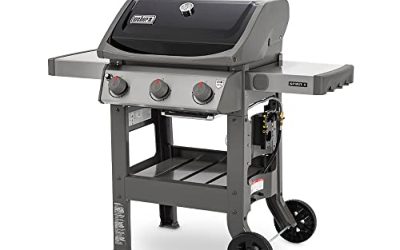
The Weber Spirit II E-310 is the classic three-burner freestanding propane grill, and it earns its place as the dependable all-rounder in this lineup. It has 529 square inches of total cooking space across three burners, with a porcelain-enameled cast-iron cooking grate and a tuck-away warming rack. Total burner output is 30,000 BTU per hour, and the GS4 grilling system pairs high-performance stainless steel burners with porcelain-enameled Flavorizer bars, an Infinity ignition system, and a front-access grease management system that channels drippings into a removable tray.
The open-cart design keeps the grill lighter and easier to move than a full cabinet model, while two stainless steel side tables provide workspace. One side table folds down, which helps on a narrow deck. The lid carries a built-in thermometer, and the grill is compatible with the iGrill 3 thermometer accessory for cooks who like to monitor thick cuts without lifting the lid. Weber backs the Spirit II line with a 10-year warranty on major components.
Who it is for: Families and regular weekend grillers who want a proven, easy-to-maintain grill for a mid-size patio. It is a strong match for someone upgrading from a small portable grill to a proper freestanding station without jumping to a large four-burner footprint.
Caveats: Three burners limit how many heat zones you can run at once, so very large gatherings may need cooking in batches. There is no side burner, so sauces and side dishes still need the kitchen stove. The open cart leaves the propane tank visible, which some buyers prefer to hide behind cabinet doors.
Char-Broil Performance 4-Burner Cart-Style Propane Gas Grill

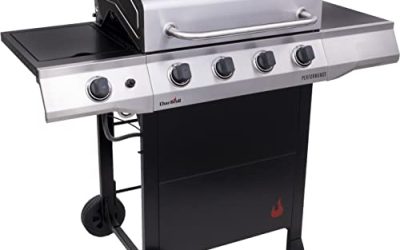
The Char-Broil Performance 4-Burner is the value-oriented four-burner pick in this guide, built for cooks who want extra cooking space and a full cart layout at a mid-range footprint. Four main burners spread heat across a wide grate, giving you room to run a hot zone for searing and a cooler zone for foods that need more time. The cart-style frame rides on wheels, with side shelves for prep space and a lower cabinet that keeps the propane tank and grilling tools out of sight.
Electronic ignition lights the burners at the push of a button, and the porcelain-coated grates are designed to resist rust while holding heat for sear marks. A lid-mounted temperature gauge helps you watch preheating, and the warming rack keeps finished food hot while the next round cooks. The four-burner layout is the practical choice for households that regularly cook for six or more people, or for anyone who likes to grill a full meal — main course and vegetables — in one session.
Who it is for: Larger households and frequent hosts who want four-burner capacity and cabinet storage without moving into a premium grill. It suits a spacious patio or backyard where the grill serves as the main outdoor cooking station.
Caveats: A four-burner grill is wider and heavier than a three-burner model, so measure your patio and gate before ordering. The cabinet and shelves add assembly time compared with a simpler open-cart grill. As with any cart-style grill, keep the grease tray emptied and the burners brushed after cooking to keep performance steady over time.
Monument Grills Mesa 400MF 4-Burner Liquid Propane Gas Grill
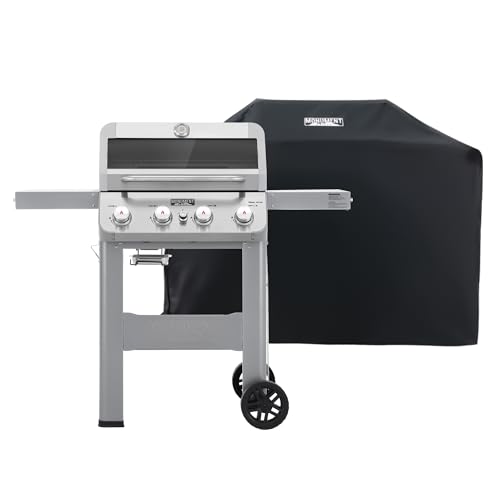
The Monument Grills Mesa 400MF stands out in this lineup for its Clearview tempered glass lid, which lets you check on food without lifting the lid and losing heat. Four stainless steel burners deliver 36,000 BTU of cooking power across 570 square inches of total cooking area, including 405 square inches of primary cooking space and a 165-square-inch warming rack — enough room to grill for a crowd in a single round. The stainless steel construction gives the grill a clean, modern look that fits well in a redesigned patio or outdoor kitchen area.
One side shelf folds down for storage, and the grill ships with a barbecue cover included, which is a practical touch for a grill that lives outdoors. The Mesa 400MF heats to around 500 degrees Fahrenheit in about ten minutes, so preheating does not eat into your evening. The stainless steel firebox and grates are built for regular use, and the wheeled cart makes it easy to roll the grill into position for a gathering and back against the wall afterward.
Who it is for: Homeowners refreshing a patio or outdoor living area who want a modern-looking grill with a viewing window and generous cooking space. It is a good fit for entertainers who cook for groups and appreciate being able to watch food without opening the lid.
Caveats: The glass lid needs regular cleaning to stay clear, and fingerprints show more readily than on a painted lid. The grill is a four-burner model, so it needs more patio space than the compact three-burner picks. Check that the included cover fits your storage routine if you plan to keep the grill uncovered during the grilling season.
Weber Genesis E-325 Liquid Propane Gas Grill

The Weber Genesis E-325 is the premium pick in this guide, aimed at cooks who grill several times a week and want the strongest combination of cooking space, sear capability, and build quality. Three PureBlu burners with a tapered design deliver a consistent flame and even heat across the grate, and an extra-large sear zone gives you a dedicated high-heat area for steaks and chops. The porcelain-enameled cast-iron grates hold heat well, and the total cooking area is 787 square inches, including the warming rack — the largest in this lineup despite having three burners.
Stainless steel side tables provide generous workspace, and the enclosed cabinet below hides the tank and stores accessories. The Genesis line sits a step above the Spirit series in materials and finish, with a heavier lid, sturdier cart, and more refined controls. It is the kind of grill that anchors a serious outdoor living upgrade, pairing naturally with an outdoor dining set, patio lighting, and a dedicated prep area.
Who it is for: Dedicated grillers and homeowners building a long-term outdoor kitchen setup. If you grill year-round, cook for groups often, and want the best sear and the most cooking space in a three-burner layout, this is the pick to build around.
Caveats: This is the largest and heaviest grill in the group, so it needs a roomy patio and a clear path for delivery and assembly. The premium build comes with a larger footprint, and the sear zone takes some practice to use without overcooking thinner cuts. As with any large grill, plan on a fitted cover and a regular cleaning routine to protect the finish.
Comparison Table
| Grill | Burners | Total Cooking Area | Key Features | Best For |
|---|---|---|---|---|
| Weber Spirit II E-310 | 3 | 529 sq in | GS4 system, Infinity ignition, folding side table, grease management system | Families, mid-size patios |
| Char-Broil Performance 4-Burner | 4 | Wide four-burner grate | Cart-style frame, cabinet storage, side shelves, electronic ignition | Large households, frequent hosts |
| Monument Grills Mesa 400MF | 4 | 570 sq in | Clearview glass lid, stainless steel, folding shelf, cover included | Entertainers, modern patios |
| Weber Genesis E-325 | 3 | 787 sq in | PureBlu burners, extra-large sear zone, enclosed cabinet, stainless side tables | Dedicated grillers, outdoor kitchens |
Which One Is Right for You?
Match the grill to your household and your patio, not to a feature list alone. If you cook for a family of four or five on a mid-size deck, the Weber Spirit II E-310 covers nearly every weeknight and weekend meal with a proven design and a manageable footprint. Its folding side table is a real advantage on a narrow patio, and its grease management system keeps cleanup simple.
If you regularly feed six or more people, step up to a four-burner model. The Char-Broil Performance 4-Burner gives you the extra grate space and cabinet storage that big gatherings demand, while the Monument Grills Mesa 400MF adds a modern stainless look, a viewing-window lid, and an included cover that suits a patio redesign. Between the two, choose the Char-Broil if cabinet storage and a classic cart layout matter most, and the Mesa 400MF if you want the glass lid and the largest primary cooking area of the four-burner picks.
If grilling is a central part of your outdoor living plans rather than an occasional activity, the Weber Genesis E-325 is the long-term anchor. Its extra-large sear zone and 787 square inches of total cooking space handle the biggest menus in this group, and its enclosed cabinet and stainless side tables look the part in a finished outdoor kitchen. Whichever model you choose, leave clearance around the grill, store the tank upright outdoors, and keep a fitted cover on hand so your upgrade still looks new several seasons from now.
Frequently Asked Questions
How much cooking space do I need in a freestanding propane grill?
For a household of two to four people, around 400 to 500 square inches of total cooking space is usually enough for a full meal. For six or more people, or for anyone who likes to grill the main course and vegetables at the same time, look for 550 square inches or more. Remember that the total figure includes the warming rack, so check the primary grate size too — that is where the actual cooking happens.
Are freestanding propane grills better than built-in grills for an outdoor living upgrade?
Freestanding grills are the better choice when you want flexibility. They need no gas line or masonry, cost less to install, and move easily if you redesign the patio. Built-in grills suit a permanent outdoor kitchen with a fixed layout and a natural gas connection. If you rent your home, plan to move, or like rearranging your patio for parties, a freestanding model is the practical pick.
How do I keep a freestanding propane grill in good condition?
Brush the grates while they are still warm after cooking, empty the grease tray regularly, and wipe down the exterior every few weeks. Keep the grill covered when it is not in use, and store the propane tank upright outdoors, never inside a garage or shed. Once a season, check the burner tubes and gas hose for wear, and test connections with soapy water to look for leaks before the first cook of the season.
Can a freestanding propane grill stay outside all year?
Yes, freestanding propane grills are designed for outdoor use, but a fitted cover makes a large difference in how long the finish and the burners last. In regions with snow or heavy rain, a cover plus a sheltered spot against a wall protects the grill from the worst weather. In very cold weather, propane delivers less pressure, so preheating may take longer — plan a few extra minutes and keep a spare tank on hand during the winter months.
Disclosure: As an Amazon Associate, we may earn from qualifying purchases.
FAQ
Which One Is Right for You?
How much cooking space do I need in a freestanding propane grill?
Are freestanding propane grills better than built-in grills for an outdoor living upgrade?
How do I keep a freestanding propane grill in good condition?
Can a freestanding propane grill stay outside all year?
More from Amazon
Programs that pair well with the guide above. Offers and eligibility are set by Amazon and may change.
Free shipping on eligible items, Prime Video and more. Eligible new members can start with a free trial.
Start a Prime free trialAudiobooks and podcasts to listen to on the go. Eligible new members can start with a free trial.
Try Audible freeAd-free music streaming. Eligible new subscribers can start with a free trial.
Try Music Unlimited freeA free business account with business pricing and bulk-buying tools for work, shop or home office.
Create a business accountAs an Amazon Associate we earn from qualifying purchases.

Write Your Review
No reviews yet. Be the first to share your experience!