
Key takeaways
- Roller roof rakes vs slide snow rakes compared by how each moves snow, roof protection, snow type and effort, so you can choose the right system for your roof.
Roller rakes and slide rakes look similar on a product page, a long pole with something at the end, but they move snow in opposite ways and they fail in opposite conditions. One drags snow down with a protected blade; the other undercuts it and lets it ride a chute to the ground. Choosing wrong usually means owning a tool that fights your roof shape or your typical snow all winter.
This comparison is for homeowners deciding between the two systems before their first purchase, and for owners of one system wondering whether the other suits their roof better. The four products below, two of each type, were chosen from the specifications on their Amazon listings, so the comparison rests on listed reach, head design and slide dimensions.
Quick Picks
As an Amazon Associate we earn from qualifying purchases.
| Product | Best for | Key spec from title |
|---|---|---|
| Garelick 89421 Aluminum Roof Rake | Pulling snow off asphalt shingles without scraping them | 21 ft reach, 24 x 7 in aluminum blade, shingle-saver rollers |
| SFIHOME Telescopic Roof Rake with Wheels | Long edges where wheels help the head roll up the slope | Adjusts 4.8 to 20 ft, 26 in head, wheels, 5-section tubes |
| Snow Joe RJ208M Roof Rake with Debris Slide | Long roof planes where snow should slide off, not be dragged | 28 ft reach, 15 in x 20 ft polyester slide, rollers, 4 poles |
| Goplus Snow Roof Rake with Oxford Slide | Slide clearing with a lighter sectional pole set | 21 ft adjustable aluminum, Oxford slide and wheels, 5.5 lb |
Read the table by system first, product second. The two roller rakes pull snow down with a protected blade, and the two slide rakes push a cutting frame so snow rides a chute to the ground. If your roof is simple and your snow is light, the slide column will pull you one way; obstacles and crust pull you back to the rollers.
How to Choose
A note on how to read the listings behind this comparison: slide systems advertise reach that includes the slide run, while pull rakes advertise pole length, so the headline numbers are not directly comparable. Compare instead the head or frame width, whether wheels are fitted and where, and the slide dimensions when a slide is included. Those figures describe how the tool behaves on your roof. The pole figures only describe how far away you can stand while it behaves that way, which matters, but comes second.
Understand how each system actually moves snow
The two designs solve different halves of the job. A roller rake is pulled: the blade bites into the snowpack and you drag a load down the slope and off the edge, with the wheels keeping the blade off the shingles. A slide rake is pushed: a cutting frame undercuts the snow and the slab rides down a fabric or polyester chute under its own weight. Pulling gives you control over stubborn, crusted layers. Sliding moves fresh snow in long ribbons with far less arm work, but the slab has to be willing to travel, which is why slide systems shine on simple, unobstructed roof planes.
Judge both against your roof covering
Shingle protection works differently in each camp. Roller rakes rely on the wheels holding a metal or poly blade just clear of the surface as it travels. Slide rakes rely on small rollers at the cutting frame plus the fact that the snow leaves on fabric, so nothing is dragged across the roof at all. Either system fails if it is forced: a roller with a flat spot or missing wheel lets the blade dig in, and a slide frame pushed over a vent or pipe boot will stop dead. Check the listing for wheel placement and frame width against the obstacles on your own roof.
Match the system to your typical snow
Fresh, light snow is slide weather: it undercuts cleanly and travels down the chute in satisfying slabs. Wet, heavy snow still slides, but the ribbons get heavy and the fabric can bunch if the run is interrupted. Crusted or refrozen snow is roller rake weather, because a pulled blade can chop and drag in short bites where a slide frame just rides up over the crust. Ice dams themselves are not a job for either tool once they are solid; both systems are for removing the snow that feeds the dam, early and often, before meltwater starts refreezing at the eave.
Keep the safety rules the same for both
Whichever system you choose, the working position does not change. Everything happens from the ground, on cleared and stable footing, standing to the side of the fall zone rather than beneath the eave. Nobody belongs on a snow-covered roof to help either tool along, and a ladder is not a platform for pulling or pushing a long pole. Look for overhead power lines and the service drop before raising any pole, especially the longer slide systems. Clear people, pets and vehicles from below the edge, and work in stages so the snow comes down in amounts you can manage.
The 4 Best Options
Garelick 89421 Aluminum Roof Rake

The Garelick is the classic sectional pull rake, built around an aluminum blade that never has to scrape the roof because small rollers hold it just above the shingles. Four pole sections snap together for a full 21 feet of reach, then come apart for storage on a garage wall. Aluminum keeps the whole tool light enough to guide from the ground without the head wandering. For choosing between a roller rake and a slide rake, those listed details add up to the most straightforward fit in this group.
Specs
- Reach: 21 feet from four snap-together pole sections
- Blade: 24 x 7 inch aluminum blade
- Rollers: built-in wheels keep the blade off the shingle surface
- Handle: lightweight aluminum sections
- Weight: about 5.75 pounds
- Model: 89421
Best for: Pulling snow off asphalt shingles without scraping them
Watch out for: Confirm the roller wheels are intact before the season, because a missing wheel lets the aluminum blade ride directly on the shingles.
ASIN: B0000BYCD5
SFIHOME Telescopic Roof Rake with Wheels

SFIHOME builds its rake around a 26 inch head on five tube sections, so the working length adjusts from under 5 feet to a full 20 feet. Wheels on the head let it roll up the roof slope instead of digging in, which helps on shingle roofs where a bare blade edge can catch. The sectional build also means one damaged tube does not end the tool. For choosing between a roller rake and a slide rake, it is the combination of head design and handle that makes the difference, not any single figure.
Specs
- Length: adjustable from 4.8 to 20 feet
- Sections: 5-section tube design
- Head size: 26 inches
- Frame: aluminum, with wheels on the head
- Use: snow and leaf removal from house roofs
- Model: SFA03-RSR00126ALMSL
Best for: Long edges where wheels help the head roll up the slope
Watch out for: Count the tube sections in the box on arrival and test the snap fits, since the reach depends on every section locking cleanly.
ASIN: B0DKF5R87F
Snow Joe RJ208M Roof Rake with Debris Slide
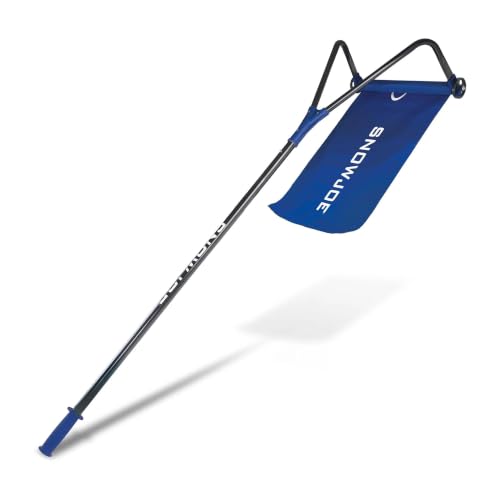
The RJ208M is a slide rake rather than a pull rake: you push the cutting frame up the slope on its rollers, and the snow it undercuts rides down a 20 foot polyester slide instead of being dragged over the shingles. Four extension poles give five working lengths and up to 28 feet of reach. It clears in ribbons, which suits long, simple roof planes. For choosing between a roller rake and a slide rake, that is the balance this model strikes best, and it is why it earns its place here.
Specs
- Reach: 28 feet with the included extension poles
- Slide: heavy-duty polyester slide, 15 inches x 20 feet
- Poles: 4 adjustable extension poles, five length options
- Head: cutting frame on easy-glide roller wheels
- Use: snow and debris removal from the ground
- Model: RJ208M
Best for: Long roof planes where snow should slide off, not be dragged
Watch out for: Give the slide a clear run down the roof and to the ground, because bunched fabric stops the snow ribbon cold.
ASIN: B08KRL6P1T
Goplus Snow Roof Rake with Oxford Slide

Goplus pairs the slide idea with a lighter sectional build: a wide Oxford fabric slide under a wheeled head, on aluminum poles that adjust from about 6 to 21 feet. At 5.5 pounds it is easy to carry around a house between roof planes. The slide does the carrying work, so the operator mostly steers instead of pulling loaded snow toward the edge. For choosing between a roller rake and a slide rake, those listed details add up to the most straightforward fit in this group.
Specs
- Length: adjustable from 5.9 to 21 feet
- Weight: 5.5 pounds, aluminum construction
- Slide: wide Oxford fabric slide
- Wheels: two wheels guide the head up the roof
- Handle: extendable poles with anti-slip grip
- Use: snow, wet leaves and debris from the ground
Best for: Slide clearing with a lighter sectional pole set
Watch out for: Rinse grit off the Oxford slide before folding it away, since trapped grit abrades the fabric over a season.
ASIN: B01MTVV2JD
Timing matters for this choice too. The practical moment to decide is before the snow season, because the two systems store differently, assemble differently and suit different roofs, and none of that is fun to discover with a storm already on the roof. During the season, whichever system you own works best early and often: fresh snow pulls or slides away easily, while the same slope left through two melt-and-refreeze cycles becomes the hardest clearing of the winter for either design.
Which One Fits Your Situation
A roof with vents, chimneys and changes of pitch
Choose the Garelick 89421 Aluminum Roof Rake. The steerable roller head works around obstacles in short pulls, where a slide frame would stop at every vent and flashing. Its listed 21 ft reach, 24 x 7 in aluminum blade, shingle-saver rollers is the detail that matters most in this situation, and it keeps the whole job at ground level or on firm footing, where it belongs.
Crusted or refrozen snow most of the winter
Choose the SFIHOME Telescopic Roof Rake with Wheels. A pulled, wheeled blade can chop and drag crusted layers in bites, while a slide frame tends to ride up over hard crust. Its listed adjusts 4.8 to 20 ft, 26 in head, wheels, 5-section tubes is the detail that matters most in this situation, and it keeps the whole job at ground level or on firm footing, where it belongs.
A long, simple roof plane and light, dry snow
Choose the Snow Joe RJ208M Roof Rake with Debris Slide. The slide sends whole ribbons down the polyester chute with mostly steering effort, which is the fastest clearing this guide covers. Its listed 28 ft reach, 15 in x 20 ft polyester slide, rollers, 4 poles is the detail that matters most in this situation, and it keeps the whole job at ground level or on firm footing, where it belongs.
Slide clearing on a lighter, shorter pole
Choose the Goplus Snow Roof Rake with Oxford Slide. The Oxford slide system keeps the same push-and-glide method in a lighter sectional build that stores and carries more easily. Its listed 21 ft adjustable aluminum, Oxford slide and wheels, 5.5 lb is the detail that matters most in this situation, and it keeps the whole job at ground level or on firm footing, where it belongs.
Common Mistakes
- Raising a long aluminum pole without checking for overhead power lines and the service drop to the house.
- Trying to chip a formed ice dam off with the rake head, which damages shingles, flashing and gutters.
- Buying the longest pole on the listing without measuring the eave, then fighting flex and shoulder strain all winter.
- Dragging a bare metal blade across asphalt shingles instead of choosing a poly blade or a head with working rollers.
- Waiting until snow has crusted and refrozen before raking, when the same job was easy the day it fell.
Frequently Asked Questions
Which is faster on a simple, open roof plane?
A slide rake usually clears a simple plane faster, because each push sends a whole ribbon of snow down the chute instead of dragging one blade-load at a time. The advantage shrinks on roofs with vents, chimneys or changes of pitch, where the slide keeps stopping and the roller rake’s smaller, steerable head keeps working around obstacles.
Which is gentler on asphalt shingles?
Both are designed to protect shingles, in different ways. The roller rake’s wheels hold its blade off the surface while it pulls. The slide rake’s frame rides on rollers and the snow leaves on fabric, so nothing scrapes the slope. Either can damage a roof if forced when stuck, and either fails safely if you stop, back off and reposition instead of pushing harder.
Can a slide rake handle crusted or refrozen snow?
Poorly, compared with a pull rake. A slide frame tends to ride up over hard crust instead of undercutting it, and the slab will not travel down the chute if it is frozen to the layer below. A roller rake can chop and drag crusted snow in short bites. In climates where most snow arrives wet and refreezes, the roller design is the more forgiving only tool.
Which should a first-time buyer choose?
Choose by roof and snow, not by novelty. Pick the slide system if your roof is a long, simple plane and your snow usually falls light and dry. Pick the roller rake if your roof has obstacles, your snow turns heavy or crusted, or you want one tool that also pulls leaves and debris. Either way, buy before the season and practice the assembly on a dry day.
Whichever system you choose, the habit matters more than the hardware: clear early after each snowfall, from the ground, in stages, and neither design is ever asked to do the crusted, refrozen work it handles worst. Match the system to your roof shape and your typical snow, and roof clearing becomes a routine chore measured in minutes instead of a seasonal emergency.
FAQ
Which is faster on a simple, open roof plane?
Which is gentler on asphalt shingles?
Can a slide rake handle crusted or refrozen snow?
Which should a first-time buyer choose?
More from Amazon
Programs that pair well with the guide above. Offers and eligibility are set by Amazon and may change.
Free shipping on eligible items, Prime Video and more. Eligible new members can start with a free trial.
Start a Prime free trialAudiobooks and podcasts to listen to on the go. Eligible new members can start with a free trial.
Try Audible freeAd-free music streaming. Eligible new subscribers can start with a free trial.
Try Music Unlimited freeA free business account with business pricing and bulk-buying tools for work, shop or home office.
Create a business accountAs an Amazon Associate we earn from qualifying purchases.




Write Your Review
No reviews yet. Be the first to share your experience!