
Key takeaways
- Compare the best coping saw blades by TPI, blade width, and pack size, with pin-end picks from Olson, Stanley, Zona, and Pegas for curved cuts.
A coping saw frame lasts for decades, but the blade tensioned in it is a consumable. Blades dull, kink when a cut binds, and eventually snap, and the tooth count and width of the replacement you fit decide whether a curve comes out smooth or ragged. Fitting a fresh, well-matched blade is the cheapest upgrade a coping saw can get.
This guide compares five pin-end replacement blades for standard frames, from a coarse 10 TPI blade for fast waste removal to a fine 32 TPI blade for delicate detail work. Every length, tooth count, and dimension below is attributed to the maker that publishes it, so you can match each pick against your own frame and the stock you cut most often.
As an Amazon Associate, we earn from qualifying purchases.
Quick answer
For most woodworkers, the Olson CP30000BL assortment is the simplest buy: four 6-1/2 inch blades covering 10, 15, and 18 TPI per Olson. For a single everyday tooth count, the Stanley 15-061 gives 15 TPI in a four-pack, while the Zona 36-679 at 32 TPI handles the finest detail work.
1. Olson CP30000BL Coping Saw Blade Assortment
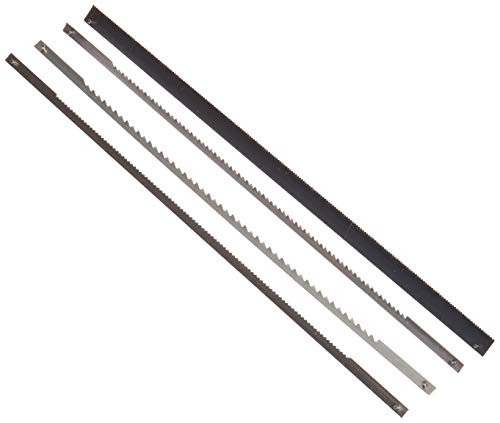
The CP30000BL is a four-blade assortment card from Olson, the coping and scroll blade brand of Blackstone Industries. Per Olson, the set mixes 10, 15, and 18 TPI blades so one card covers coarse, medium, and fine work, and Olson describes the assortment as including a blade type for metal cutting alongside the wood blades. The blades are hardened and tempered high-carbon steel per Olson, and at 6-1/2 inches long between pins they fit all standard coping saw frames, per Olson.
An assortment suits anyone who has not yet settled on a favorite tooth count, because it lets the stock decide: coarse teeth for thick pine, fine teeth for thin plywood or intricate fret-style curves. Because the card holds only one blade of some tooth counts, heavy users of a single TPI will burn through the favorite blade first and then need a dedicated pack anyway.
Specs (per Olson):
- Length: 6-1/2 in between pins
- Tooth counts: 10, 15, and 18 TPI assortment
- Pack size: 4 blades
- Material: hardened, tempered high-carbon steel
- Fit: all standard coping saw frames
Who it’s for: Woodworkers who cut varied stock and want one card that covers coarse through fine work.
Who should skip: Anyone who already knows their tooth count and would rather stock a full pack of that single blade.
2. Stanley 15-061 Coping Saw Blade, 4-Pack

The 15-061 is Stanley’s middle-of-the-road coping blade: 6-1/2 inches long and 15 TPI per Stanley, sold in a card of four. Stanley describes this blade as extra narrow for sharp, surrounding cuts, which is exactly the work a coping saw exists for, trimming moldings to fit inside corners and following tight pencil lines in trim carpentry.
At 15 TPI the cut is slower than a coarse blade but leaves a smoother edge that needs less cleanup, and the narrow profile turns tighter radii than wider blades. It is a sensible default blade to keep tensioned in the frame for general use. For thick stock or fast waste removal in dovetail joinery, though, the fine teeth load up with dust and a coarser blade below is the better tool.
Specs (per Stanley):
- Length: 6-1/2 in
- Tooth count: 15 TPI
- Pack size: 4 blades
- Profile: extra narrow for sharp curves
Who it’s for: Trim carpenters and general woodworkers who want one everyday blade for curved cuts in wood and plastic.
Who should skip: Anyone cutting thick stock quickly, who will find 15 TPI slow going.
3. Stanley 15-059 Coping Saw Blade, 4-Pack

The 15-059 is the coarse sibling in Stanley’s coping blade line: 6-1/2 inches long with 10 TPI per Stanley catalog data, in a card of four. The wider tooth spacing clears dust quickly, so the blade keeps cutting in thick softwood and hardwood instead of clogging, and it removes waste fast when you are clearing the waste between dovetail pins or roughing out a shape before refining it.
The trade-off is edge quality. A 10 TPI blade leaves a rougher surface than the finer picks in this guide, so it is a roughing blade rather than a finishing one. Pair it with a finer blade for the final pass and the two cards cover most bench work between them.
Specs (per Stanley catalog data):
- Length: 6-1/2 in
- Tooth count: 10 TPI
- Pack size: 4 blades
Who it’s for: Woodworkers roughing out thick stock or clearing dovetail waste who value cutting speed over edge finish.
Who should skip: Anyone whose coping work is mostly fine, finish-ready curves in thin stock.
4. Zona 36-679 Coping Saw Blades, 4-Pack
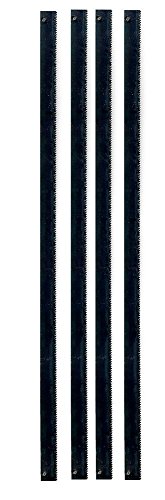
Zona, the hobby tool brand from Blackstone Industries, makes the finest blade in this guide. Per Zona, the 36-679 measures 6-1/2 inches between pins, .250 inch wide by .014 inch thick, with 32 TPI, and it comes in a pack of four. That very fine tooth count is aimed at model work, thin veneer, and delicate fret-style cutting where a coarse blade would tear the stock apart.
A 32 TPI blade cuts slowly in anything thick, and the thin .014 inch profile demands a gentle feed, so this is a specialist blade rather than a frame’s everyday tenant. For fine work, though, the smooth edge it leaves can go straight to glue or finish with minimal cleanup.
Specs (per Zona):
- Length: 6-1/2 in between pins
- Width and thickness: .250 in x .014 in
- Tooth count: 32 TPI
- Pack size: 4 blades
Who it’s for: Model makers and woodworkers cutting thin stock, veneer, and fine detail where edge quality matters most.
Who should skip: Anyone cutting thick or hard stock, where 32 TPI will crawl and overheat the blade.
5. Pegas Pinned Coping Sawblades, 20 TPI, Pack of 12

Pegas blades are made in Switzerland by Scies Miniatures, and the pinned coping line is built for hand frames that take pin-end blades. Per Pegas, this blade is 6.5 inches long with 20 teeth per inch, and the pack holds 12 blades, the largest count in this guide. Pegas makes its coping blades from hardened carbon steel, and retailers of the line note the blades are intended for hard and soft wood up to 3/4 inch thick.
At 20 TPI this blade sits between the Stanley 15-061 and the Zona in fineness, fine enough for clean dovetail waste removal and thin-stock curves, yet quick enough for everyday use. The dozen-blade pack suits woodworkers who change blades often and would rather not reorder cards of four every few projects.
Specs (per Pegas):
- Length: 6.5 in, pinned ends
- Tooth count: 20 TPI
- Pack size: 12 blades
- Material: hardened carbon steel
- Origin: made in Switzerland
Who it’s for: Frequent users who want a fine-to-medium blade in a bulk pack, especially for dovetail and thin-stock work.
Who should skip: Anyone whose frame takes plain-end blades only, since these are pinned.
How to choose coping saw blades
Match the pin length first. Most coping frames take a blade that measures 6-1/2 inches between pins, and every pick in this guide is built to that standard per its maker. If your frame is an older or oversized model, measure the pin-to-pin distance on a blade that already fits before ordering.
Pick TPI for the stock. Coarse blades around 10 TPI clear dust fast and suit thick stock and rough work. Mid-range blades around 15 to 20 TPI balance speed and finish for general use. Fine blades at 32 TPI leave the smoothest edge in thin material but cut slowly. As a working rule, keep at least two or three teeth in contact with the stock; a blade that is too coarse for thin plywood will snag and tear it.
Mind width and thickness. Narrower, thinner blades turn tighter curves, which is why Stanley markets the 15-061 as extra narrow and why the Zona is only .014 inch thick per Zona. Wider blades track straighter on gentle curves but resist turning.
Handle blades safely. A tensioned blade can snap during use, so follow the saw maker’s eye-protection guidance whenever you cut. Fit blades with the teeth pointing in the direction the saw maker specifies for your frame, and keep fingers clear of the blade when changing it, since the teeth are sharp along the full edge. Release blade tension before storing the saw, which extends the life of both blade and frame. When a blade breaks or wears out, wrap it before putting it in the trash and discard it so the sharp ends cannot cut anyone handling the bin.
FAQ
What TPI coping saw blade is best for general woodwork?
A mid-range count around 15 TPI, like the Stanley 15-061, is the usual middle ground: quick enough in common board thicknesses and smooth enough to limit cleanup. Drop to 10 TPI for thick stock and rise toward 20 or 32 TPI as the work gets thinner and finer.
Do all coping saw blades fit every coping saw frame?
No. Most standard frames accept blades measuring 6-1/2 inches between pins, which covers every pick here, but frames vary, and some take plain-end rather than pin-end blades. Check your frame maker’s specification and measure an existing blade before ordering a new type.
How often should a coping saw blade be replaced?
Replace a blade when it starts to wander off the line, needs noticeably more feed pressure, or loses teeth. Per their makers, these blades are inexpensive consumables, and a fresh blade restores accuracy faster than any adjustment to the frame.
Can coping saw blades cut metal?
Some can. Olson rates blades in the CP30000BL assortment for copper and soft metals alongside wood and plastic. Always follow the blade maker’s material ratings, cut slowly, and expect a blade used on metal to dull faster than one kept for wood.
Final verdict
For a single purchase that covers the most ground, the Olson CP30000BL assortment (B001V6167S) puts three tooth counts on one card. Woodworkers who prefer one proven everyday blade should take the Stanley 15-061 (B00002X2BW) at 15 TPI, and add the Stanley 15-059 (B00002X2BV) at 10 TPI for coarse work. For fine detail, the Zona 36-679 (B001BHEF3O) at 32 TPI is the specialist pick, while the Pegas pinned blades (B00MWB4BIM) offer 20 TPI in a pack of 12 for high-volume users. Match the tooth count to your stock, keep spares on hand, and any of these blades will keep an old frame cutting true.
Product and ASIN Reference
| Product | ASIN |
|---|---|
| Olson CP30000BL Coping Saw Blade Assortment | B001V6167S |
| Stanley 15-061 Coping Saw Blade, 4-Pack | B00002X2BW |
| Stanley 15-059 Coping Saw Blade, 4-Pack | B00002X2BV |
| Zona 36-679 Coping Saw Blades, 4-Pack | B001BHEF3O |
| Pegas Pinned Coping Sawblades, 20 TPI, Pack of 12 | B00MWB4BIM |
More from Amazon
Programs that pair well with the guide above. Offers and eligibility are set by Amazon and may change.
Free shipping on eligible items, Prime Video and more. Eligible new members can start with a free trial.
Start a Prime free trialAudiobooks and podcasts to listen to on the go. Eligible new members can start with a free trial.
Try Audible freeAd-free music streaming. Eligible new subscribers can start with a free trial.
Try Music Unlimited freeA free business account with business pricing and bulk-buying tools for work, shop or home office.
Create a business accountAs an Amazon Associate we earn from qualifying purchases.








Write Your Review
No reviews yet. Be the first to share your experience!