
Key takeaways
- Compare five oil filter wrenches, from cap socket sets to strap, chain, claw and plier styles, with maker fit ranges and drive sizes for home oil changes.
A spin-on oil filter is only supposed to be hand tight, yet heat cycles, a dry gasket, or an overzealous previous installer can leave it stuck fast enough to stop an oil change cold. Reaching for ordinary pliers or a screwdriver usually ends with a crushed, leaking can and a bigger mess. An oil filter wrench solves the problem by gripping the filter the way its shape allows, so steady pressure breaks it loose without drama. The catch is that no single wrench style suits every filter, engine bay, or working angle, which is why choosing the right type matters more than buying the strongest one.
This guide compares five distinct oil filter wrench types: a cap socket set for cartridge housings and fluted caps, a heavy-duty strap wrench for large filters, a drive chain wrench for stubborn cans, a compact two-jaw claw wrench for tight import engine bays, and slip-joint filter pliers for filters with working room around them. Each pick below lists the size range and drive its maker specifies, because matching the tool to your filter’s diameter and flute count is what decides whether it grips or slips. A buying guide follows the picks, with safety and recycling notes for home mechanics.
As an Amazon Associate, we earn from qualifying purchases.
How to Choose an Oil Filter Wrench
Start with the filter itself. Spin-on filters are gripped around the can or by the flutes stamped into the end, while many newer engines use a cartridge element inside a plastic or metal cap that needs a socket-style cup. Measure the filter’s diameter with calipers or a tape, and if you plan to use a cap wrench, count the flutes on the end of the filter or cap. Makers size cap wrenches by both diameter in millimeters and flute count, and both numbers have to match. A cup that is even slightly off can rock on the flutes and slip under load; when a cup slips on an off-brand filter size, that is a fit issue, not a defect in the tool.
Next, look at the room around the filter. Cap and claw wrenches work from the end of the filter and need only enough clearance for a ratchet swing. Strap and chain wrenches wrap around the can, so they need space beside the filter but little room at the end. Pliers need the most working room of all, since the handles have to open and close. Finally, check the drive: several wrenches below turn with a 3/8-inch or 1/2-inch square drive ratchet you likely already own, while pliers and some strap tools are self-contained.
Two safety habits belong with every type. Let the engine cool before you start, because the oil, the filter can, and nearby exhaust parts stay hot long after shutdown. If the filter is reached from underneath, support the vehicle on jack stands rated for its weight, and never rely on a jack alone to hold it up. When the job is done, drain the old filter and take it, along with the used oil, to a local collection program or a parts store that accepts them; used oil and filters should never go into household trash or down a drain.
BETOOLL 23pcs Oil Filter Wrench Set (HW0103)
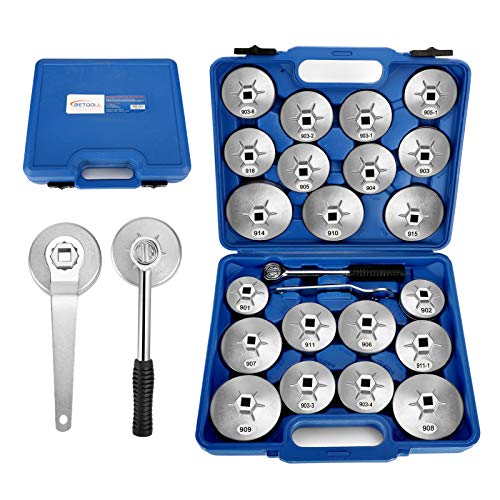
Cartridge-style filters hide inside a cap that only a close-fitting cup should turn, and this 23-piece BETOOLL set is built around that job. The 21 cups cover 65 to 101 millimeters across 14 sizes, with 14-flute and 15-flute versions of the common sizes mixed in, and BETOOLL describes each cup as a 6-point design marked with its size for quick identification. A 1/2-inch drive ratchet and a ring spanner come in the case, so the kit still works where a ratchet handle cannot swing. Because the cups are cut for specific caps, the fit check matters: measure your cap and count its flutes before ordering. BETOOLL names applications including Toyota, VW, BMW, GMC Sierra, Ford, and Volvo, but the diameter and flute count, not the badge on the vehicle, decide the match.
Specs
- Type: Cap and cup socket set for cartridge housings and fluted caps
- Pieces: 23 total, with 21 cups, one ratchet, and one ring spanner
- Cup sizes: 65 to 101 mm in 14 sizes, with 14-flute and 15-flute variants, per BETOOLL
- Drive: 1/2-inch square drive
- Material: Aluminum alloy, per BETOOLL
- Storage: Storage case included
Lisle 60200 Heavy Duty Strap Filter Wrench

A strap wrench grips with friction instead of teeth, so it turns large filters without biting into the can. Lisle rates the 60200 for filters and other round objects up to 6-1/2 inches in diameter, which covers the big spin-on filters on trucks and tractors that smaller tools cannot wrap. The yoke is heat-treated alloy steel and only 3-5/8 inches long, a compact shape intended for crowded engine bays, and the wrench turns with a 1/2-inch drive ratchet or breaker bar. The woven web strap conforms to the can as it tightens, spreading the load around the circumference. A strap needs a reasonably clean grip to bite, so wipe oil off the filter first, and expect some patience with filters installed dry and left for years.
Specs
- Type: Web strap wrench
- Capacity: Filters up to 6-1/2 inches in diameter, per Lisle
- Drive: 1/2-inch square drive
- Yoke: Heat-treated alloy steel, 3-5/8 inches long, per Lisle
- Strap: Heavy-duty woven web strap
GEARWRENCH 2595D 1/2-Inch Drive Chain Wrench

Chain wrenches are the option of last resort for filters that have defeated everything else, and the GEARWRENCH 2595D puts that grip on the end of a 1/2-inch drive ratchet or breaker bar. The chain wraps around the can and locks against the drive head, so torque goes into turning rather than slipping. GEARWRENCH lists a working range of 5/8 inch to 5 inches, which spans most spin-on filters as well as round pipe fittings. The trade-off is surface damage: chain links bite hard enough to dent or tear a thin filter can, so this is a removal-only tool for filters headed to the recycling bin, never a tool for installing a new one. It also needs enough clearance to wrap the chain fully around the filter, which rules it out in the tightest engine bays.
Specs
- Type: Chain wrench for ratchet drive
- Capacity: 5/8 inch to 5 inches (16 to 127 mm), per GEARWRENCH listing data
- Drive: 1/2-inch square drive
- Material: Alloy steel with a painted finish, per GEARWRENCH listing data
Lisle 63600 Oil Filter Tool
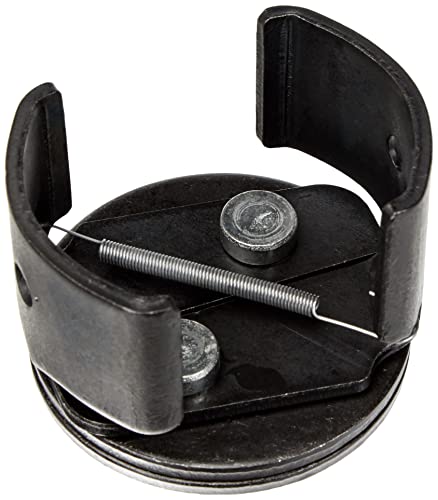
The Lisle 63600 is the compact answer for the small filters fitted to many import cars. Its two steel jaws ride on a gear-driven plate: as you turn the drive, the jaws close in and grip the can, and the harder the filter resists, the tighter they hold. Lisle sizes the tool for filters from 2-1/2 to 3-1/8 inches in diameter and describes it as suiting most import car filters along with common 3-inch domestic filters. It works with a 3/8-inch drive ratchet or a 7/8-inch wrench, which helps when the filter sits in a pocket with room for only one or the other. The jaws do leave marks, and they can crush a thin can if you keep forcing a seized filter, so stop and reassess rather than forcing it.
Specs
- Type: Two-jaw claw wrench
- Capacity: 2-1/2 to 3-1/8 inch diameter filters, per Lisle
- Drive: 3/8-inch square drive or 7/8-inch wrench, per Lisle
- Construction: Steel jaws that tighten as torque is applied
TEKTON 5866 12-Inch Oil Filter Pliers
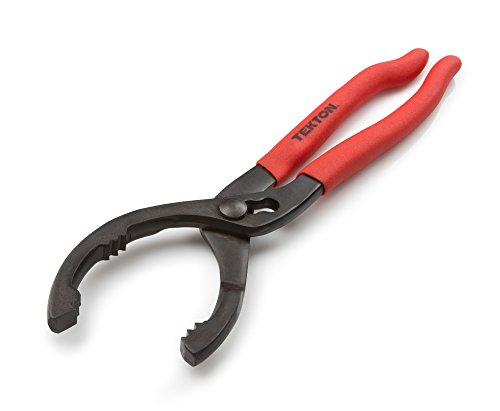
Where there is room to swing them, filter pliers are the fastest tool in this guide: squeeze, turn, done. The TEKTON 5866 is a 12-inch slip-joint design with three jaw positions, and TEKTON rates it for filters up to 4-1/2 inches in diameter. The teeth are set at a right angle to the jaws so they bite in either direction of turn, which matters on oil-slick cans that defeat smooth-jawed tools. The long handles add leverage and reach past nearby hoses and brackets. The same teeth that make the grip so sure will dent the can, so like the chain wrench these pliers are for removal only, and they need the most clearance of any tool here. On a filter tucked against the block with no room for the handles to work, a cap or claw wrench is the better pick.
Specs
- Type: Slip-joint oil filter pliers
- Capacity: Filters up to 4-1/2 inches in diameter, per TEKTON
- Length: 12 inches
- Joint: Three-position slip joint, per TEKTON
- Jaws: Large right-angle teeth; alloy steel body with soft nonslip grips, per TEKTON
How the Five Compare
The split comes down to filter style and working room. The BETOOLL set is the only pick made for cartridge caps, and it asks you to match an exact cup to an exact cap. The Lisle 63600 covers the smallest spin-on filters and the tightest spaces, while the TEKTON 5866 trades a bigger footprint for speed on mid-size filters. The Lisle 60200 handles the largest diameters gently, and the GEARWRENCH 2595D applies the most aggressive grip when a filter simply will not move.
| Wrench | Type | Maker-Stated Range | Drive |
|---|---|---|---|
| BETOOLL 23pcs Set (HW0103) | Cap and cup sockets | 65 to 101 mm cups | 1/2-inch square |
| Lisle 60200 | Web strap | Up to 6-1/2 inches diameter | 1/2-inch square |
| GEARWRENCH 2595D | Chain | 5/8 to 5 inches | 1/2-inch square |
| Lisle 63600 | Two-jaw claw | 2-1/2 to 3-1/8 inches | 3/8-inch square or 7/8-inch wrench |
| TEKTON 5866 | Filter pliers | Up to 4-1/2 inches diameter | Hand tool |
FAQ
How do I know which size cap wrench my filter needs?
Measure the outside diameter of the filter end or cartridge cap in millimeters, then count the flutes, the flat ridges around its edge. Cap wrenches are sold by that pair of numbers, and both must match the maker’s listing for the cup to seat fully. If your filter brand uses an in-between size, a cup that almost fits will slip; that mismatch is a sizing issue, not a broken tool, and an adjustable claw or strap wrench is the safer choice.
Can I install a new filter with these wrenches?
Only the cap cups are suited to installation, for seating a cartridge cap to the vehicle maker’s specified torque. Filter makers generally call for hand tightening a spin-on filter plus a partial turn, and the biting tools in this guide, the chain wrench, claw, and pliers, dent cans by design, so they are removal tools only. The strap wrench can snug a large filter gently, but finishing by hand gives better feel for gasket contact.
What should I do if the filter still will not move?
First confirm the wrench is fully seated and that you are turning the filter counterclockwise as seen from its open end. Let a hot engine cool, since heat and pressure work against you, and use the correct square drive so the tool is not flexing. Apply steady pressure rather than jerking. If the can starts to collapse or tear, stop: a torn filter needs extraction tools or professional help, and forcing it further only spreads the damage and the mess.
What do I do with the old filter and used oil?
Let the filter drain into your catch pan, then seal it in a bag or container so it cannot leak in transit. Take the filter and the used oil to a local household hazardous waste collection, an oil recycling program, or a parts store that accepts them. Never pour oil down a drain or onto the ground, and never put a used filter in household trash; many areas require recycling, and most collection points take both items for free.
Final Verdict
If your engine uses a cartridge cap, or you service several different vehicles, the BETOOLL cup set covers the most ground in one case. For a single stubborn spin-on filter, match by size and space: the Lisle 63600 for small import filters, the TEKTON 5866 where there is room for pliers, the Lisle 60200 for large truck and tractor filters, and the GEARWRENCH 2595D when nothing else will bite. Whichever style you choose, confirm the diameter and flute count against the maker’s listing before you buy, because the right fit, not the strongest tool, is what makes the job easy.
Product and ASIN Reference
| Product | ASIN |
|---|---|
| BETOOLL 23pcs Oil Filter Wrench Set (HW0103) | B00QWE182W |
| Lisle 60200 Heavy Duty Strap Filter Wrench | B007QVB71C |
| GEARWRENCH 2595D 1/2-Inch Drive Chain Wrench | B000RH4HK0 |
| Lisle 63600 Oil Filter Tool | B0002SR4Q8 |
| TEKTON 5866 12-Inch Oil Filter Pliers | B000NPR33O |
FAQ
How do I know which size cap wrench my filter needs?
Can I install a new filter with these wrenches?
What should I do if the filter still will not move?
What do I do with the old filter and used oil?
More from Amazon
Programs that pair well with the guide above. Offers and eligibility are set by Amazon and may change.
Free shipping on eligible items, Prime Video and more. Eligible new members can start with a free trial.
Start a Prime free trialAudiobooks and podcasts to listen to on the go. Eligible new members can start with a free trial.
Try Audible freeAd-free music streaming. Eligible new subscribers can start with a free trial.
Try Music Unlimited freeA free business account with business pricing and bulk-buying tools for work, shop or home office.
Create a business accountAs an Amazon Associate we earn from qualifying purchases.



Write Your Review
No reviews yet. Be the first to share your experience!